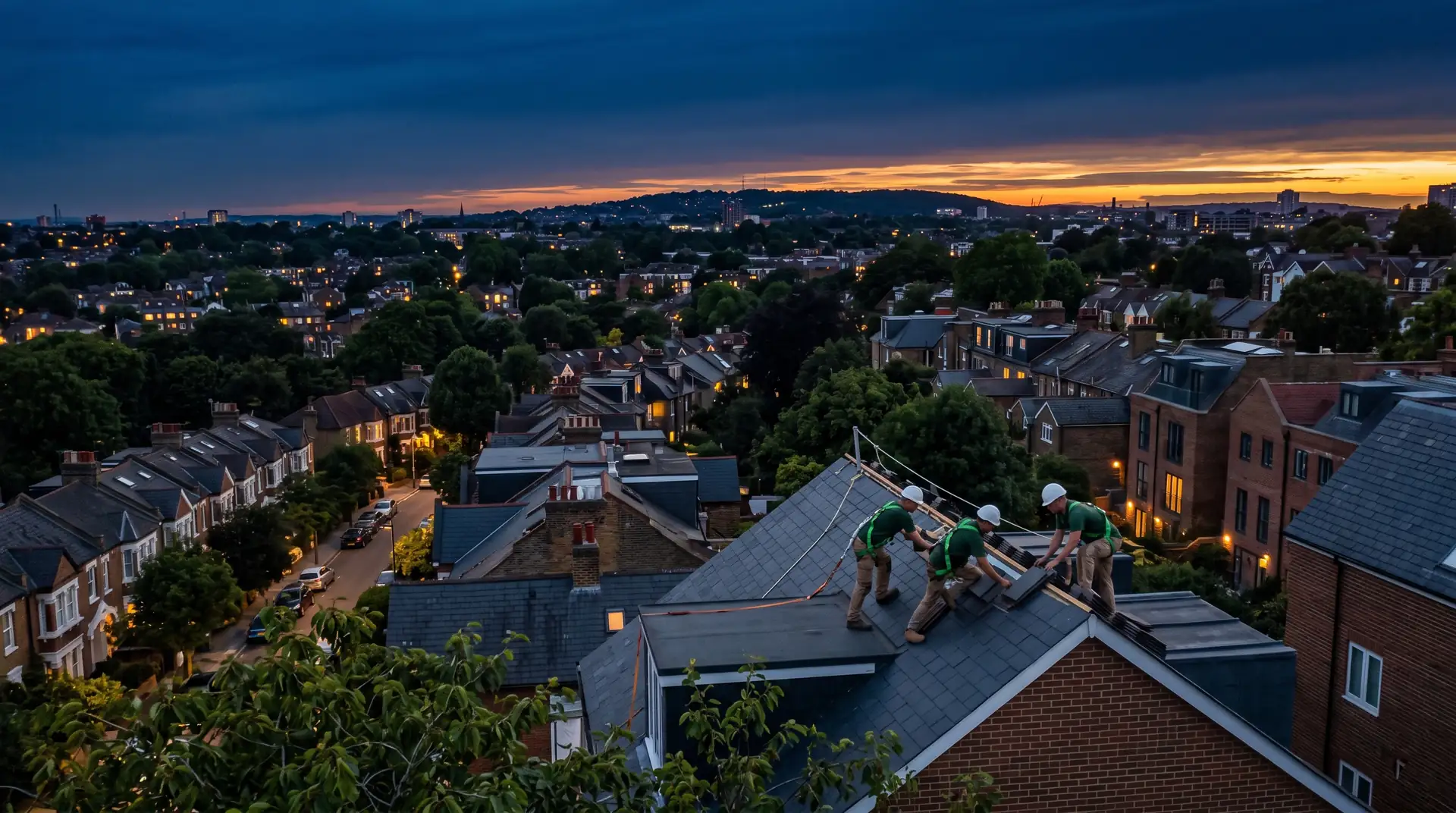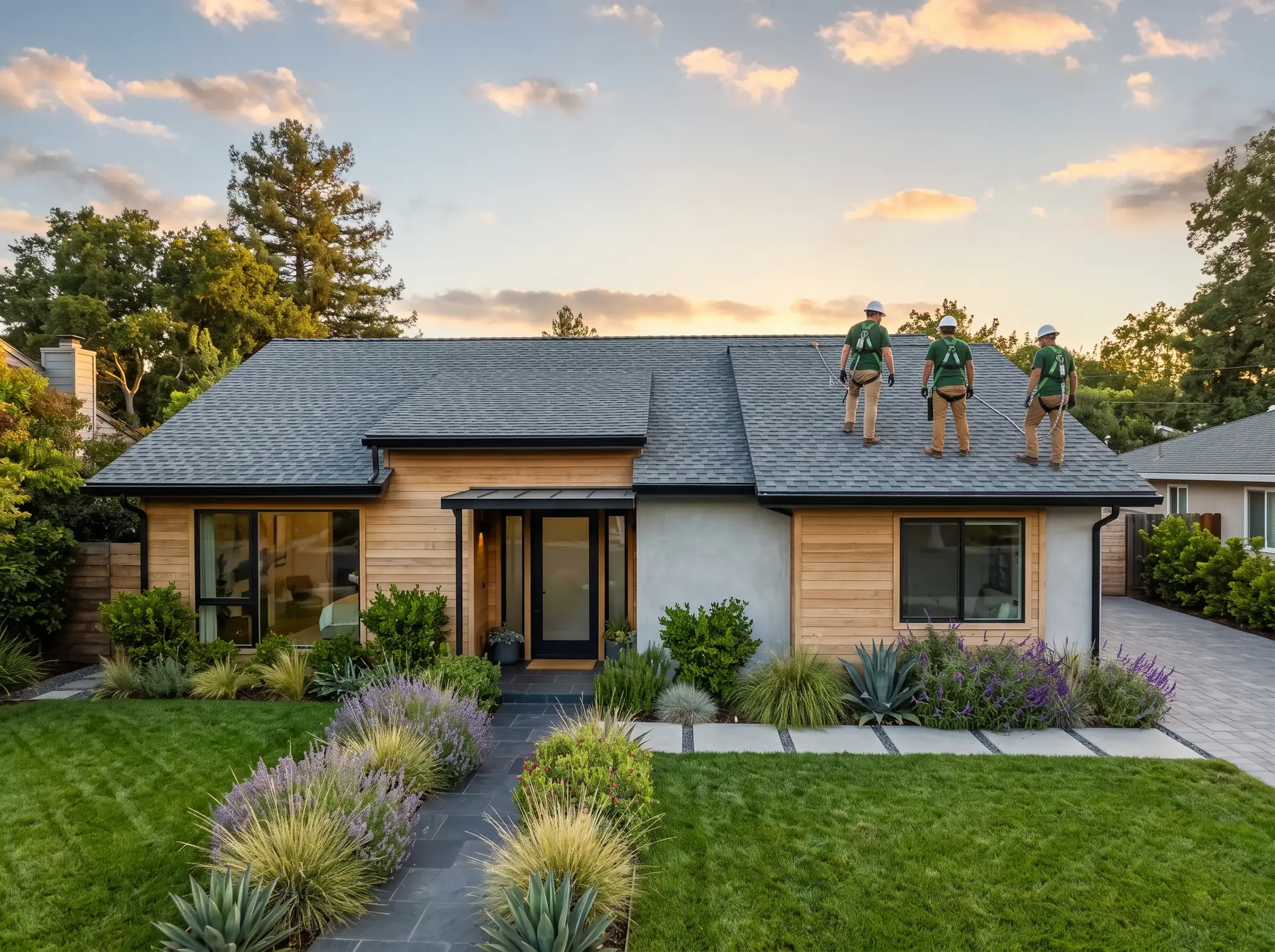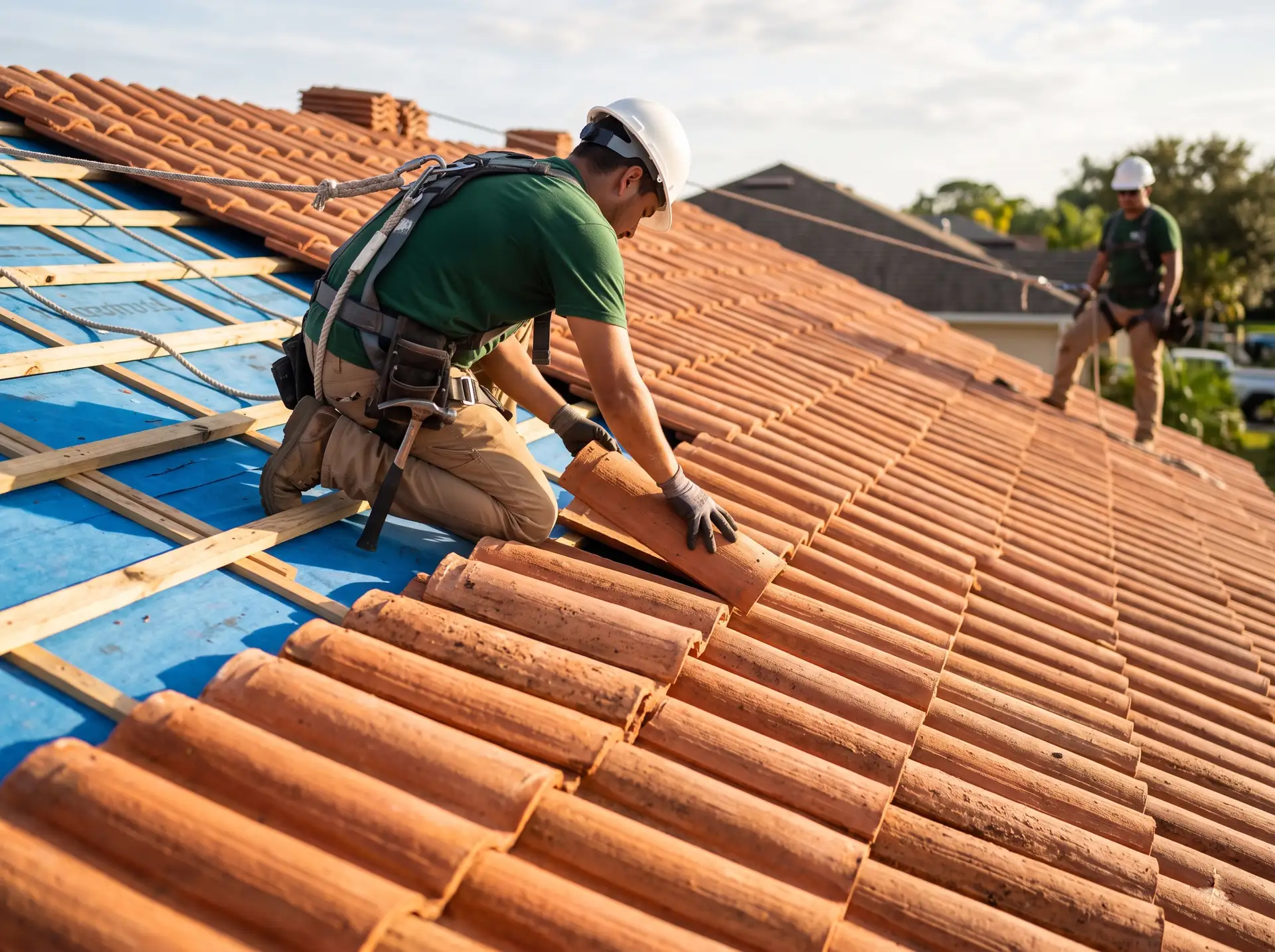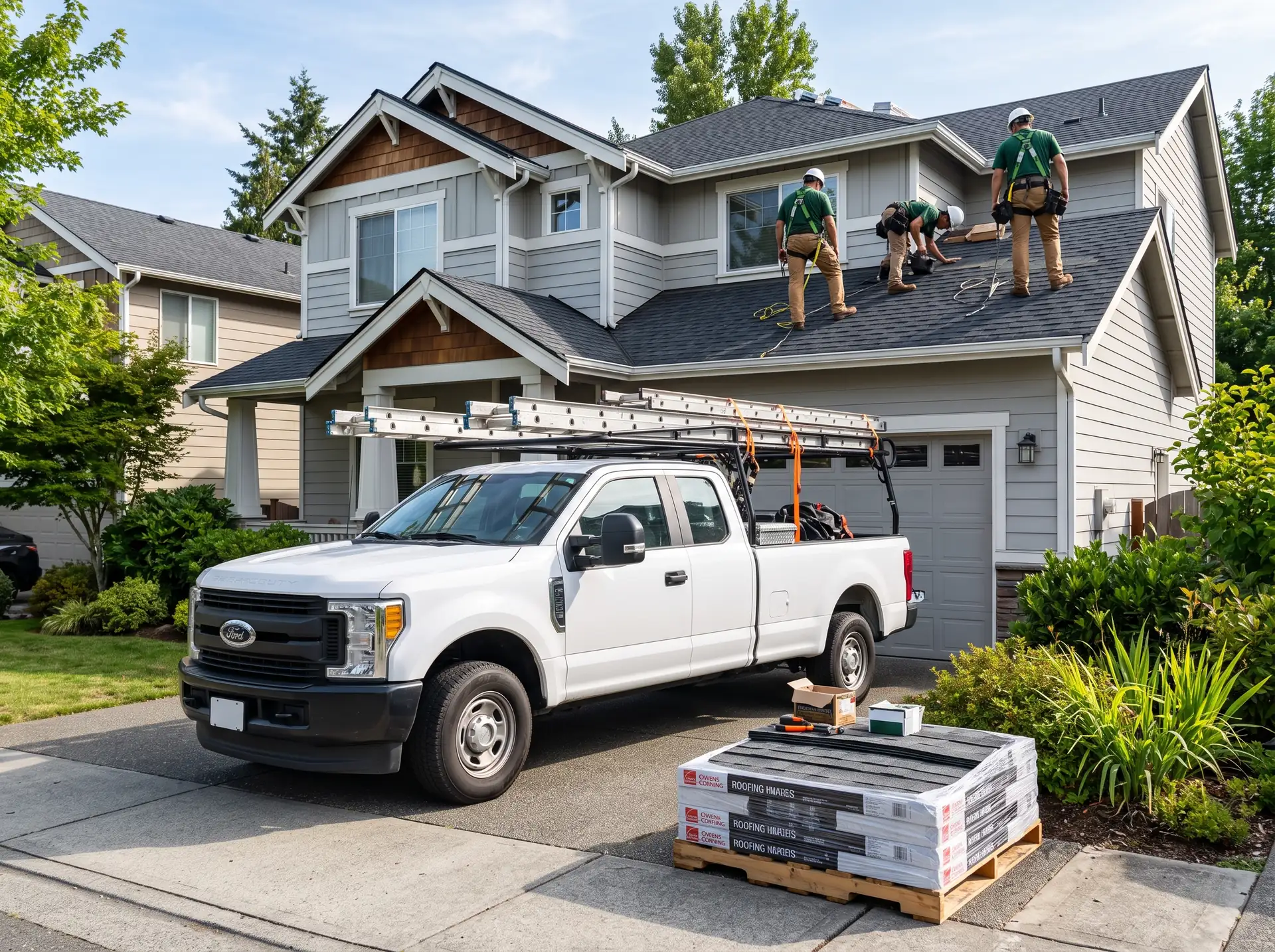
Yes. A roofing permit is required in California to replace a roof. Reroofing is not on the California Residential Code list of work exempt from permits, so your city or county building department issues a permit and inspects the work. Small repairs may not need one; the building official decides what counts as an ordinary repair.
The permit is how three sets of state rules reach your roof: the reroofing rules in the Residential Code, the Title 24 energy rules (including the cool-roof requirement in some climate zones), and the fire-rating rules. Your contract should say who pulls it; normally that is the licensed roofing contractor.
Why does a roof replacement need a permit in California?
The 2025 California Residential Code (Section R105.1) requires anyone who intends to construct, alter or repair a building to apply to the building official and "obtain the required permit" first. Section R105.2 then lists the work that is exempt: small detached sheds, low fences and retaining walls, sidewalks, painting and similar finish work, playground equipment, small awnings and small low decks. Roofing is not on the list.
The state housing agency's own administrative section (1.8.4.1) says the same thing in its own words: a written permit is needed before the "alteration of any building", except for the listed exempt work and minor changes that do not affect structure, egress, sanitation, safety or accessibility "as determined by the enforcing agency".
Cities and counties adopt the Chapter 1 permit rules themselves, sometimes with local amendments, so the permit comes from your local building department, not the state, and the forms, fees and inspection steps differ from city to city.
Replacing your roof? Our roof replacement service starts with an on-site look and a written proposal, and the work begins once the permit is issued.
Does a small roof repair need a permit?
Often not, but the code does not draw the line in square feet. Section R105.2.2 says no application is needed for "ordinary repairs to structures", and it excludes structural work such as cutting a structural beam or load-bearing support. Whether replacing a few shingles, a pipe boot or a section of underlayment is an ordinary repair is the building official's call.
Some cities publish their own cutoff for roof repairs. If the repair involves the deck or framing, or covers a large part of a slope, ask the building department before work starts; a phone call costs less than a correction notice.
What does a roofing permit actually check?
Three bodies of state rules apply to a California re-roof, and the permit and inspections are how the building department enforces them:
| Rule | Where it comes from | What it means for your roof |
|---|---|---|
| Tear-off and reroof methods | California Residential Code R908 | A roof replacement removes existing layers down to the deck; overlays are limited; flashings are rebuilt |
| Energy (Title 24 Part 6) | California Energy Code, Section 150.2(b)1I on single-family homes | A re-roof counts as an alteration; replacing more than half of the roof triggers the roofing requirements, including a cool roof in some climate zones |
| Fire rating | California Residential Code R902 and the California Wildland-Urban Interface Code | At least Class C everywhere; stricter ratings in fire hazard severity zones (see Class A fire-rated roofing) |
The California Energy Commission states it plainly: "Replacement of any component systems (such as reroofing)... is considered an alteration and not a repair." For a single-family roof replacement that needs no field verification, the compliance document is the CF1R-ALT-05-E form, whose Section E is "Roof Replacement". The Commission says these forms are completed and submitted to the building department with the permit.
Can a new roof go over the old one in California?
Sometimes, but a true roof replacement cannot. Section R908.3 defines roof replacement as "the removal of existing layers of roof coverings down to the roof deck", with narrow exceptions for an adhered ice barrier or self-adhered underlayment over sound sheathing. Laying new roofing over existing roofing is a "roof recover". Section R908.4 permits one where the new covering is installed "in accordance with the roof covering manufacturer's approved instructions", and in the other listed cases below, but never in the excepted ones:
| Situation | Recover (overlay) allowed? |
|---|---|
| New covering installed to the roofing manufacturer's approved instructions | Yes, unless one of the three "No" cases applies |
| Existing roof is water soaked or too deteriorated to be a base | No |
| Existing covering is slate, clay, cement or asbestos-cement tile | No |
| Roof already has two or more layers of any covering | No |
| Standing-seam metal system that carries its own loads to the structure | Yes, without removing the old covering |
| Metal panels, metal shingles or concrete and clay tile over wood shakes | Yes, with the old surface covered first where a combustible concealed space is created (R908.4.1) |
| A new protective coating over an existing coating, metal, built-up, modified bitumen, single-ply or foam roof | Yes |
Two more reroof rules protect you. Existing slate, clay or cement tile may be reinstalled, "except that damaged, cracked or broken slate or tile shall not be reinstalled" (R908.5), and rusted or damaged flashings, vents and similar parts must be replaced. Flashings are "reconstructed in accordance with approved manufacturer's installation instructions" (R908.6). Even where an overlay is allowed, we recommend a tear-off so the deck can be inspected and the flashing renewed.
Who pulls the roofing permit: you or the contractor?
Either can, but the contract should settle it. The Contractors State License Board (CSLB) says a contract should detail "who gets the necessary building permits", and its homeowner checklist asks whether the contractor must get the permits before work starts and whether the permit fees are in the price.
If you sign the permit application yourself as an owner-builder, CSLB warns that you "assume full responsibility for all phases of your project and its integrity". It also warns homeowners to be wary of people who push them to become an owner-builder "as a way to save money". On a roof replacement, the usual and safer arrangement is that the licensed roofing contractor pulls the permit and schedules the inspections.
How to check that your roofer is licensed
- The right license. Roofing is the C-39 Roofing Contractor classification. A B General Building contractor may include roofing in a larger multi-trade project, but CSLB says it must subcontract to a C-39 roofer when roofing is a standalone contract.
- No small-job loophole for a re-roof. The license exemption in Business and Professions Code 7048 only covers work under $1,000 in total that "does not require a building permit". A permitted roof replacement therefore needs a licensed contractor, unless the owner takes the job on as an owner-builder (see above).
- Look the license up. CSLB's free Check A License tool shows the license status, classification and complaint disclosure by license number or business name.
- Down payment limit. On a home improvement contract the down payment may not exceed $1,000 or 10 percent of the contract price, whichever is less (Business and Professions Code 7159.5).
What happens if a roof is replaced without a permit?
For the contractor, it is a violation of the Contractors License Law. CSLB lists the consequences as disciplinary action including civil penalties of up to $5,000 per violation, an order to pay the permit fees and local penalties, and suspension or revocation of the license.
For the homeowner, CSLB notes that construction performed without a permit "can expose a homeowner to additional liability and costs".
Does HOA approval replace the permit?
No. They are separate approvals. Where an association's rules require approval for exterior changes, California Civil Code 4765 requires a fair, prompt, written decision, and says the decision "may not violate any governing provision of law", including a building code. Get HOA approval for the look of the roof, and the building permit for the work itself.
Other questions
How long does it take to get a roofing permit?
It varies by city. Among the cities we serve: Los Angeles issues re-roof express permits online with no plan check, Long Beach issues one- and two-family reroof permits online in one step, Santa Barbara issues like-for-like reroof permits instantly and changes of material within 5 business days or less, and Simi Valley states a 2 to 3 day residential reroof review. Each city's process.
Does replacing the underlayment under tile need a permit?
When the underlayment is replaced across the whole roof, yes: the tiles come off and the roof is re-covered, which is a roof replacement under Section R908.3. For a small area, the city's repair threshold decides; Long Beach, for example, exempts up to 100 square feet of roof repair in any 12 months. In Los Angeles, LADBS lists a tile lift and relay among its express permits.
Is a Title 24 form needed for every re-roof?
The Energy Commission treats reroofing as an alteration, and the single-family form covers roof replacements where more than half of the roof is replaced (the form itself says half or more). Your building department tells you which form it wants with the permit.
Questions about your own roof? Call (323) 760-7835 or request an estimate, and see our roof replacement service for what the work involves.
Sources
- 2025 California Residential Code, Chapter 1 (R105.1, R105.2, R105.2.2, 1.8.4.1), via UpCodes
- 2025 California Residential Code, Chapter 9 (R902.1.2, R908), via UpCodes
- California Energy Commission, 2025 Single-Family Residential Compliance Manual (CEC-400-2025-005)
- California Energy Commission, 2025 compliance documents for single-family buildings (CF1R-ALT-05-E)
- California Business and Professions Code 7048
- California Business and Professions Code 7159.5
- CSLB, C-39 Roofing Contractor classification
- CSLB, What jobs a B General Building contractor can perform (Fast Facts)
- CSLB, Contracts and binding agreements
- CSLB, Building permit violations
- CSLB, Owner-builder responsibilities
- CSLB, Check A License
- California Civil Code 4765 (HOA architectural review)
Sources were read on September 30, 2026, with local rules added on October 1, 2026. Codes and maps change; check with your building department for the rules in force at your address.