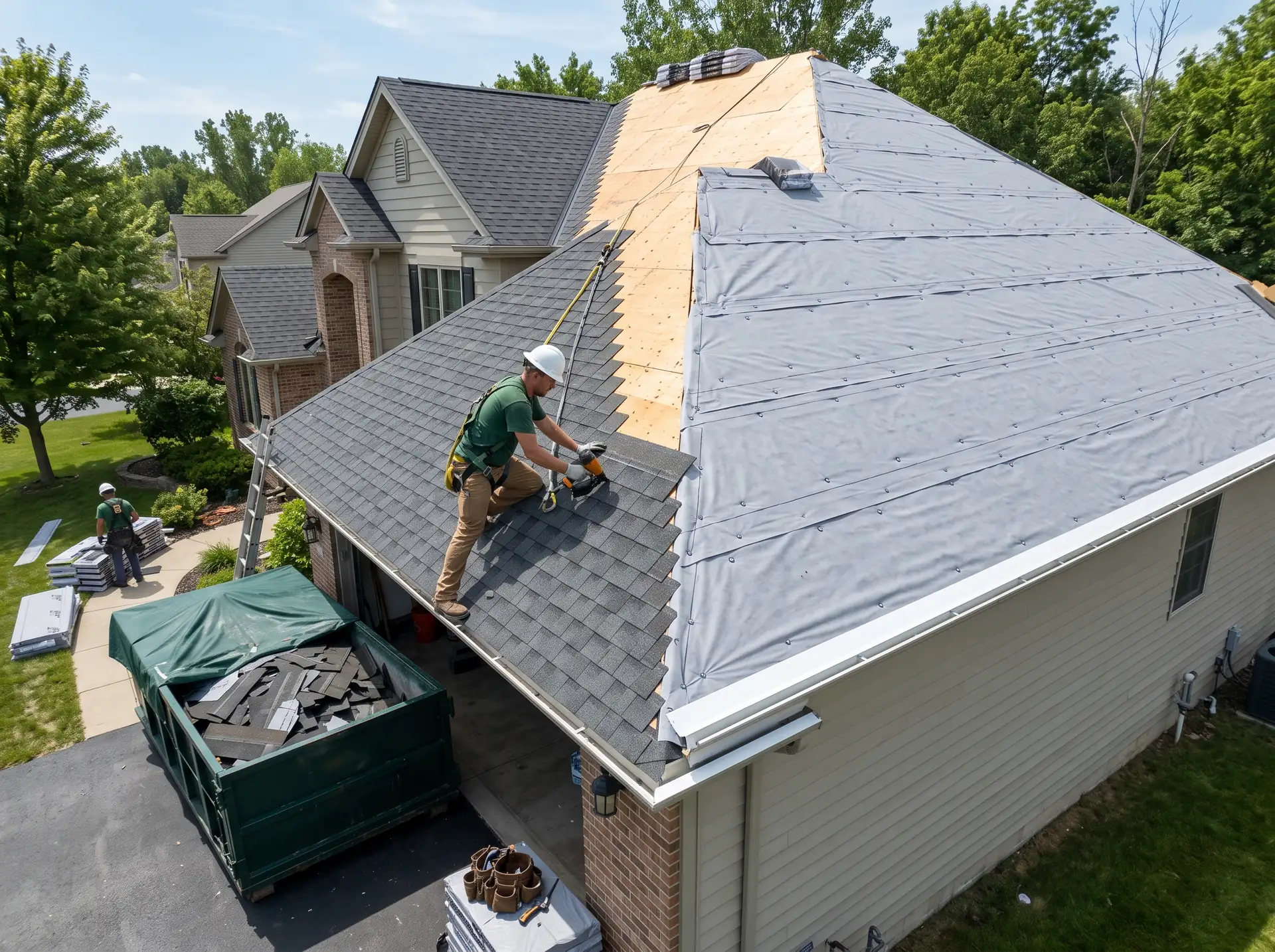
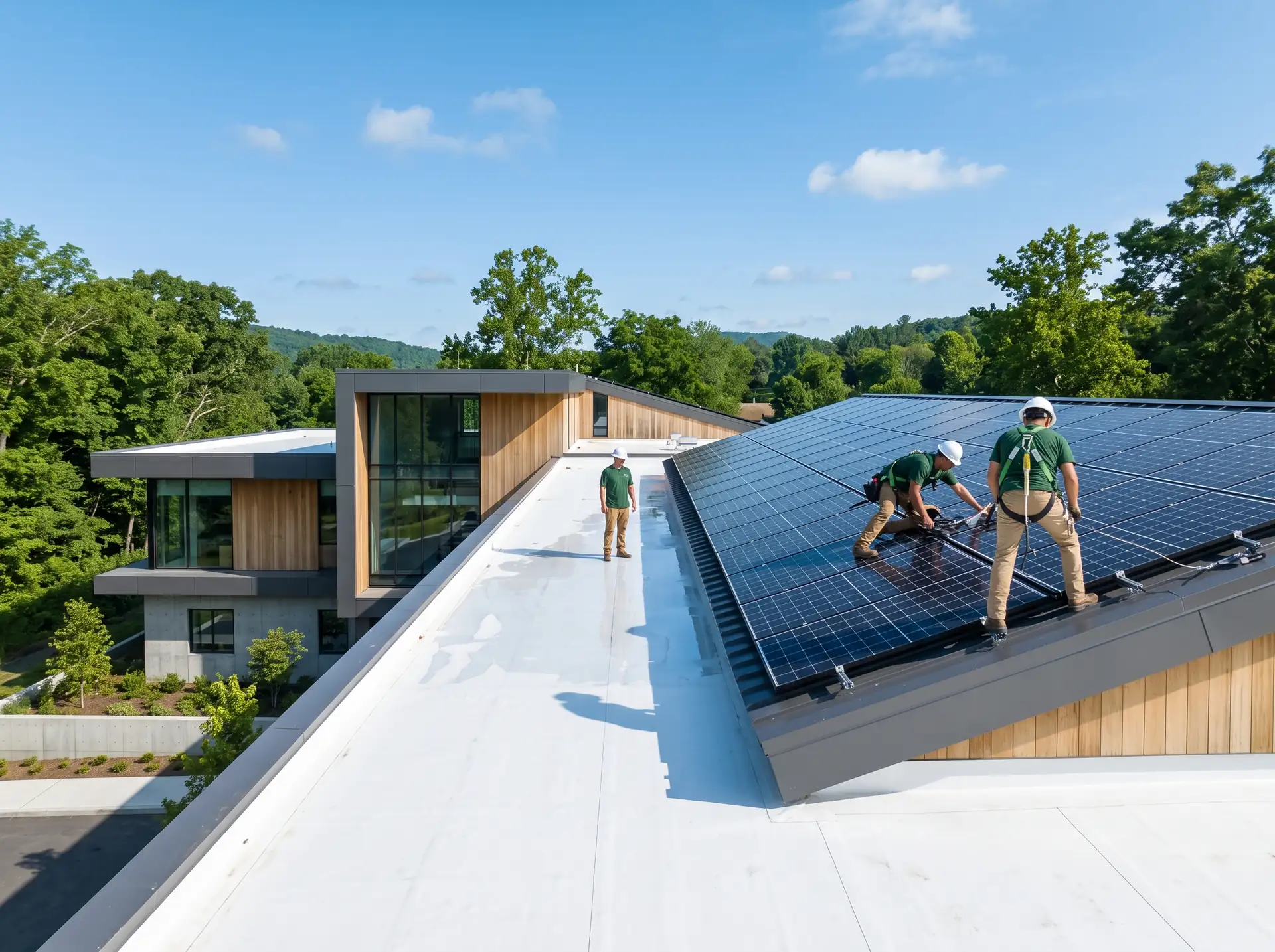
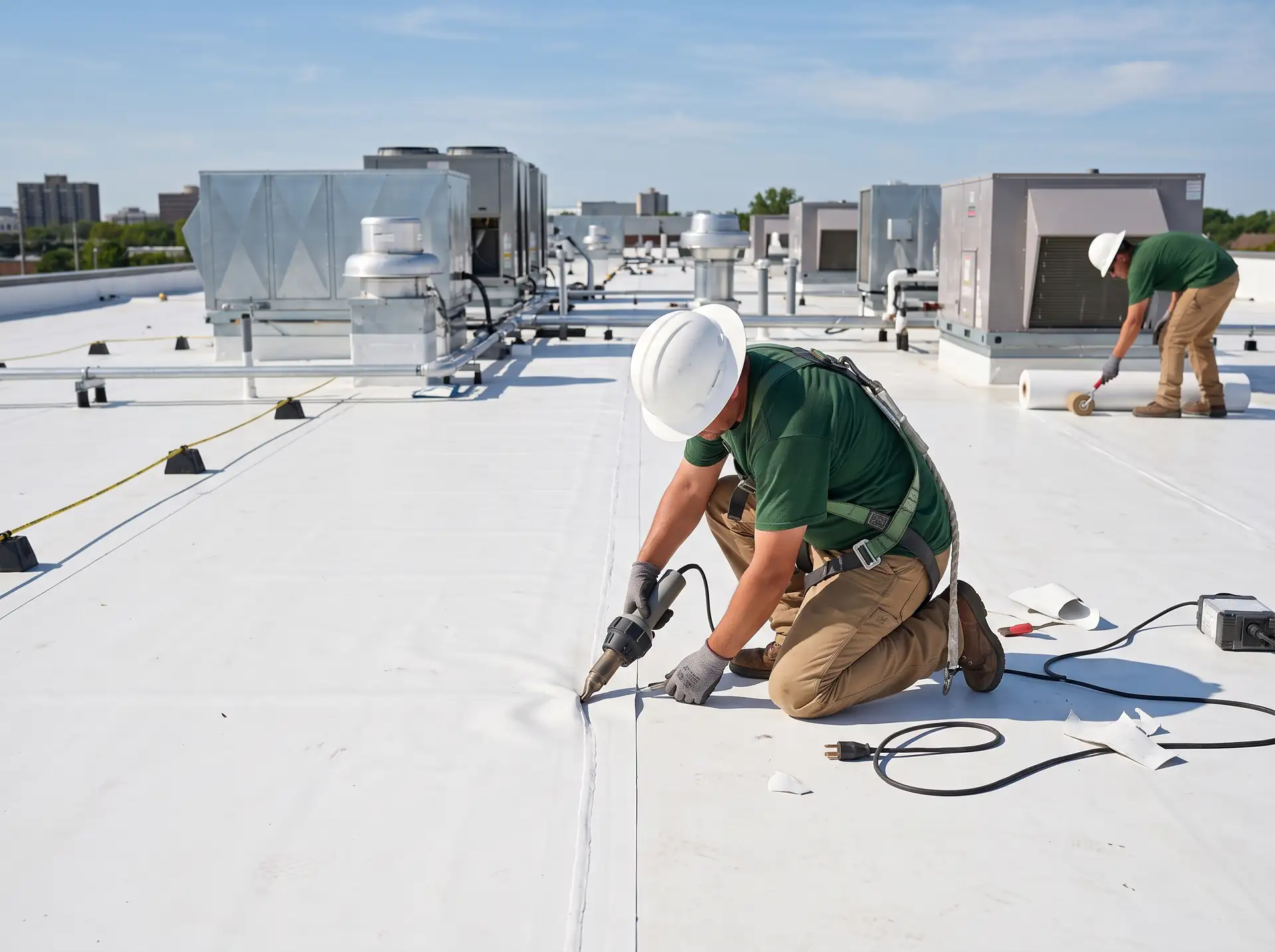
Metal roofing from Global Green Roofing means standing-seam and stone-coated steel roofs for homes in Los Angeles. Metal is light, noncombustible and long-lived, it is made in cool-rated colors, and standing-seam panels let solar arrays clamp onto the seams without drilling the roof. We install complete systems: deck repairs, high-temperature underlayment, panels, trims and flashing.
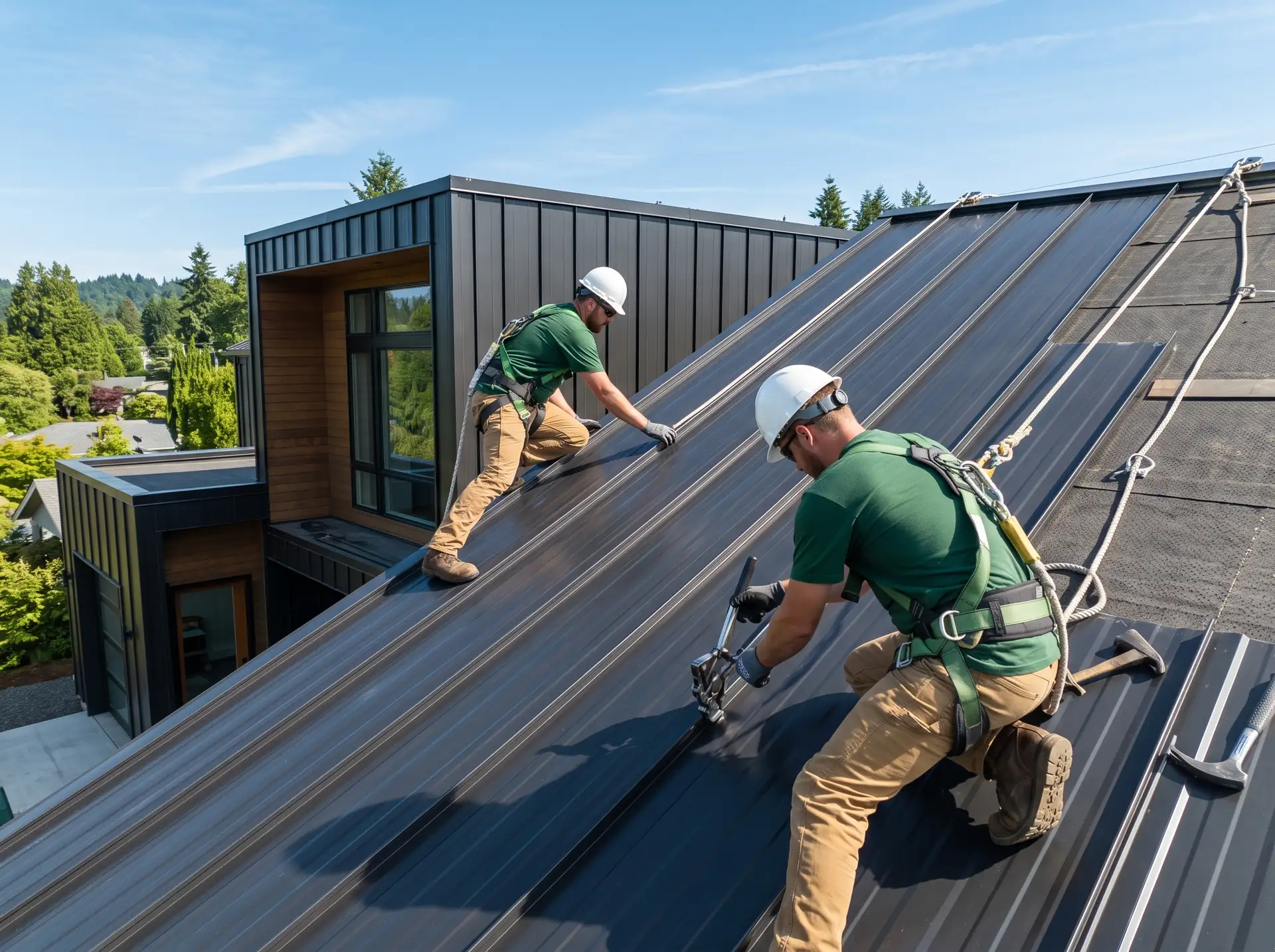 Metal Roofing
Types of metal roofing for homes
| System | What it is | Fits | Trade-offs |
|---|---|---|---|
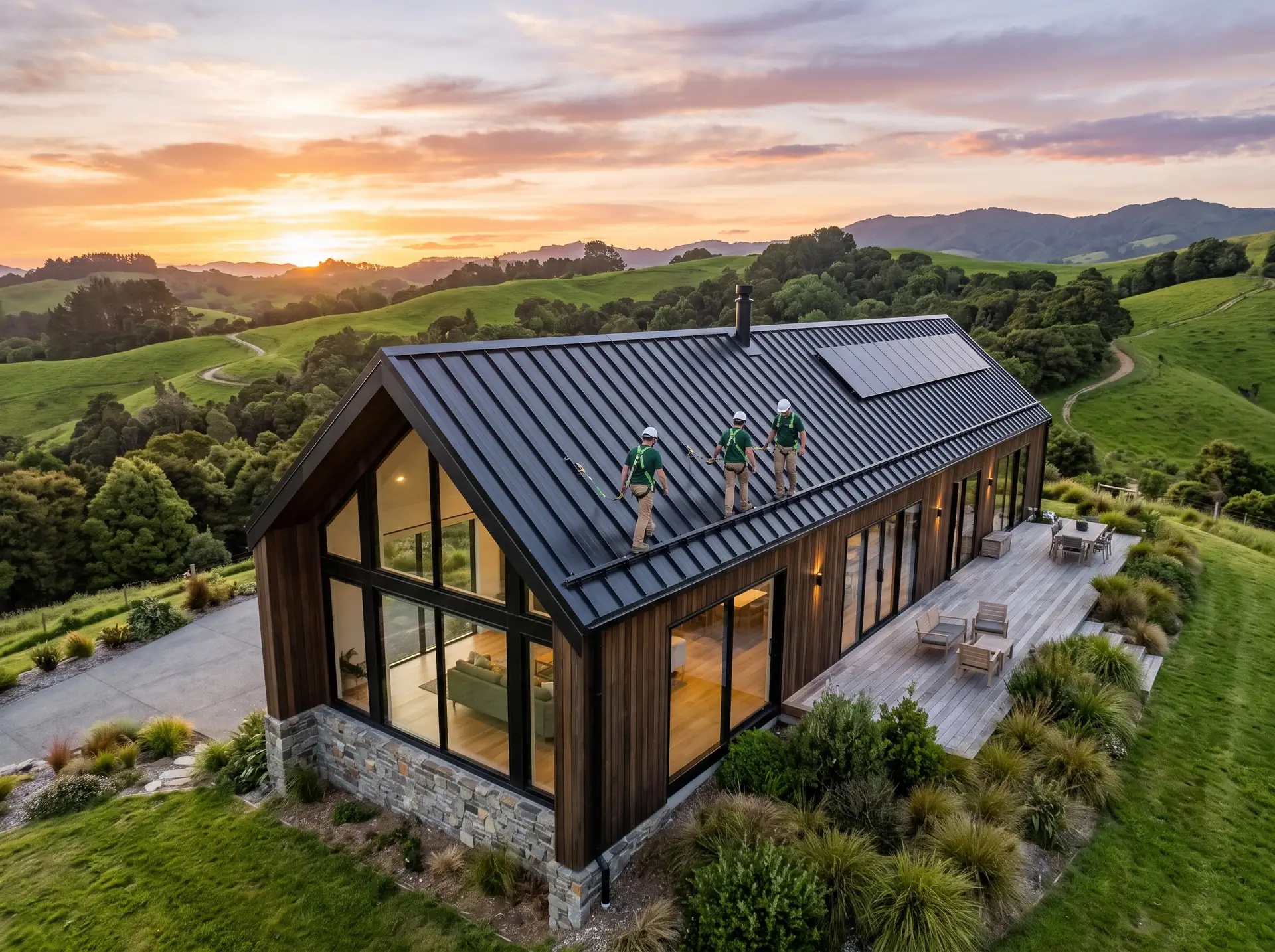
| Standing seam | Panels running ridge to eave, joined by raised seams; concealed clips hold the panels and let them expand and contract | Modern and farmhouse designs, solar | Clean, linear look; no exposed screws |
| Stone-coated steel | Steel shaped like shake, tile or shingle and coated in stone granules | Homes that want a traditional look with metal's weight and fire resistance | Profiles, fastening and ratings vary by maker; compare named products |
| Exposed-fastener panels | Corrugated or ribbed sheets with rows of screws through the face | Outbuildings, agricultural and utility roofs | S-5! notes it is typically lower cost than standing seam, but every screw is exposed to the weather |
Why homeowners choose standing-seam metal
- Long service life: the Metal Roofing Alliance puts a metal roof at 30 to 50 years or more, noting that metal can often be repainted rather than replaced
- Light weight: painted 24-gauge steel standing seam weighs roughly 130 to 150 pounds per 100 square feet in manufacturer data, against 900 or more for standard concrete tile
- Noncombustible, and many metal roof systems carry a Class A fire rating as an assembly
- Factory finishes in rated cool colors that reflect more of the sun's heat
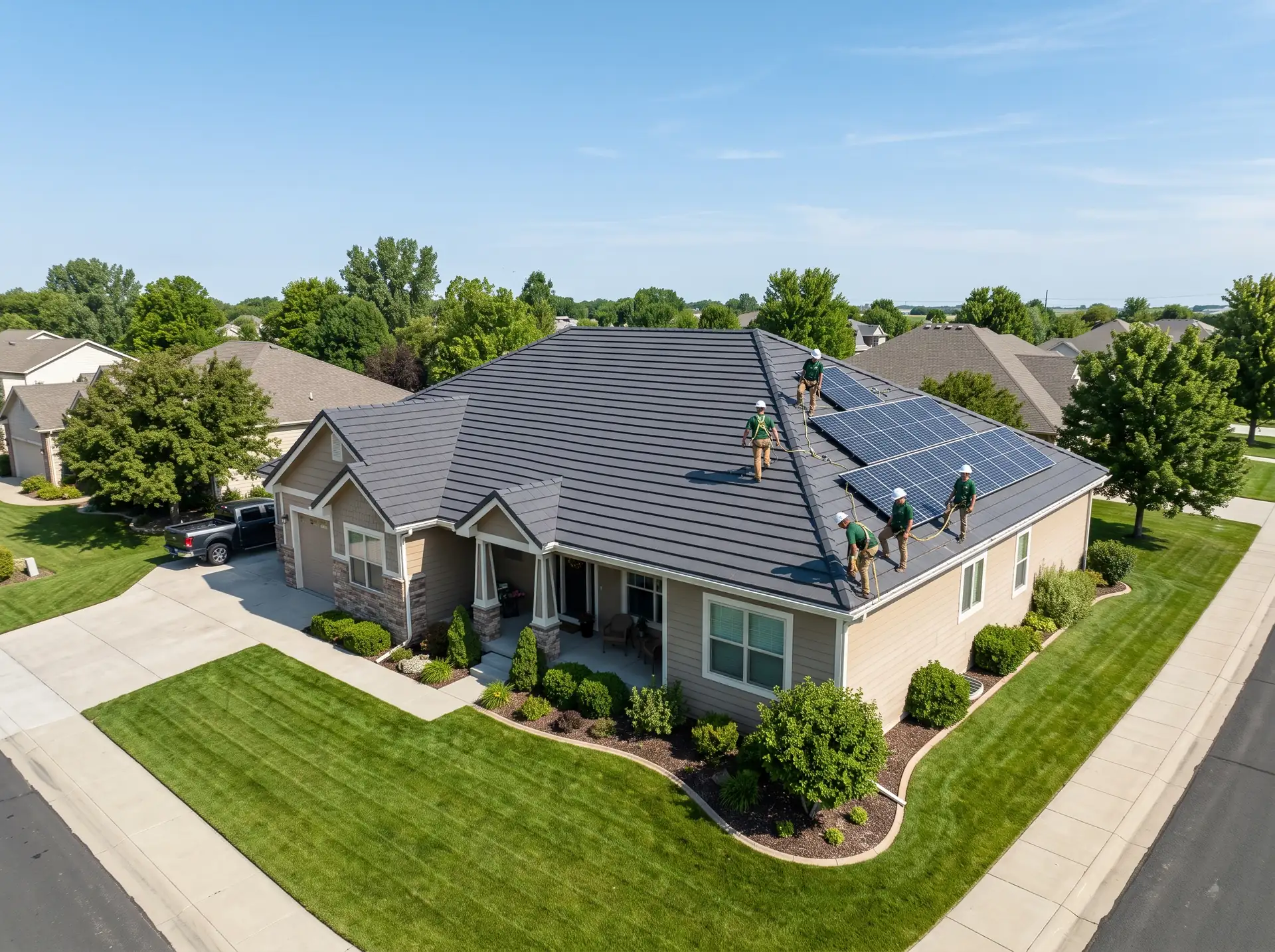
- Solar panels mount with clamps on the seams, with no holes through the roof
Metal roofing near the coast
Salt air is hard on metal and its finishes. At least one panel maker's paint warranty excludes "exposure to salt environments", so a coastal address changes which metal, finish and warranty make sense. We specify them for your location, not one product for everyone.
Metal roofs, wildfire and solar
Metal does not burn, and in wildfire country that matters, but the rating belongs to the whole assembly, including the underlayment and how the eaves, ridge and vents are closed against embers. Our Class A fire-rated roofing guide explains what the rating covers.
For solar, standing seam is one of the best bases a roof can offer: clamps grip the seams, so the array needs no penetrations, and the roof can outlast the array: the Metal Roofing Alliance, citing industry research, puts coated standing-seam steel at up to 70 years against a typical solar service life of about 28 to 37 years. See whether to replace your roof before solar if an array is in your plans.
Noise and dents: the common worries
Noise. The Metal Roofing Alliance says "there is little difference between metal and other materials when it comes to noise from rain or hail."
Dents and hail. Impact resistance is rated under UL 2218 from Class 1 to Class 4. The Metal Roofing Alliance says "the majority of metal roofing earns a UL2218 Class 4 rating", the highest, but ratings belong to named products, so ask for the one being proposed.
Metal or another material?
The Metal Roofing Alliance itself acknowledges that metal costs more upfront than asphalt shingles; it lasts longer, weighs far less than tile and suits solar best. Shingles win on upfront cost; tile wins where the style of the house calls for it. Our metal roof vs shingle guide compares the two on cost, life, weight, fire, heat and noise, and cool roofing covers reflective metal finishes. Leaks on an existing metal roof are handled under roof repair.
What drives the cost of a metal roof
We price each metal roof from its own measurements after an on-site look, so there is no figure here. When you compare proposals, these are the lines that explain the difference:
- The system. Standing seam and stone-coated steel are made and fastened differently, so compare proposals for the same system and profile.
- Gauge and finish. The steel thickness and the paint system; near the coast, a metal and finish whose warranty does not exclude salt exposure.
- What comes off first. A replacement removes every layer down to the deck (Residential Code R908.3), and deck repairs found after tear-off add to the job.
- The shape of the roof. Each hip, valley, dormer, skylight and wall needs trim and flashing formed to fit it.
- Fire hazard zone details. In High and Very High zones, a re-roof of 50 percent or more must be a Class A assembly, with the ember-resistant eave, valley and vent details that go with it.
- Solar plans. Standing seam takes seam clamps with no holes; exposed-fastener panels take brackets fastened to the panel (S-5!). Either way the mounts are planned with the roof, not after it.
How metal roofing works with us
Measure and design
Panel layout, profile, color, gauge and finish, and solar plans if you have them.
Proposal
The full system in writing: deck prep, underlayment, panels, trims and flashing.
Installation
Tear-off, deck repairs, high-temperature underlayment and seamed panels with matching trims.
Metal Roofing questions
Can metal roofing go over existing shingles?
Sometimes. California Residential Code R908.4 lets a standing-seam system that carries its own loads to the structure go over an existing roof, but no recover is allowed over a water-soaked or deteriorated roof or one that already has two or more layers. We still recommend removing the old roof so the deck can be inspected and repaired first.
Can an old metal roof be refinished instead of replaced?
Often, yes. The Metal Roofing Alliance notes that metal roofs "can often be repainted versus replaced". Whether yours can depends on the condition of the panels, seams and fasteners, which an inspection shows.
Close to the coast, in Malibu, Long Beach and Pacific Palisades, the metal and finish are chosen for salt air. Our service areas page lists every city we cover.