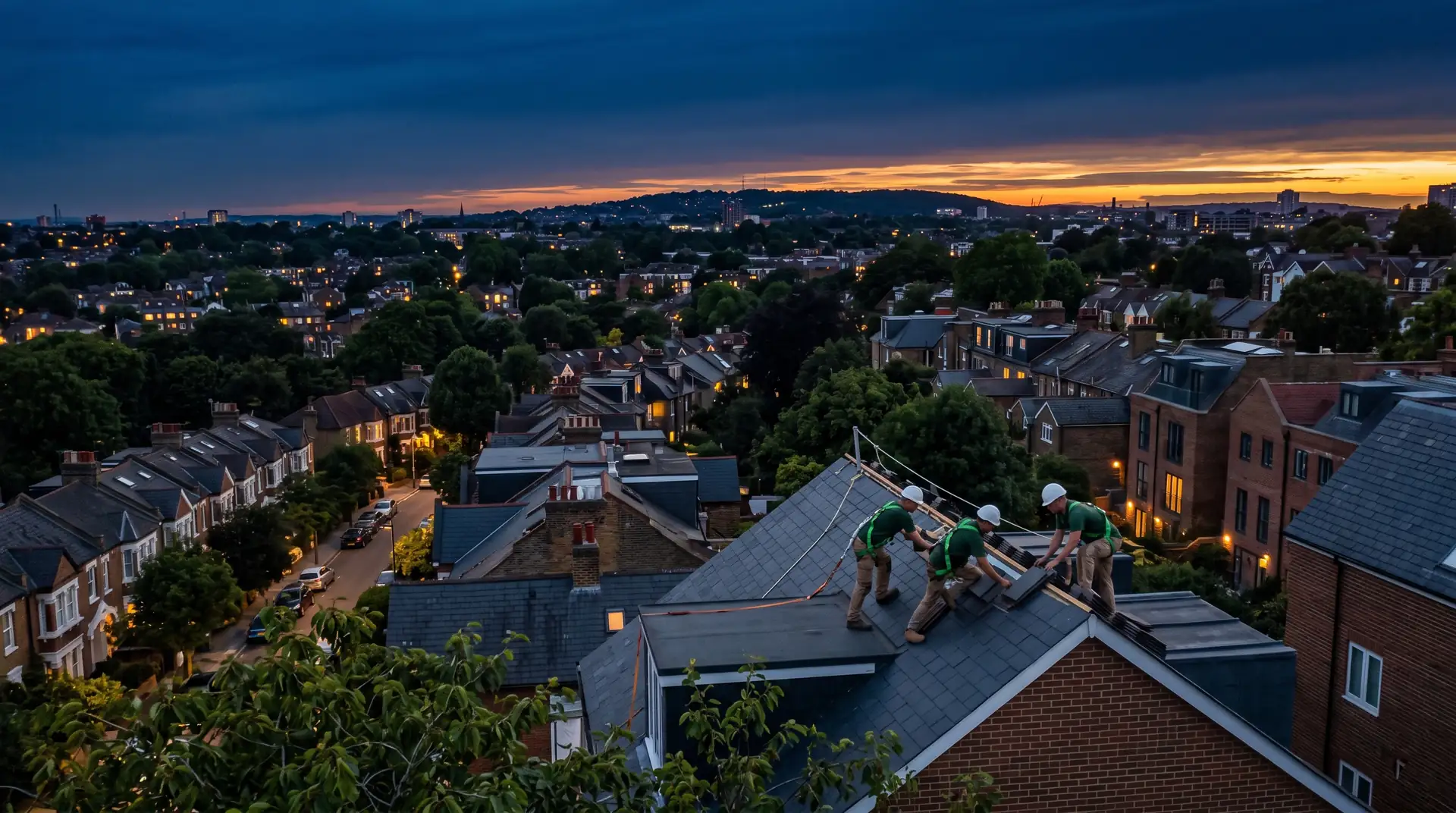
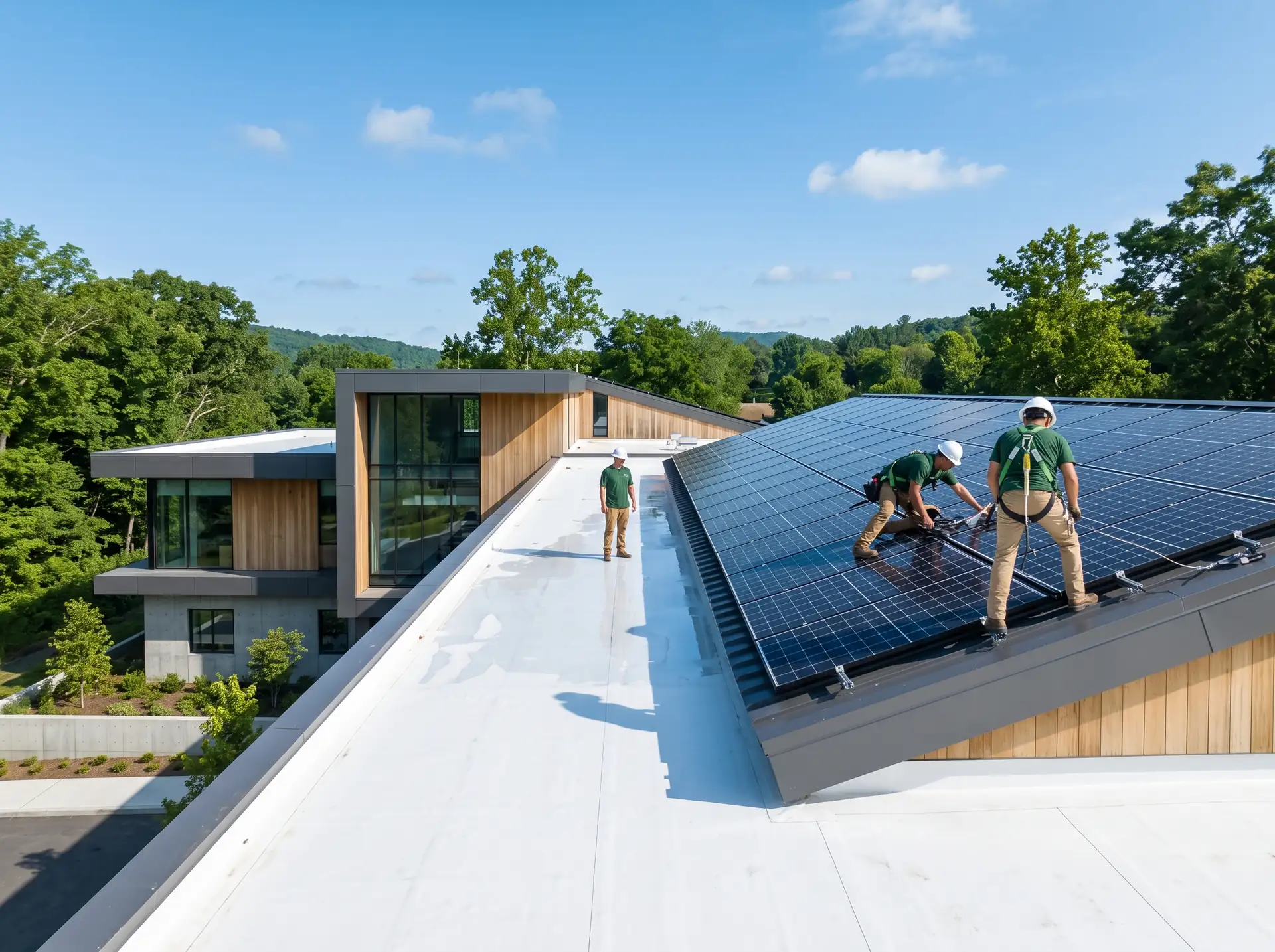
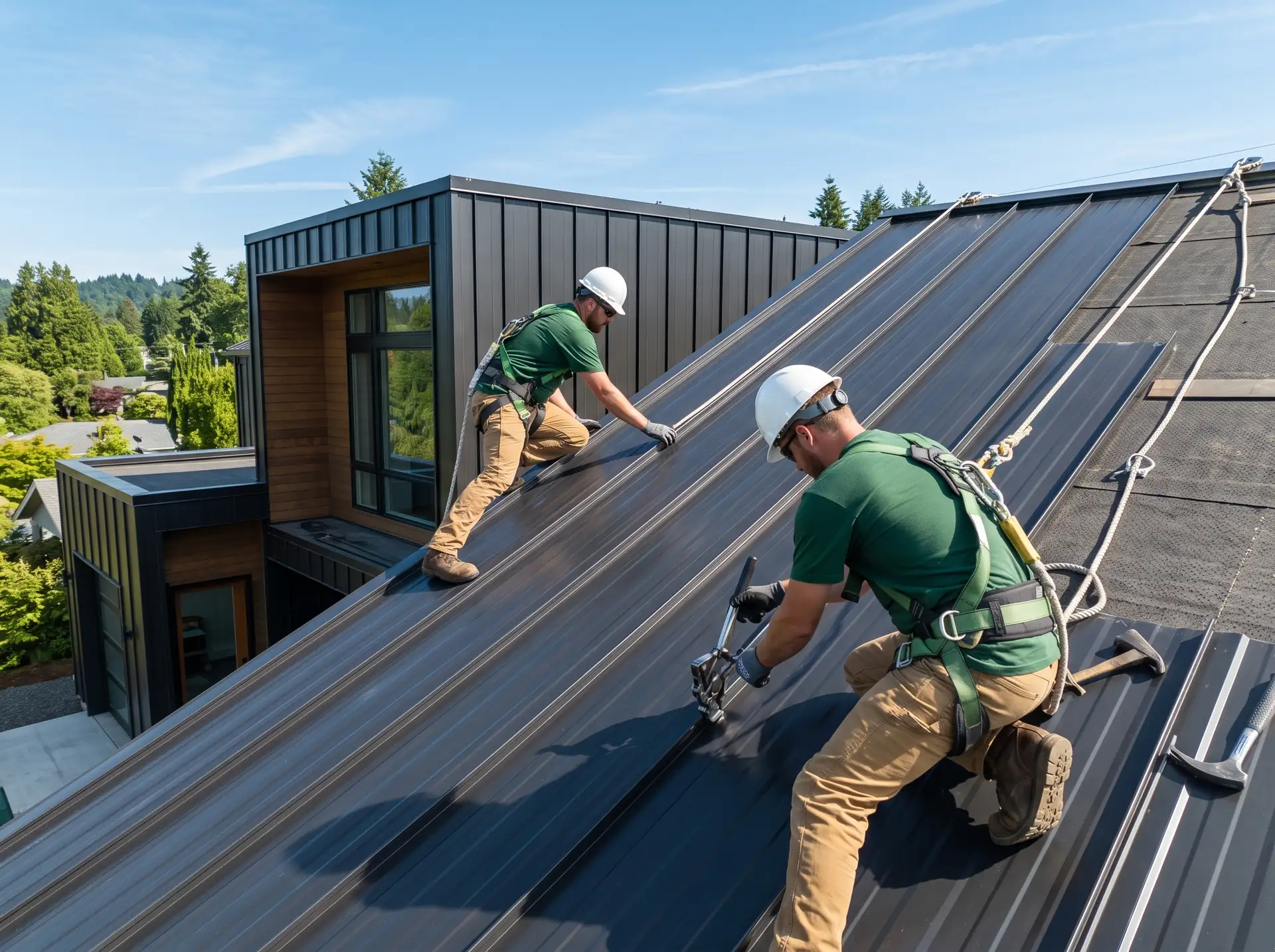
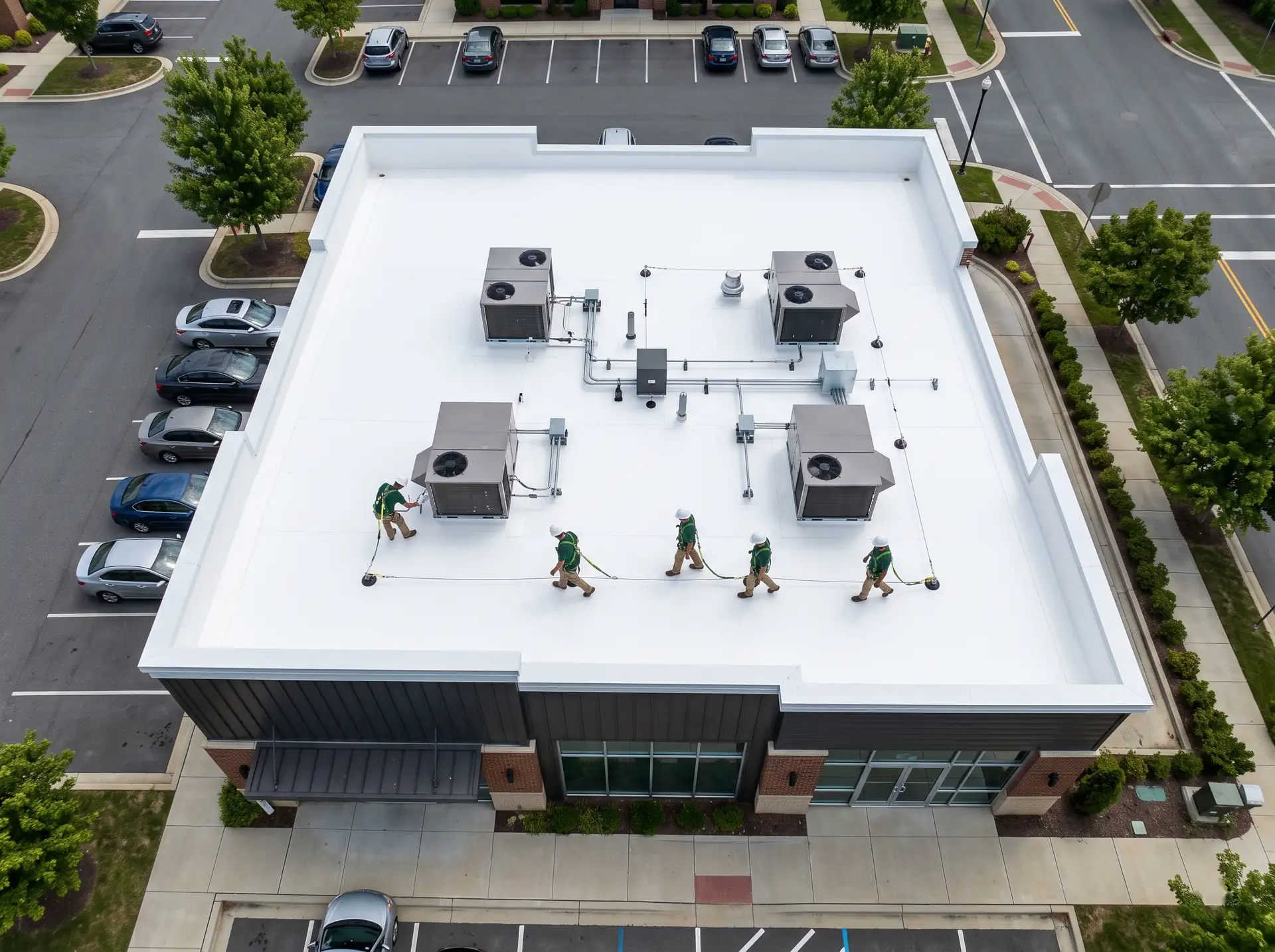
Flat roofing at Global Green Roofing means new and replacement flat and low-slope roofs on homes, additions, garages and commercial buildings in Los Angeles. Low-slope roofs take continuous membranes such as TPO rather than shingles, so we install those, add tapered insulation where water ponds, and build the reflective surface that California's energy code requires on most low-slope re-roofs.
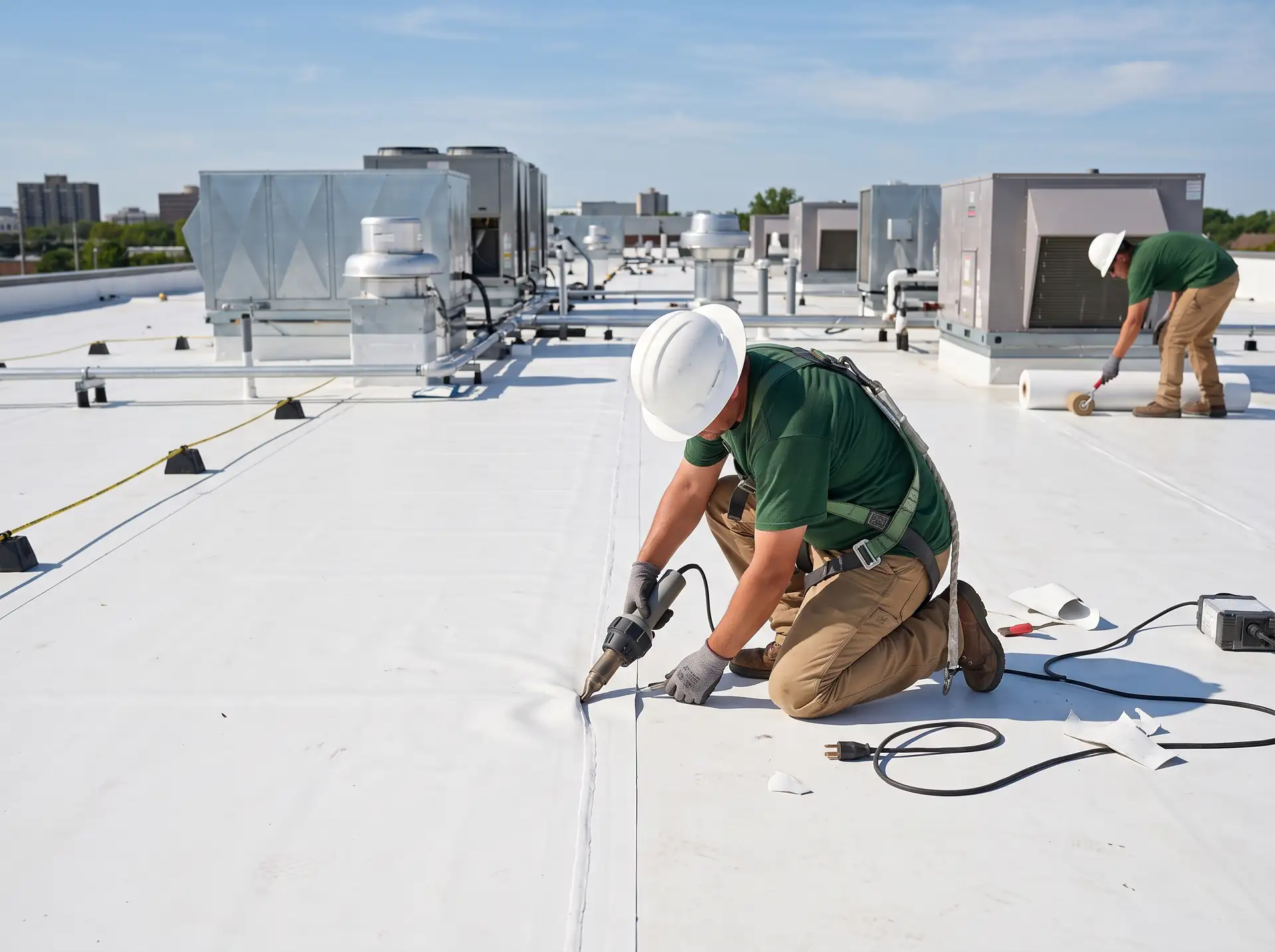 Flat Roofing
Flat roof systems compared
A "flat" roof still has a slight slope to drain. What goes on it depends on the deck, the drainage and how the roof is used:
| System | How it goes on | Strengths | Watch for |
|---|---|---|---|
| TPO | Single-ply sheets, seams welded with hot air | Welded seams, white and reflective, light | Needs a clean, dry substrate; quality of welds decides its life |
| Modified bitumen (torch-down or self-adhered) | Asphalt-based sheets, heat-fused or self-adhered, often with a reflective cap | Tough, forgiving on detailed roofs | Dark caps are hot; choose a reflective cap sheet |
| Built-up roofing | Alternating layers of felt and asphalt, often with gravel | Many layers of redundancy | Heavy; hard to find leaks under gravel |
Fluid-applied coatings are also sold for flat roofs. They add reflectance only over a sound, dry, well-attached roof and do not fix a failing membrane, so they are not an alternative to the systems above when the roof needs replacing.
TPO roofing: how it works
TPO (thermoplastic polyolefin) is a single-ply membrane whose seams are heat-welded with hot air into one continuous sheet rather than glued. White TPO reflects most of the sun, which keeps the roof and the rooms below cooler and helps a low-slope re-roof meet California's cool-roof values. It is common on homes, additions and patios, not only commercial buildings.
How long it lasts depends on the installation: clean, fully welded seams and proper detailing at walls, curbs and drains.
Fixing drainage, not only the membrane
A new membrane on a roof that holds water wears out early. Where water ponds, the options are tapered insulation that builds slope toward the drains, crickets behind curbs and chimneys, and new or enlarged drains and scuppers. These are planned before the membrane, because once it is down they are a second job.
Insulation and the Title 24 cool-roof rule
A flat roof replacement is the easiest moment to add insulation over the deck, since the roof is open anyway. It is also when California's energy code applies: replacing more than half of a low-slope roof requires an aged solar reflectance of at least 0.63 and thermal emittance of 0.75 (or an SRI of 75) in climate zones 4 and 6 to 15, and R-14 continuous insulation in zones 1, 2, 4 and 8 to 16 (California Energy Commission, Section 150.2(b)1I). The zones and values are in our guide to cool roof requirements in California.
Replace or repair your flat roof?
Replacement is right when the membrane is failing across the roof, when the insulation under it is wet, or when the same areas keep leaking after repairs. If the problem is a seam, a blister or one drain, a repair is the honest answer; see flat roof repair for how those are done.
How flat roofing works with us
Roof survey
Membrane, seams, insulation condition, drainage, edges and rooftop equipment.
Proposal
The membrane system, insulation and drainage changes, and Title 24 values where they apply.
Installation
Tear-off, tapered insulation and cover board as needed, welded seams and flashed details.
Flat Roofing questions
How much ponding water is normal on a flat roof?
The roofing industry benchmark, from the National Roofing Contractors Association, is no ponding water on the roof 48 hours after a rain in conditions that allow drying. Water still standing after that points to low spots, blocked drains or a sagging deck.
Does a flat roof replacement need more insulation?
In climate zones 1, 2, 4 and 8 to 16, Title 24 requires the re-roofed low-slope area to reach R-14 continuous insulation (or a U-factor of 0.039); zones 3 and 5 to 7 have no such requirement, and roofs that already have R-10 or more continuous insulation are excepted.
Can a new flat roof go over the old one?
In limited cases the code allows a recover over one existing layer, but not over a roof with wet insulation or two layers already. We check before recommending it.
Replacing a flat roof triggers the Title 24 low-slope rule across the cities on our service areas page, coastal zone 6 included; only a few addresses in climate zones 5 and 16 fall outside it.