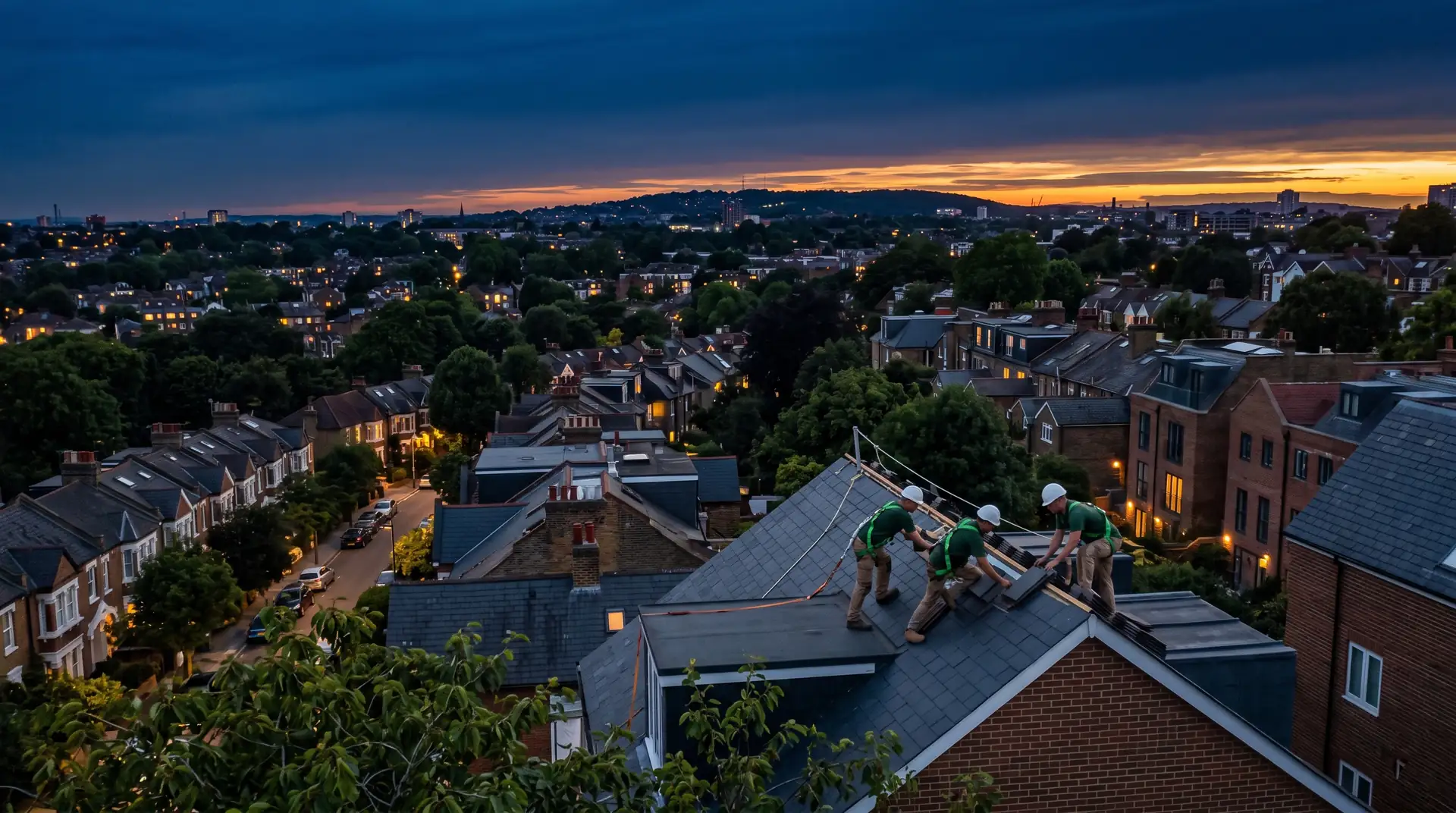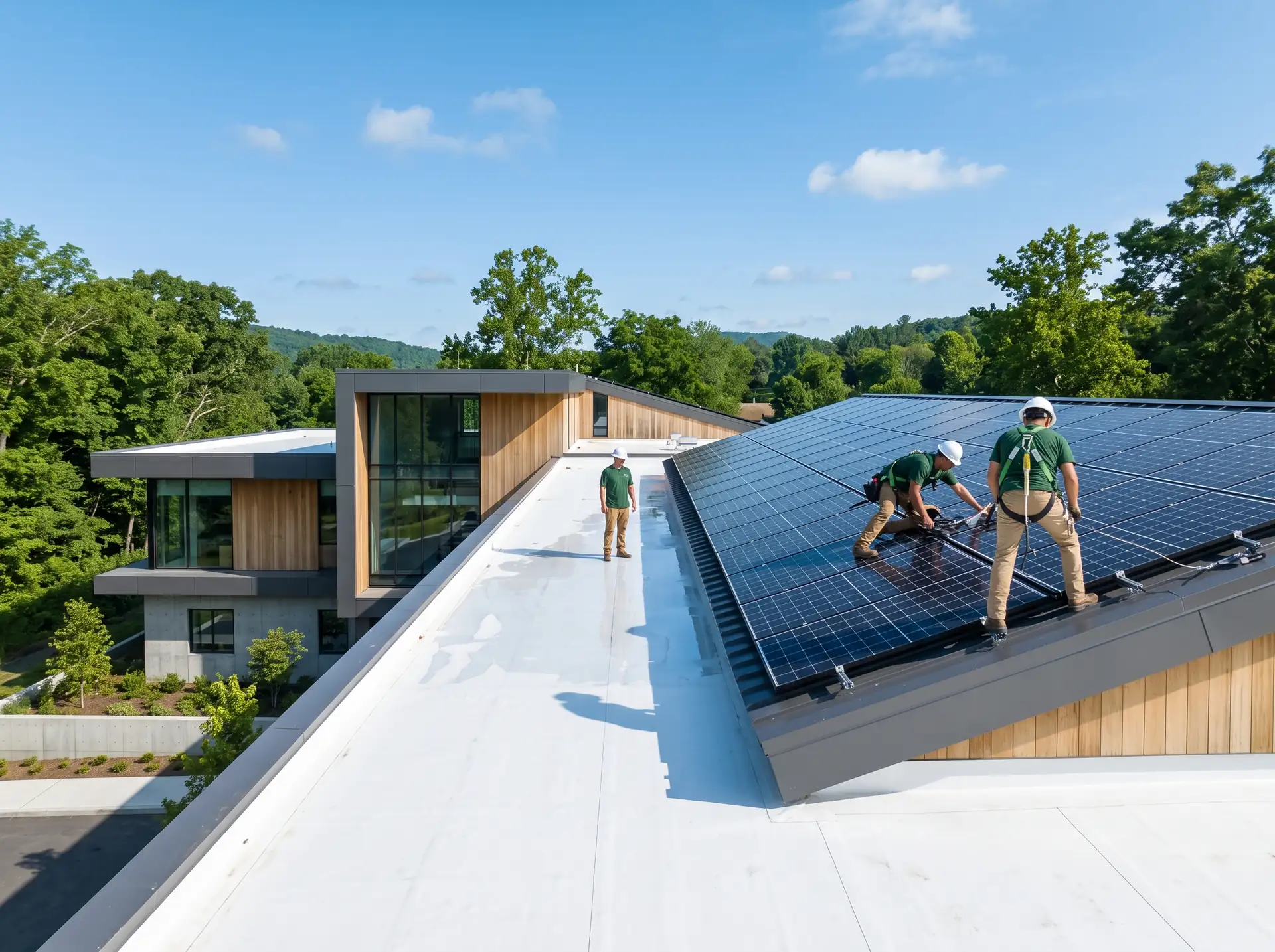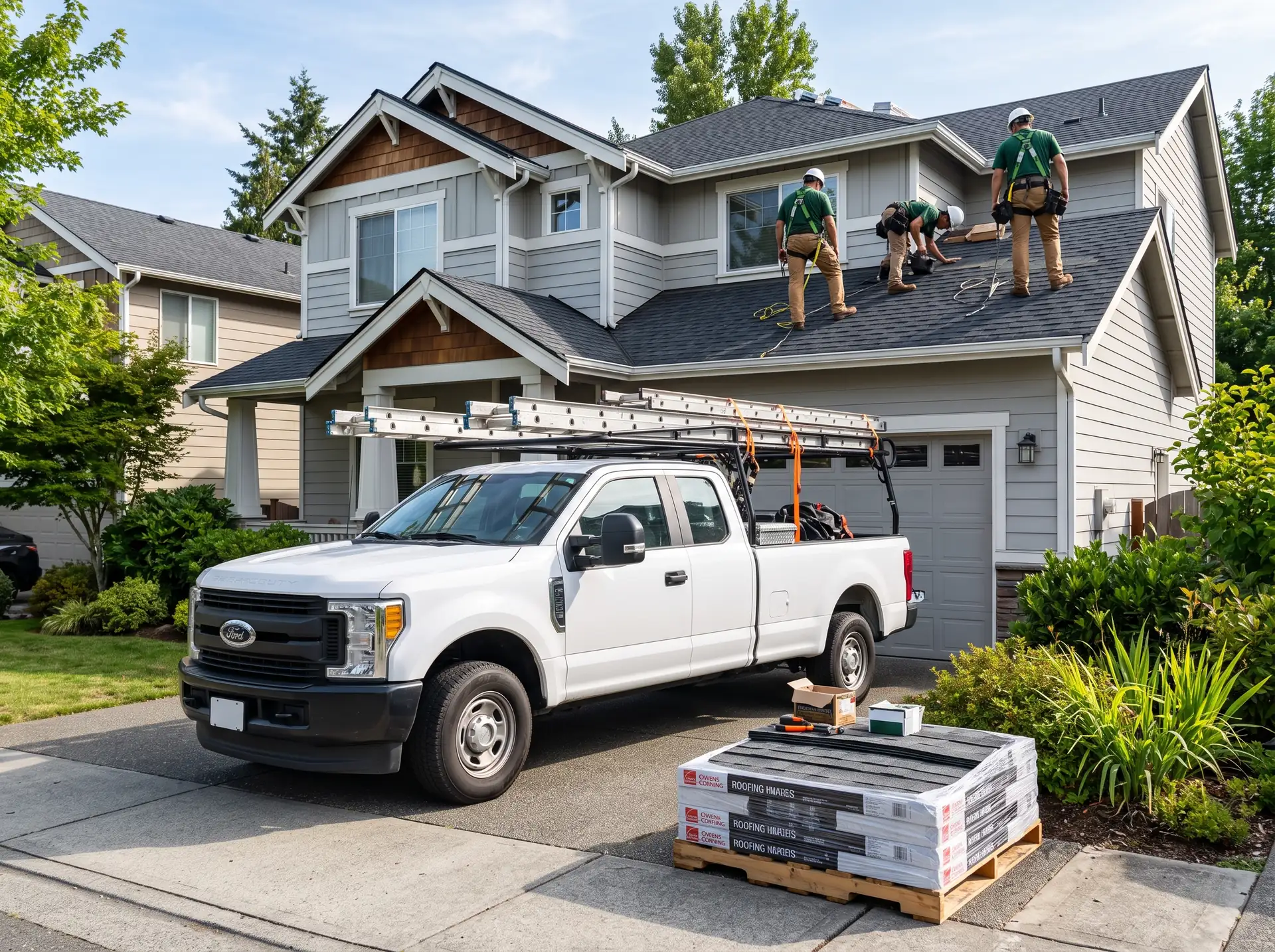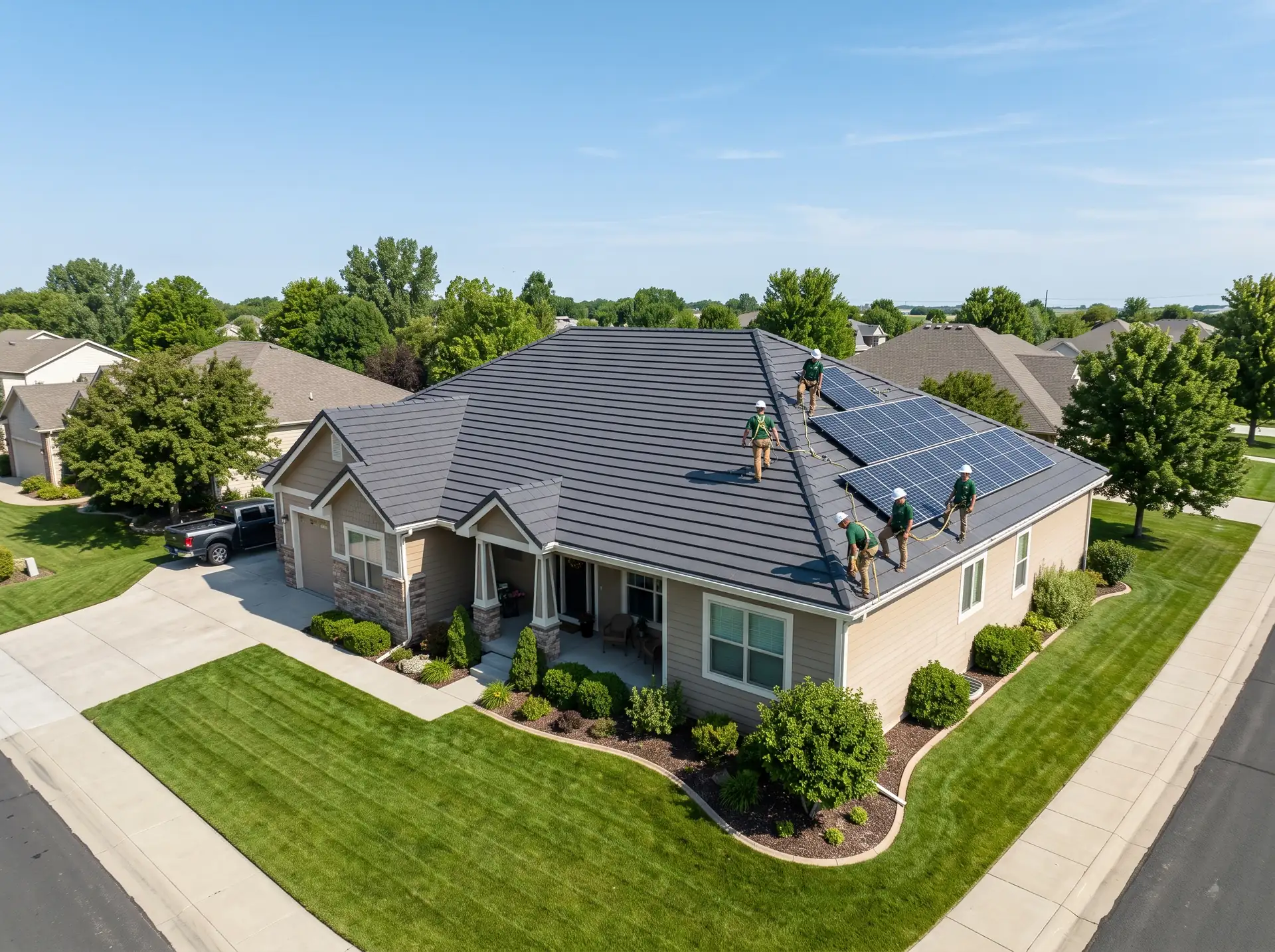
Replace your roof before solar if it will not outlast the panels. The U.S. Department of Energy says solar panels last about 25 to 30 years, "similar to the lifetime of a roof", and that doing both at once avoids having the panels re-installed after a later roof replacement. The California Public Utilities Commission puts it plainly: "If you plan to replace your roof soon, you should replace it before installing a rooftop solar system."
If the roof is newer or clearly has decades left, install the solar now and plan the layout with the roof in mind. If it is not, our roof replacement service does the roof first.
Why the order matters
A rooftop array covers a large part of the roof and is bolted through it. If the roof wears out while the panels still have years of output left, the array has to come off before the roof can be replaced, and go back on afterwards, with permits, inspection and a second round of roof penetrations.
Solar panels are built to keep working for a long time. The DOE puts a home array at about 25 to 30 years. For comparison, it reports a Berkeley Lab survey of utility-scale solar plants in which the average operational lifespan rose to 25 to 35 years by 2025, and a 2012 NREL review of nearly 2,000 field measurements found a median output loss of 0.5% per year. The DOE's 25 to 30 years is the span your roof needs to cover.
Will your roof outlast the panels?
Start with the roof's age and material, then confirm its condition. Published service-life figures give a rough first check:
| Roof | Published service life | Against a 25 to 30 year array |
|---|---|---|
| Asphalt shingles | About 20 years (National Association of Home Builders, 2007) | A shingle roof more than a few years old will likely need replacing under the array |
| Standing-seam metal | 30 to 50+ years (Metal Roofing Alliance) | A newer metal roof can carry an array for its life |
| Clay or concrete tile | Over 50 years for the tile (National Association of Home Builders, 2007) | The tile may last, but the underlayment beneath must be sound; check it before the array goes on |
| Flat or low-slope membrane | Varies widely by membrane and condition | Have the membrane and drainage checked first |
Do not know when the roof was installed? The DOE suggests asking the previous owners or checking with your local government, which "should have a record of when it issued the building permit." Then have the roof inspected: a roof inspection gives you an estimate of remaining life to hold against the panels' 25 to 30 years. On a tile roof, the underlayment is the part to check; see tile roof underlayment replacement.
Replacing the roof first? Our roof replacement service plans the roof around your array: mount locations, flashing and the fire-access pathways. For a longer-lasting base, see standing-seam metal roofing.
What removing and reinstalling panels involves
Taking an array off for a re-roof is its own job with its own permit. Rules are set city by city, but the examples we read all require separate paperwork for the solar:
- City of Thousand Oaks: "Replacing the roof on a building with existing solar panels requires an electrical permit and a roofing permit." The reroof permit is pulled by a C-39 roofing contractor, and the electrical permit to reinstall the same panels in the same place by a B, C-10 or C-46 contractor. Moving or changing the panels needs a solar permit.
- Unincorporated Los Angeles County: "a separate permit for the reinstallation shall be required in addition to the building permit for the reroofing", and "reuse of existing Weeb clips is not permitted" (county Building Code Manual 1512, dated April 1, 2025, based on the 2023 county code).
The California Public Utilities Commission tells solar buyers to ask their provider, before signing, "Roughly how much will it cost to remove and re-install the panels if I need to replace my roof in the future, including inspection fees?" That number is the cost a roof-first plan avoids.
Planning the roof and the array together
If the roof is being replaced before solar, a few decisions made now save work later:
- Fire-access pathways. The 2025 California Residential Code (Section R329.6) requires at least two 36-inch pathways from eave to ridge on separate roof planes, one on the street or driveway side, and a clear setback of 18 inches on both sides of the ridge when the array covers up to 33% of the roof (36 inches above that; in a home with fire sprinklers, the 18-inch setback holds up to 66%). Panels may not sit on the roof below an emergency escape window. The rules do not apply to roofs of 2:12 slope or less, to detached nonhabitable structures, to listed building-integrated systems, or where the fire authority says rooftop operations will not be used.
- Attachments. The code requires roof penetrations for the array to be "flashed and sealed in accordance with Chapter 9", and the roof must carry the array's loads. On standing-seam metal, clamps grip the seams so the array needs no holes in the roof.
- Fire rating. Rooftop panels must have "the same fire classification as the roof assembly". In the fire hazard zones covered by the 2025 Wildland-Urban Interface Code, a re-roof of half or more needs a Class A assembly; see Class A fire-rated roofing.
- Title 24. Rack-mounted panels do not exempt the roof under them from the cool-roof rule; only building-integrated solar is exempt, and only its active area. See cool roof requirements in California.
When you do not need to replace the roof first
- The roof was replaced recently, or an inspection gives it clearly more remaining life than the panels' 25 to 30 years.
- The roof is metal or tile in good condition, with sound underlayment and flashing under tile.
- The array goes on a ground mount, carport or other structure instead of the house roof.
The CPUC also notes that if a roof "is heavily shaded or isn't in great condition", community solar programs could be a better fit than rooftop panels.
Questions to ask your solar provider and your roofer
- Does my roof need to be replaced before the panels go on, and who decides that? (The CPUC lists this question, along with who will do the roof work, their license number and the roof warranty.)
- How will each attachment be flashed, and what stops leaks at the mounts?
- Who will do the roof work if it is needed first, and what is their license number? (Also on the CPUC list.)
- Will the roofer come back after the solar install to check that the roof was not damaged? ENERGY STAR suggests asking exactly that.
- Which permits will be pulled, and by which licensed contractor?
Other questions
Who can remove and reinstall solar panels for a re-roof?
In the two jurisdictions we read, the roof is re-covered by a C-39 roofing contractor and the panels are reinstalled under a separate electrical permit by a C-10 or C-46 contractor (Thousand Oaks also allows a B contractor; Los Angeles County allows an A or B contractor to apply for both trades).
Does installing solar void my roof warranty?
It depends on the roofing manufacturer's and installer's warranty terms. Ask both before the install, and ask the solar company what workmanship warranty covers leaks at the mounts.
Can the roof and solar be done at the same time?
Yes, and the DOE says doing both together can often save money. The roof goes on first, then the array, with the mount locations planned between the roofer and the solar installer.
Questions about your own roof? Call (323) 760-7835 or request an estimate, and see our roof replacement service for what the work involves.
Sources
- U.S. Department of Energy, Replacing Your Roof? It's a Great Time to Add Solar (2021)
- U.S. Department of Energy, End-of-Life Management for Solar Photovoltaics
- U.S. Department of Energy, Homeowner's Guide to Going Solar
- U.S. Department of Energy, Step-by-step guide for consumers going solar
- NREL, Photovoltaic Degradation Rates: An Analytical Review (Jordan and Kurtz)
- California Public Utilities Commission, California Solar Consumer Protection Guide
- ENERGY STAR, Rooftop solar
- 2025 California Residential Code, Chapter 3 (R329 solar energy systems), via UpCodes
- City of Thousand Oaks, Solar PV systems: re-roofing a building that has solar panels
- Los Angeles County Public Works, Building Code Manual 1512: Reroofing on roofs with or without solar (archived copy)
- National Association of Home Builders, Study of Life Expectancy of Home Components (2007, copy)
- Metal Roofing Alliance, FAQs
Sources were read on September 30, 2026. Codes and maps change; check with your building department for the rules in force at your address.