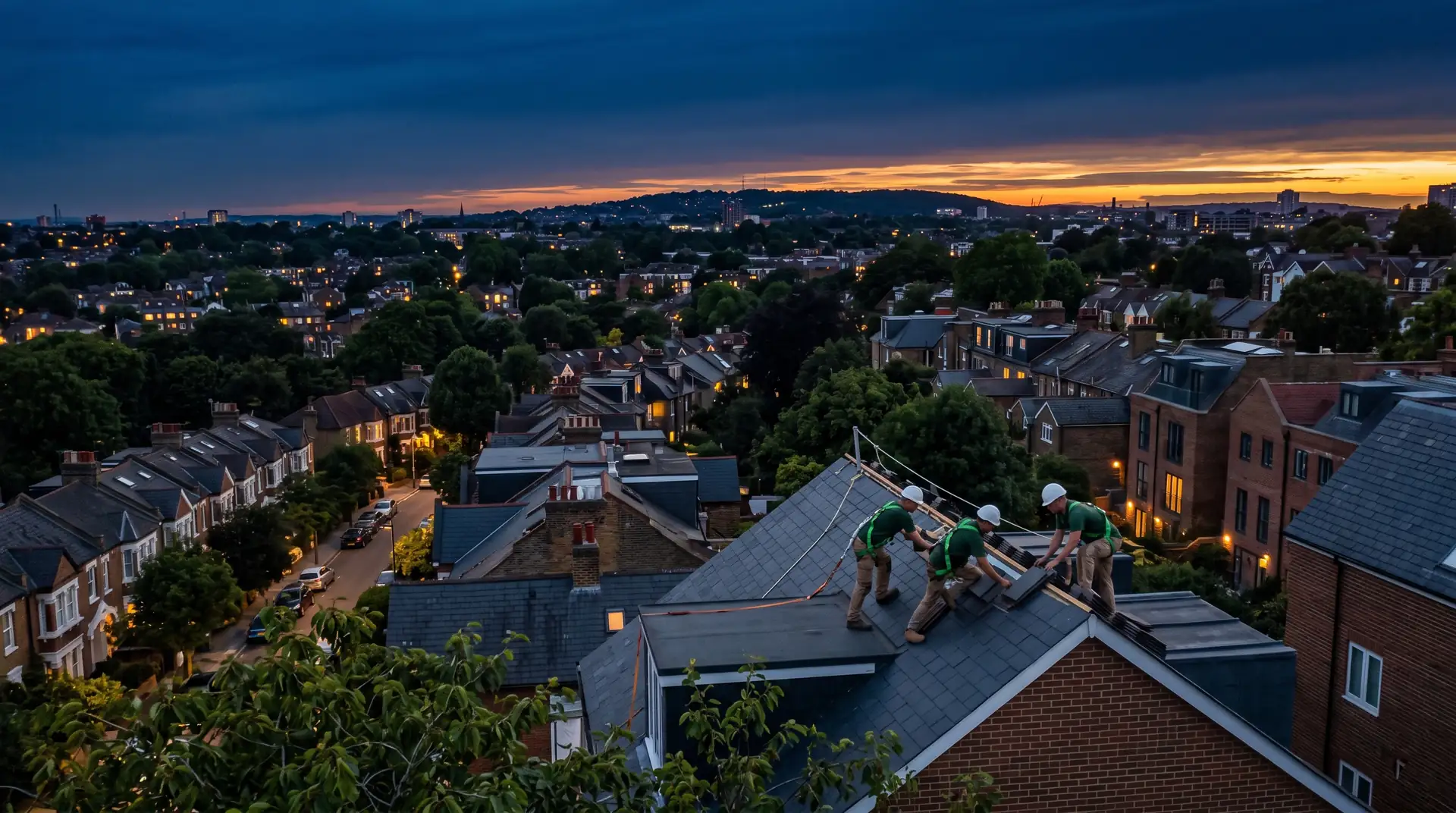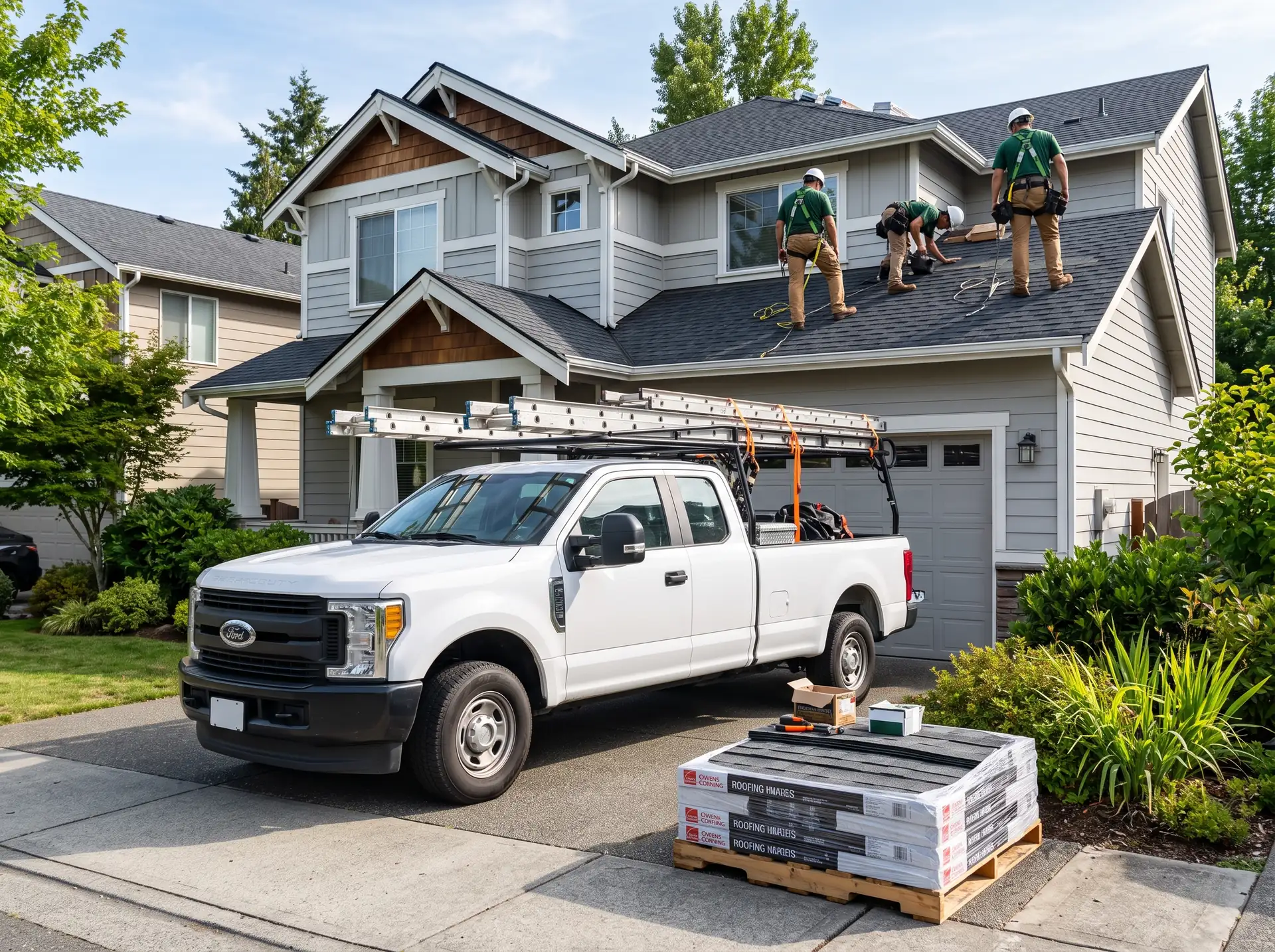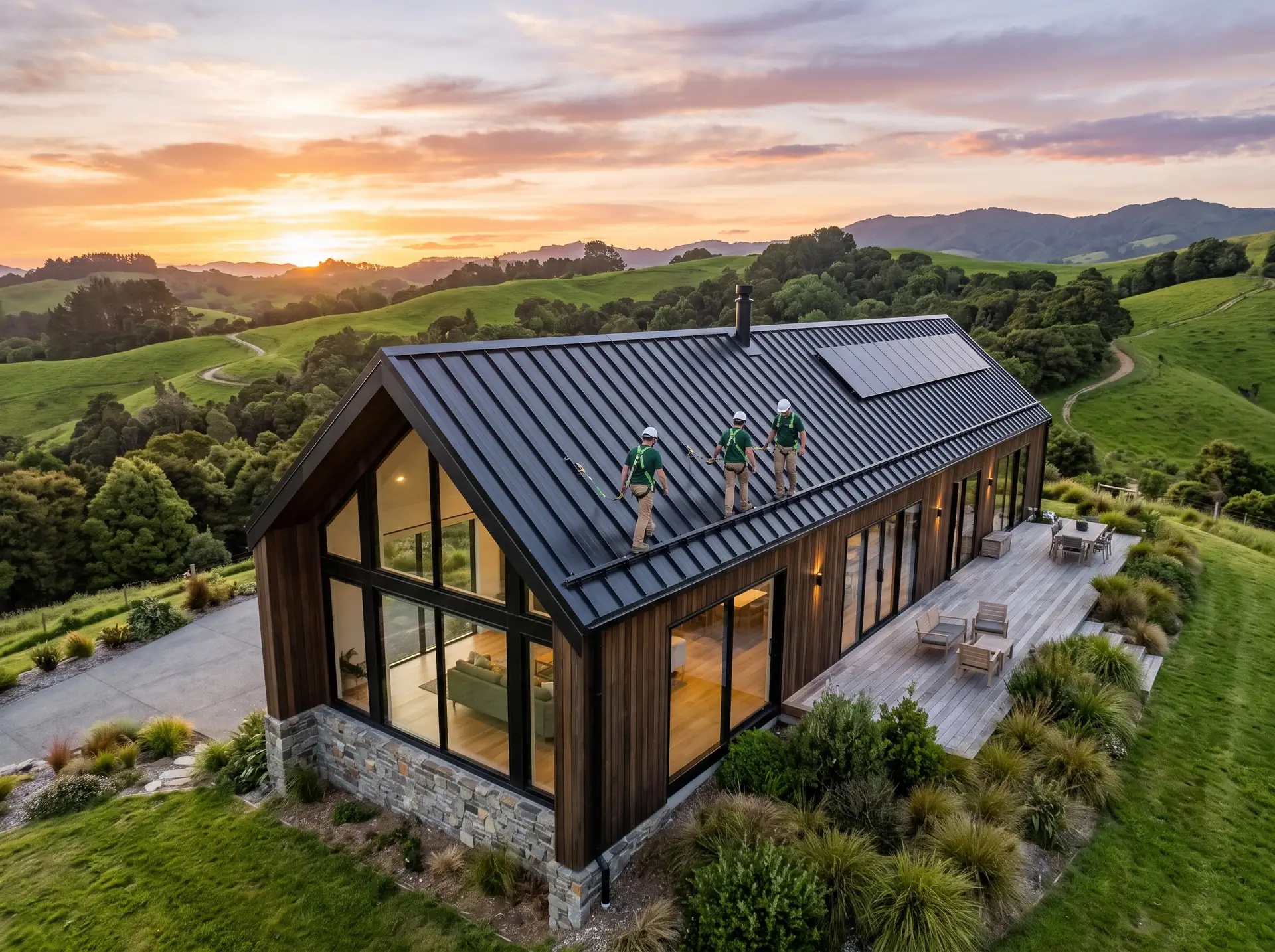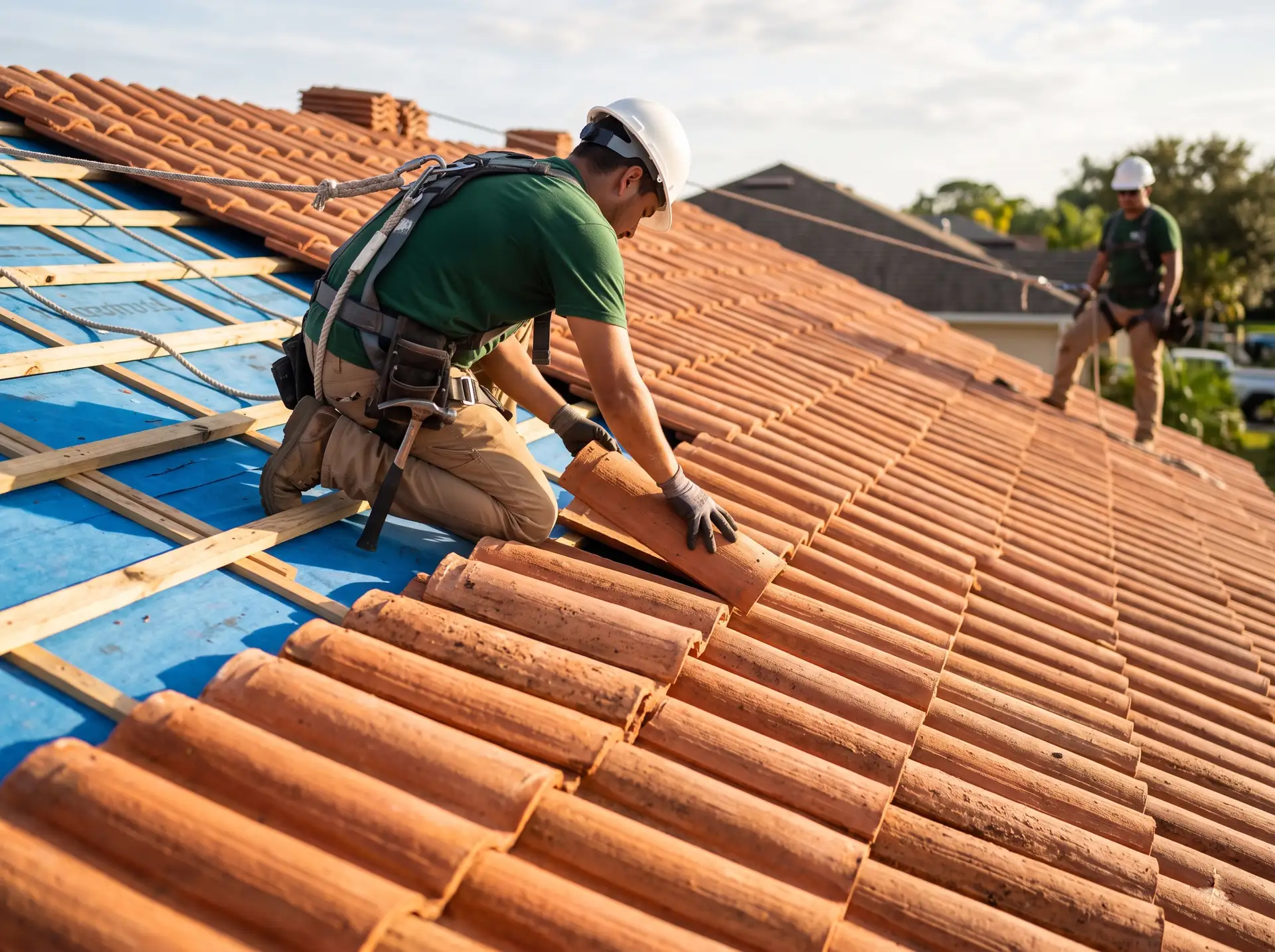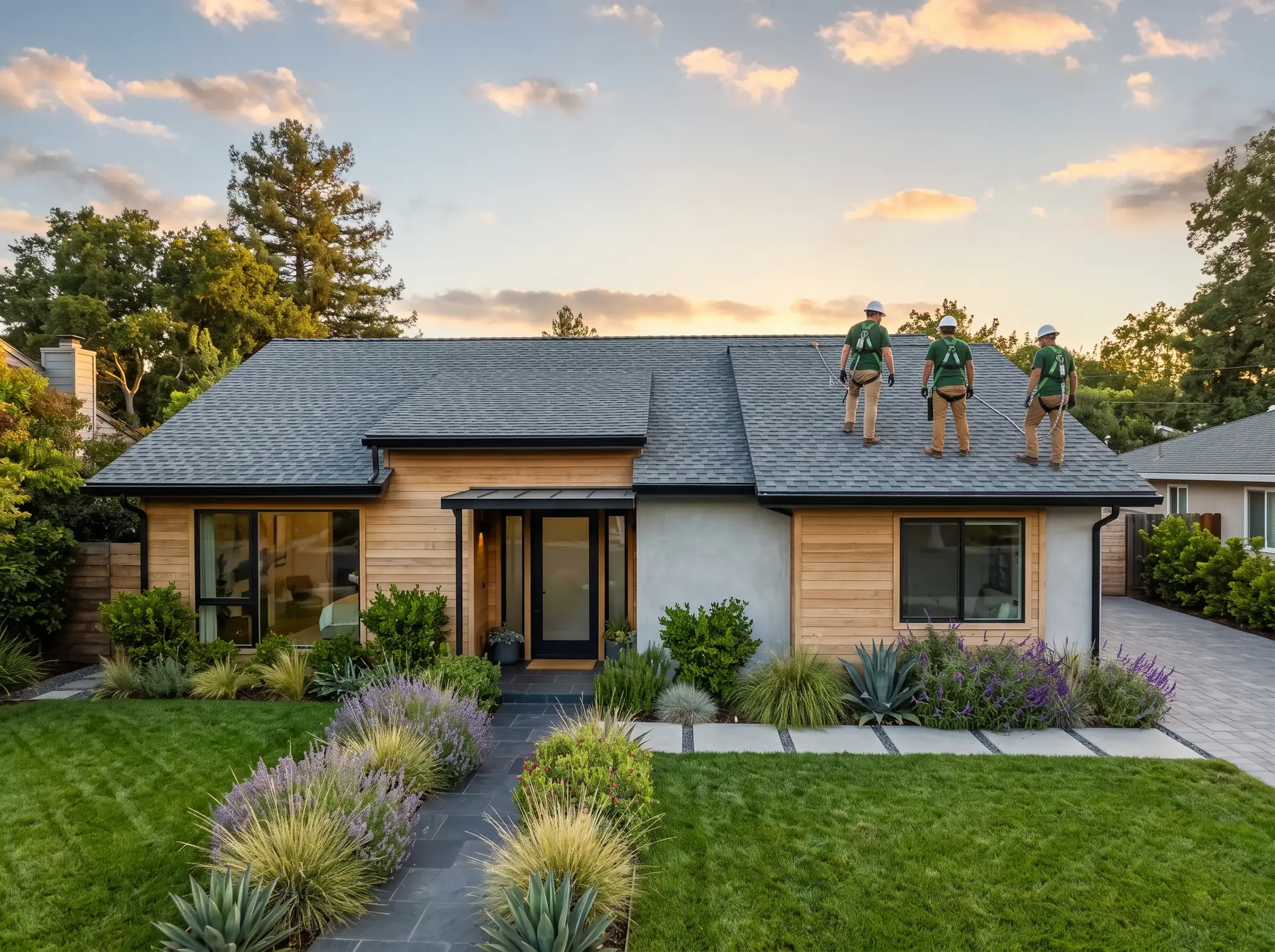
A Class A fire rated roof is a roof assembly rated in the most severe of the three classes of the ASTM E108 / UL 790 fire tests, "effective against severe fire exposure". Most asphalt fiberglass shingle, clay and concrete tile, metal and slate roofs can meet it when installed as a rated assembly; untreated wood shakes cannot.
Since January 1, 2026, California's Wildland-Urban Interface Code requires a Class A roof assembly on new homes and when 50 percent or more of a roof is replaced within 12 months, in state-responsibility fire zones and in local High and Very High Fire Hazard Severity Zones. Elsewhere the minimum is Class C.
What do Class A, B and C mean?
ASTM E108 (the same test as UL 790) exposes a roof covering to flames and burning brands from outside the building: an intermittent flame test, a spread-of-flame test, burning and flying brand tests and a rain test. The result is one of three classes:
| Class | What the standard says it withstands |
|---|---|
| A | "Severe fire exposure", affording "a high degree of fire protection to the roof deck" |
| B | "Moderate fire exposure", a moderate degree of protection |
| C | "Light fire exposure", a light degree of protection |
In every class, the covering must not slip from position and is "not expected to present a flying brand hazard". UL notes that a Class A roof can be used anywhere a Class A, B or C roof is required.
Is it the material or the whole roof that is rated?
The whole roof. UL rates roofing systems as combinations of materials on a stated deck, and the rating depends on the deck, the underlayment and any required layers, not only the visible covering. California's fire code says the same: where an underlayment is part of the rating, it must be "tested as part of the roof assembly" for Class A. The Insurance Institute for Business and Home Safety (IBHS) is blunter about flat roofs: "The membrane alone is not considered Class A, only the tested assembly is."
The code does list a few assemblies that count as Class A without testing: brick, masonry and exposed concrete, and metal, clay or concrete tile and slate, but those only "on noncombustible decks". Most California homes have wood decks, so their tile, metal or shingle roof is Class A because it is installed as a listed, tested assembly. That is why the installation matters as much as the product.
State law also requires the installer to "provide certification of the roof covering classification" to the owner (Health and Safety Code 13132.7). Keep it with your house papers; insurers and buyers ask.
Re-roofing in a fire hazard zone? Our roof replacement service covers it; ask for the Class A listing of the proposed assembly, and keep the classification certificate the installer must give you.
Which roofing materials can be Class A?
| Roofing | Class A? | Notes |
|---|---|---|
| Asphalt fiberglass shingles | Most assemblies, yes | The Asphalt Roofing Manufacturers Association says most asphalt shingle roof assemblies are Class A |
| Clay and concrete tile | Yes, as a rated assembly | Where the fire code applies, the air space under profiled tile on a wood deck needs a 72-lb cap sheet, an inch of noncombustible material, or a Class A-tested underlayment, plus eave closures |
| Metal shingles and panels | Most, yes, as a tested assembly | The Metal Roofing Alliance says most metal roofing carries a Class A rating |
| Slate | Yes | Listed as Class A over the specified underlayment even on a wood deck |
| Wood shakes and shingles | Untreated, no | Wood roofing may be sold only if State Fire Marshal-listed and weathering-tested; the City of Los Angeles bans it citywide |
| Single-ply and other flat roof membranes | Only as a tested assembly | The rating depends on the cover board, insulation and deck below |
When does California require a Class A roof?
The rules moved on January 1, 2026. Wildfire construction rules that used to sit in Chapter 7A of the Building Code and Section R337 of the Residential Code now live in Part 7 of Title 24, the California Wildland-Urban Interface Code. It applies in all State Responsibility Area fire zones, in local High and Very High Fire Hazard Severity Zones, and in areas a city designates.
| Where the house is | Minimum roof | Source |
|---|---|---|
| State Responsibility Area fire zone, or local High or Very High zone | Class A roof assembly on new homes and on re-roofs of 50% or more within 12 months; any repair portion at least Class A | Wildland-Urban Interface Code 504.2 and 507.1 |
| Very High zone (state law floor) | Class A when more than 50% of the roof is replaced within one year | Health and Safety Code 13132.7(d) |
| Outside fire hazard zones and WUI areas | At least Class C | Residential Code R902.1.2 |
Some Southern California cities are stricter. The City of Los Angeles bans wood shake and wood shingle roofs anywhere in the city, and the City of Pasadena bans wood roofing in its Very High, High and Moderate zones (see roofing in Pasadena). The City of Santa Barbara requires Class A or noncombustible roof coverings on existing buildings and repairs in its High Fire Hazard Area (see roofing in Santa Barbara).
How do you find your fire hazard zone?
- Enter your address in the Office of the State Fire Marshal's Fire Hazard Severity Zones viewer. The State Responsibility Area maps took effect April 1, 2024.
- Local Responsibility Area maps were reissued in 2025 in four phases. Los Angeles County's were issued March 24, 2025; Ventura and Santa Barbara counties' on March 10, 2025.
- Local agencies then adopt them, and "shall not decrease" the zones the state recommends, though they may add to them. The Ventura County Fire Protection District adopted its maps by ordinance effective July 1, 2025; Fillmore, Oxnard and Ventura adopt their own.
- If a parcel falls in two zones, Ventura County Fire applies "the highest FHSZ" to the whole parcel. Ask your city or county which map and zone apply to your address.
The State Fire Marshal notes the maps show "hazard," not "risk": the physical conditions over a 30 to 50 year period, without counting home hardening or recent fires.
Eaves, valleys, vents and gutters: the rest of a fire-safe roof
A Class A covering can still let fire in at its edges. In the zones where it applies, the 2025 Wildland-Urban Interface Code sets rules for the parts around it:
- Air spaces under the covering. Where a profiled covering such as barrel tile leaves an air space over a wood deck, the code asks for a 72-lb mineral-surfaced cap sheet on the deck, an inch of noncombustible material, or a listed underlayment tested as part of a Class A assembly (504.2.1). IBHS adds noncombustible bird stops at the eave ends of barrel tile and corrugated roofs.
- Valleys. Valley flashing of at least 26-gauge corrosion-resistant metal over a 36-inch-wide, 72-lb cap sheet running the full length of the valley (504.2.2). Valleys collect leaves, which IBHS notes are "particularly susceptible to ignition from embers".
- Gutters. Noncombustible gutters and downspouts, with "an approved means to prevent the accumulation of leaves and debris" (504.4).
- Vents. Attic and roof vents listed by the State Fire Marshal as flame and ember resistant, or tested to ASTM E2886 (504.10). CAL FIRE's home hardening advice is 1/16 to 1/8 inch noncombustible, corrosion-resistant metal mesh over vents.
- Skylights. Operable skylights need a noncombustible mesh screen with openings no larger than 1/8 inch (504.8.2).
Why the roof matters in a wildfire
CAL FIRE puts it directly: "The roof is the most vulnerable part of your home." It adds that embers can ignite homes "up to a mile away", and a roof is a large surface where they land and collect. IBHS, citing a 1981 study of the 1961 Bel Air Fire in Southern California, reports that 50% of homes with wood roofs within 30 feet of burning vegetation ignited, against 24% of homes with fire-resistant roofs.
IBHS's conclusion: "To minimize the threat of direct ignition by embers, a properly maintained Class A roof is required." It also notes that roof valleys collect organic debris, which is "particularly susceptible to ignition from embers", so keeping valleys and gutters clear is part of the maintenance.
Does a Class A roof lower insurance premiums?
Yes, it can. The Department of Insurance's "Safer from Wildfires" program says "Every action under Safer from Wildfires will qualify you for an insurance discount." Under its regulation (10 CCR 2644.9, effective October 14, 2022), insurers' rating plans must take into account building hardening measures, starting with a "Class-A Fire Rated Roof", along with enclosed eaves, fire-resistant vents, upgraded windows and six inches of noncombustible clearance at the base of the walls. The program says "most roofs qualify including asphalt shingles, concrete, brick, or masonry tiles, and metal shingles or sheets", and that wood shakes are not Class A.
The California FAIR Plan's home hardening discounts, effective August 23, 2023, require a Class A roof together with its other listed measures for the structural discount. No source sets a fixed discount amount; ask your insurer or broker what applies to your policy.
What about Zone 0?
Zone 0 is a separate rule about the first five feet around a house, not the roof. The Board of Forestry and Fire Protection's page says its Zone 0 regulations are still in final review with the Office of Administrative Law, so there is no effective date yet.
Other questions
Are asphalt shingles Class A?
Most asphalt fiberglass shingle assemblies are, according to the Asphalt Roofing Manufacturers Association, and many product data sheets list ASTM E108 / UL 790 Class A. Check the listing of the exact product and underlayment in your proposal.
My roof is not Class A. Do I have to replace it now?
No. The code applies when the roof is replaced or repaired: in the zones covered, replacing 50 percent or more within 12 months brings the whole roof to the new-construction Class A rule, and any repaired portion must be at least Class A.
Can I keep my wood shake roof?
It depends on your city and zone. State law bans the sale of wood roofing that is not State Fire Marshal-listed, some cities ban wood roofs outright, and in fire zones a re-roof or repair must be Class A. A fire-retardant-treated shake system can reach Class A only as a listed assembly.
How do I prove my roof is Class A?
Ask the installer for the roof covering classification certificate, which state law requires them to provide, along with the product and underlayment listing. Your permit and final inspection record the work.
Questions about your own roof? Call (323) 760-7835 or request an estimate, and see our roof replacement service for what the work involves.
Sources
- ASTM E108-25, Standard Test Methods for Fire Tests of Roof Coverings (scope)
- UL, Roof ratings for code authorities (UL 790)
- 2025 California Wildland-Urban Interface Code, Chapter 1 (application), via UpCodes
- 2025 California Wildland-Urban Interface Code, Chapter 5 (504, 507), via UpCodes
- 2025 California Residential Code, Chapter 9 (R902), via UpCodes
- California Health and Safety Code 13132.7
- Office of the State Fire Marshal, Fire Hazard Severity Zones
- Ventura County Fire Department, Fire Hazard Severity Zone map update
- City of La Canada Flintridge, 2025 LRA Fire Hazard Severity Zone maps for Los Angeles County
- CAL FIRE, Ready for Wildfire: hardening your home
- IBHS, Wildland Fire Embers and Flames: Home Mitigations That Matter (2023)
- IBHS, Wildfire Prepared Home Technical Standard (December 2025)
- California Department of Insurance, Safer from Wildfires
- California FAIR Plan, Home hardening discounts
- Board of Forestry and Fire Protection, Defensible space Zones 0, 1 and 2
- Los Angeles Municipal Code 91.1505.1 (no wood shake or wood shingle roofs in the city)
- Pasadena Municipal Code 14.04.050 (roof classification and wood roofing in fire hazard zones)
- City of Santa Barbara, Construction Codes Local Amendments (Ordinance 6093)
- Asphalt Roofing Manufacturers Association, A simple guide to your asphalt shingle roofing system
- Metal Roofing Alliance, Metal roofing and California wildfires
Sources were read on September 30, 2026, with local rules added on October 1, 2026. Codes and maps change; check with your building department for the rules in force at your address.