Flat roof repair from Global Green Roofing fixes leaks, open seams, blisters, splits and failed flashing on flat and low-slope roofs in Los Angeles. Water travels under a flat membrane before it drips, so we find where it enters, check whether the insulation below is wet, and repair the membrane type you have, then tell you straight whether repair or replacement is the better spend.
 Flat Roof Repair
Common flat roof problems, and what each means
| What you see | What it usually means | Typical repair |
|---|---|---|
| Water standing days after rain | Low spots, blocked drains or a sagging deck | Clear drains; add tapered insulation or a cricket; repair the deck if it sags |
| Blisters (bubbles) in the membrane | Trapped moisture or air between layers | Cut out and patch if broken or growing; monitor if small and intact |
| Open or lifting seams | Failed weld or adhesive, often at laps and corners | Clean, re-weld or re-adhere, and cover with a patch |
| Cracks and splits | Aged, brittle membrane or movement in the deck | Patch locally; widespread cracking points to replacement |
| Leak at a wall, curb or skylight | Failed flashing where the membrane turns up | New flashing and termination bar, sealed and counter-flashed |
Low slope roof repair: finding the leak
On a flat roof, water can enter at a seam and run along the deck or through the insulation before it shows up on a ceiling several feet away. We look for the entry point, not only the drip:
- Check every seam, penetration, drain and wall flashing upslope of the stain.
- Look for soft spots underfoot, which point to wet insulation below.
- Where needed, make a small test cut to see whether the insulation is wet, then seal it.
- Photograph the cause so the repair addresses it, and so you see it.
TPO roof repair
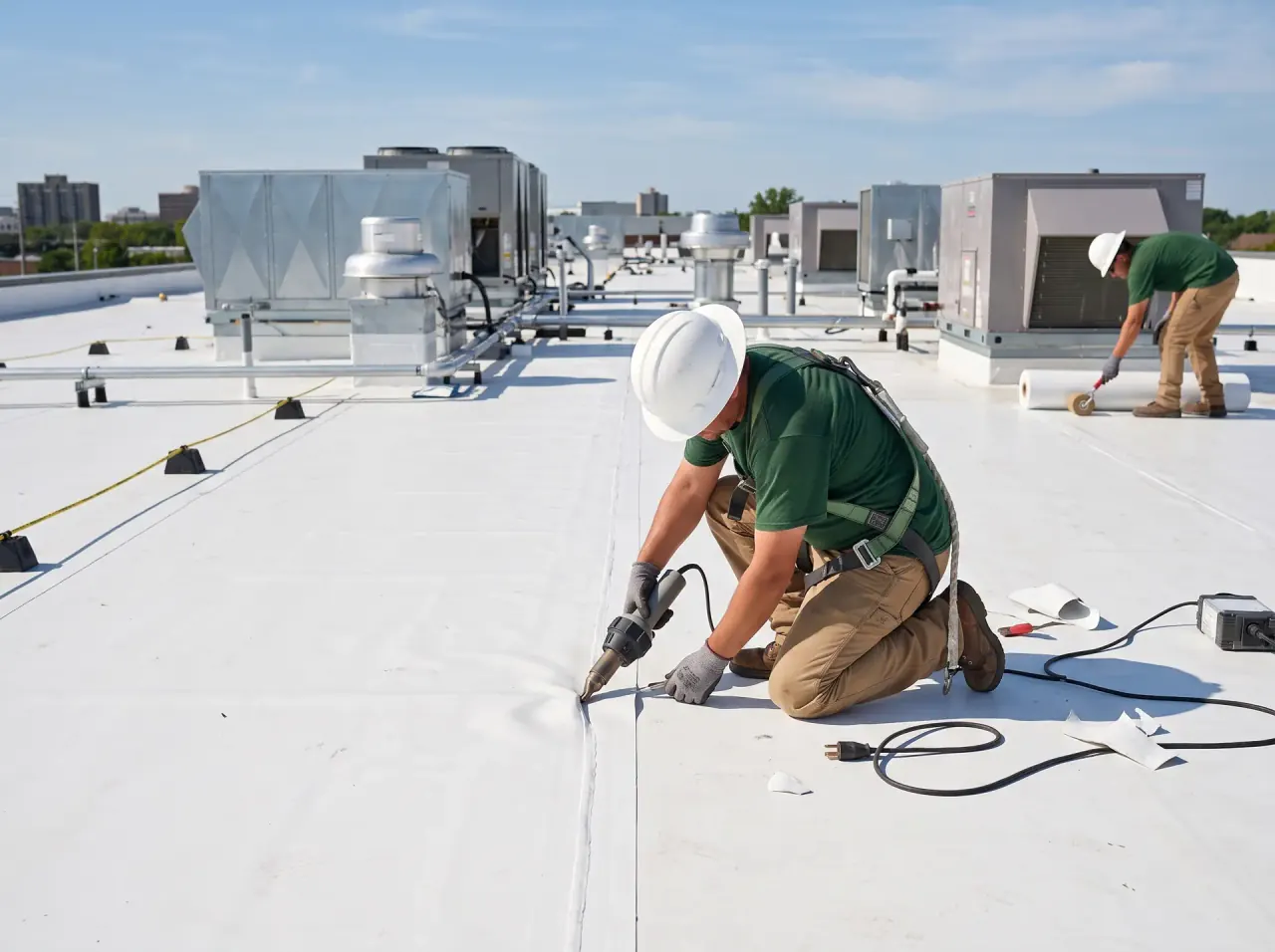
A TPO roof repair is a heat-welded patch, not glue or tape. The area is cleaned and prepared, then a TPO patch is welded over the damage. Old, weathered TPO needs careful cleaning before a new weld will hold, and where the sheet has gone brittle across the roof, patches stop holding and the membrane is due for replacement.
 Flat Roofing
Most TPO leaks are at seams, at flashing where the membrane turns up a wall or curb, and around drains and penetrations, so those are checked first.
How repairs differ on other membranes
Modified bitumen and torch-down repairs
Damaged cap sheet is cut out and a new piece fused or adhered over it, lapped onto sound material, with the granule surface matched where it is visible.
Built-up roof repairs
Gravel is cleared from the area, the damaged plies are cut back and new plies built up and sealed, then the surface is restored.
Roofs that were coated
Failed coating is cleared from the damaged area so the membrane underneath can be seen and repaired; a coating only holds on a sound, dry roof, so the repair comes first.
Fixing ponding water
Ponding is what the roofing industry's 48-hour benchmark is meant to catch, and patching the membrane does not stop it. Unblocking drains and scuppers fixes some roofs. Others need tapered insulation or a cricket to push water to the drain, or a sagging section of deck repaired. We explain which applies to your roof and what it involves before any work.
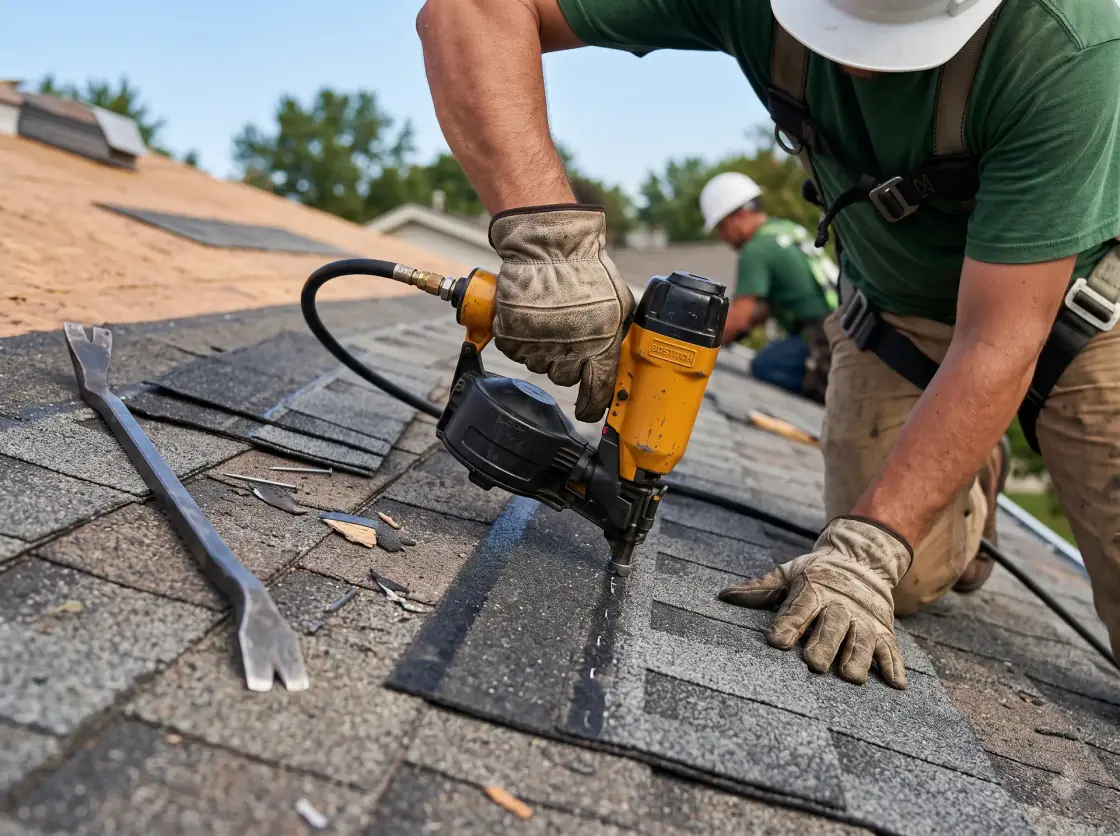 Roof Repair
Repair, recover or replace?
There are three honest answers for a flat roof, and the condition of the insulation usually decides between them:
| Option | When it fits |
|---|---|
| Repair | Damage is local; the membrane is otherwise flexible and well attached; the insulation is dry |
| Recover | The roof is sound and dry but aging; one existing layer only; the code allows it |
| Replacement | Widespread splits or seam failure, wet insulation, two layers already, or repeated leaks after repairs |
If replacement is the answer, the flat roofing page covers TPO and the other systems, and cool roofing explains the reflective surface a new low-slope roof usually needs in California.
Not sure what your roof needs? Call (323) 760-7835 or request an estimate: we look at the roof, photograph what we find and send a written proposal.
How flat roof repair works with us
Tell us what you see
A stain, a drip after rain, ponding or a visible split.
Roof survey
Seams, flashing, drains and soft spots; the entry point found and photographed.
Written scope
The repair and what it fixes, or a straight answer if the roof needs replacing.
The repair
Membrane-matched patches, new flashing or drainage fixes, and a check after rain where possible.
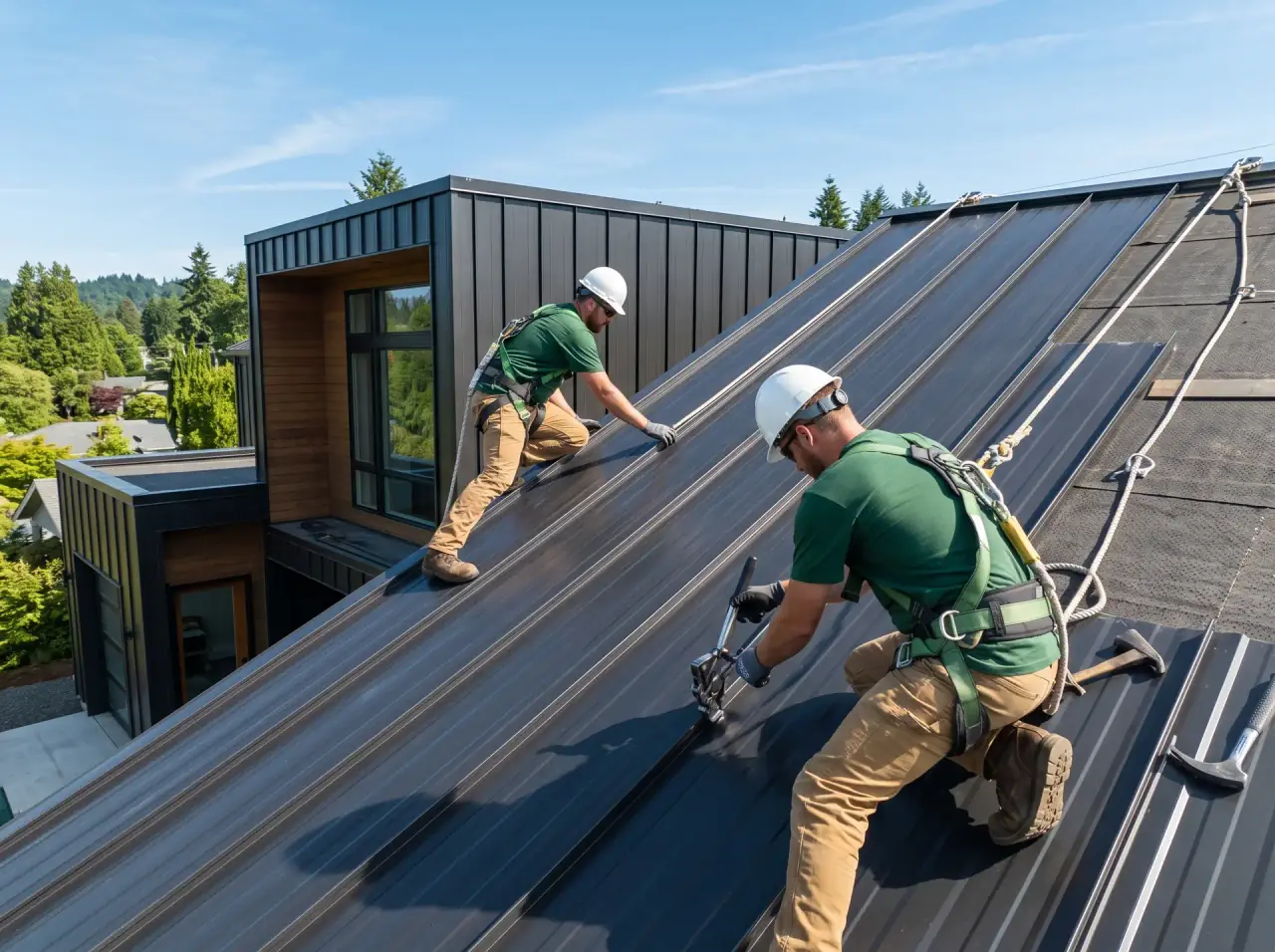 Metal Roofing
Flat Roof Repair questions
Can a flat roof be repaired in wet weather?
A temporary seal can be applied to stop water, but welded and adhered repairs need a clean, dry surface to bond, so the permanent repair waits for dry weather.
What are the flat roof repair solutions for a leak?
It depends on the membrane and the cause: a heat-welded patch on TPO, a new piece of cap sheet fused or adhered on modified bitumen, new plies on a built-up roof, and for ponding, added drains, crickets or tapered insulation. A coating is not a repair on its own.
Where do you repair flat roofs?
Across Los Angeles, Ventura and Santa Barbara Counties: flat and low-slope roofs on homes and commercial buildings. If you searched for flat roof repair near me in that area, we cover it. Call (323) 760-7835 or send the form, and we will find the leak and show you photos before we quote the repair.
Should small blisters be cut open?
Not always. A small, intact blister that is not growing is often left and watched. A broken, soft or growing blister is cut out and patched.
In Long Beach, for example, the permit exemption stops at 100 square feet of roof repair in 12 months, so a flat roof repair that grows once the membrane is opened can become a permitted job. Other cities are on our service areas page.