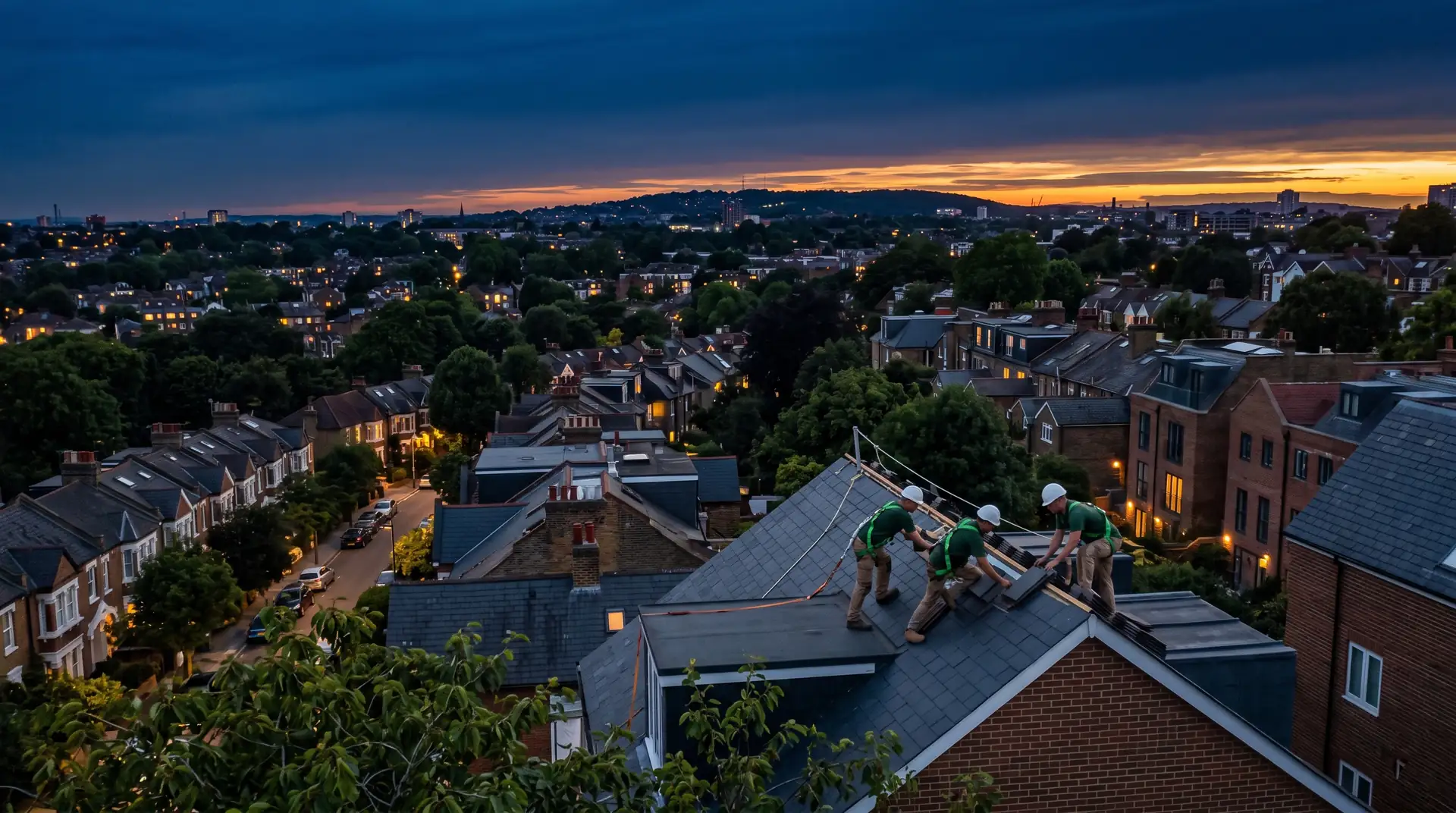
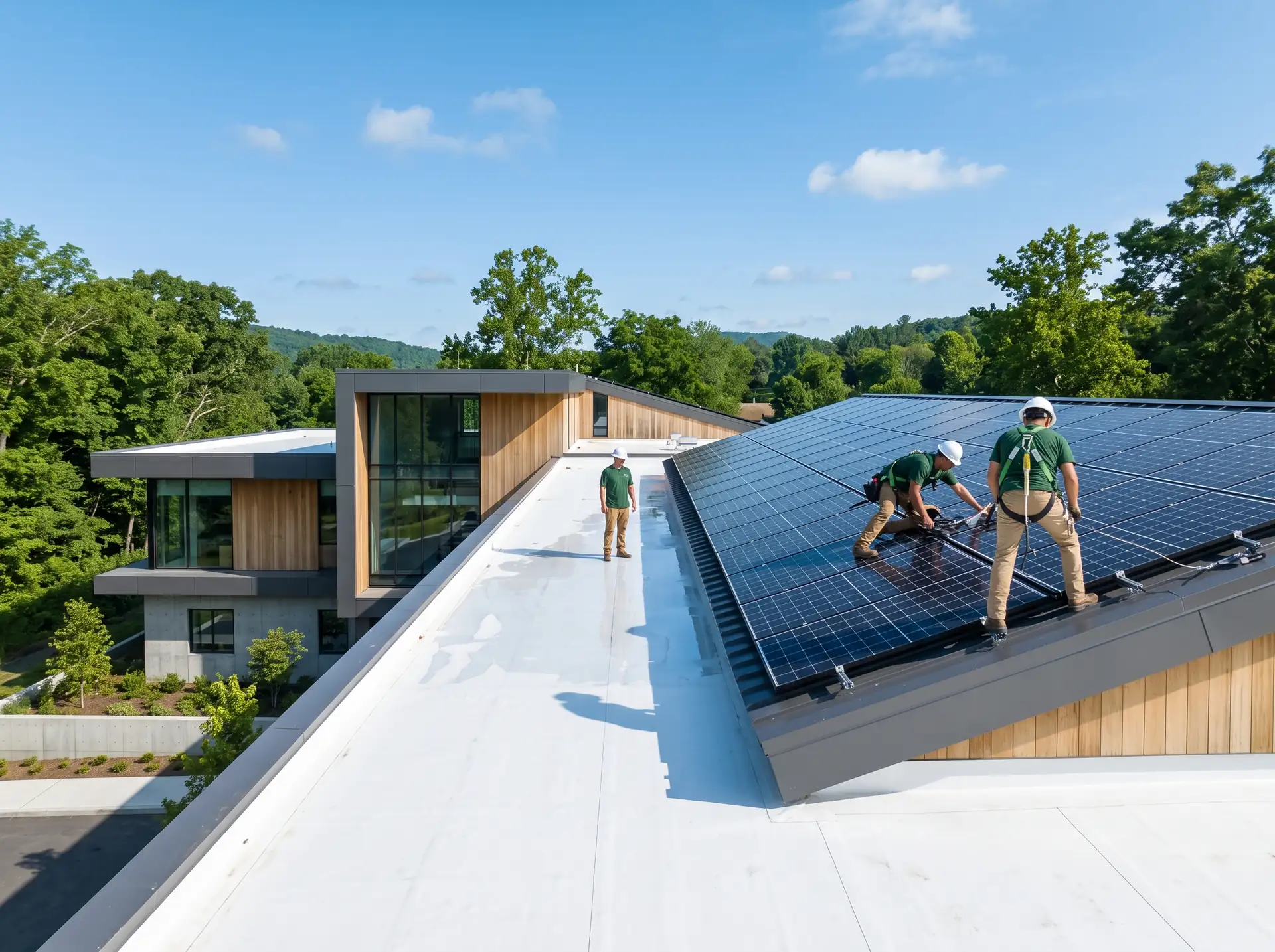
Commercial roofing at Global Green Roofing covers the roofs of commercial buildings in Los Angeles: new TPO and other low-slope membranes, repairs to the roof you have, and the drainage under it. Every job starts with an on-site look and ends in a written proposal, so the building owner knows the scope before any work is booked.
 Commercial Roofing
Roof systems for commercial buildings
Most commercial roofs are low-slope, so the roof is a continuous membrane rather than shingles or tile. The system is chosen for the building: how the roof drains, what sits on it, how much foot traffic it gets, and how much heat it should keep out of the space below.
TPO membranes
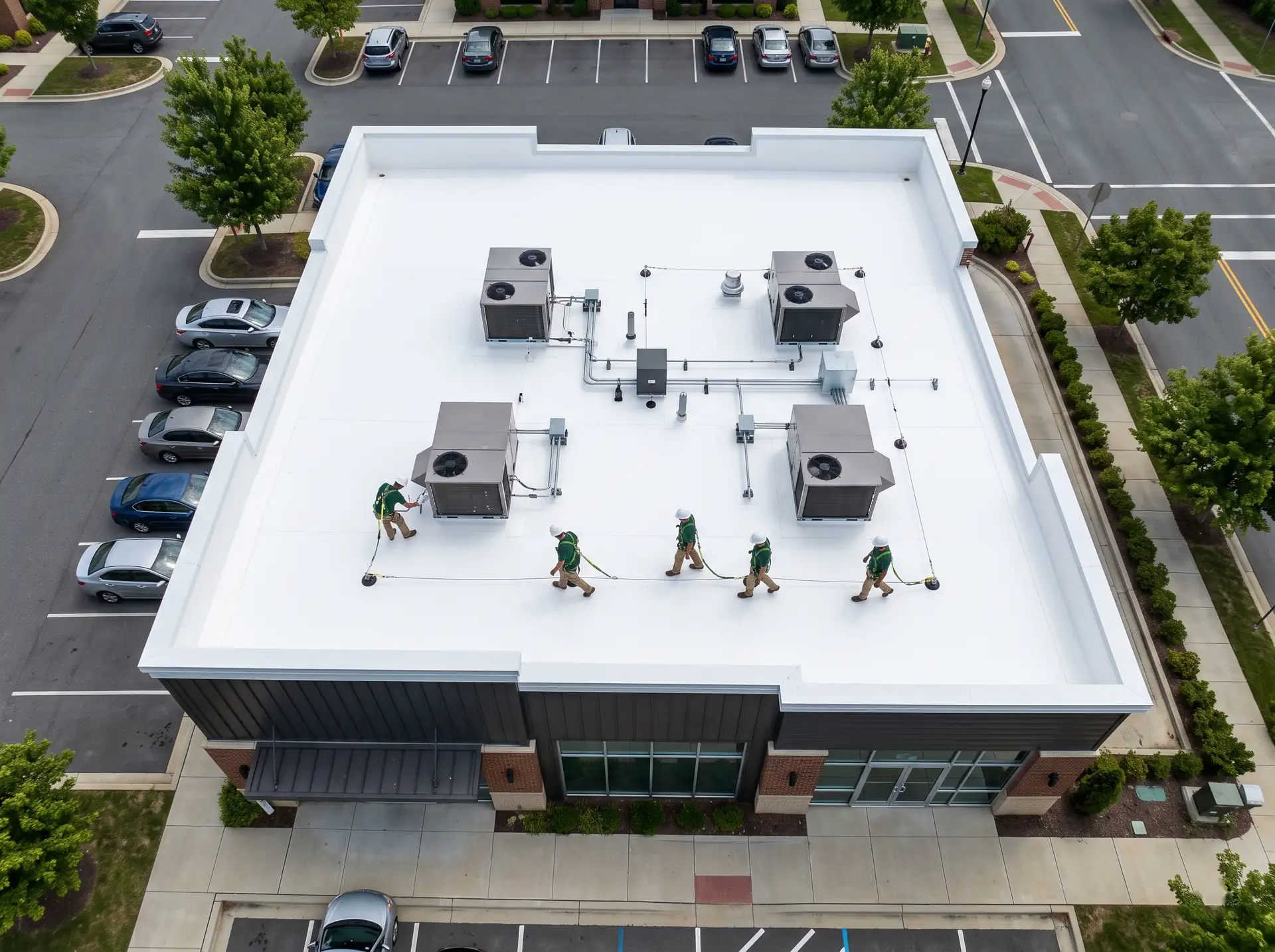
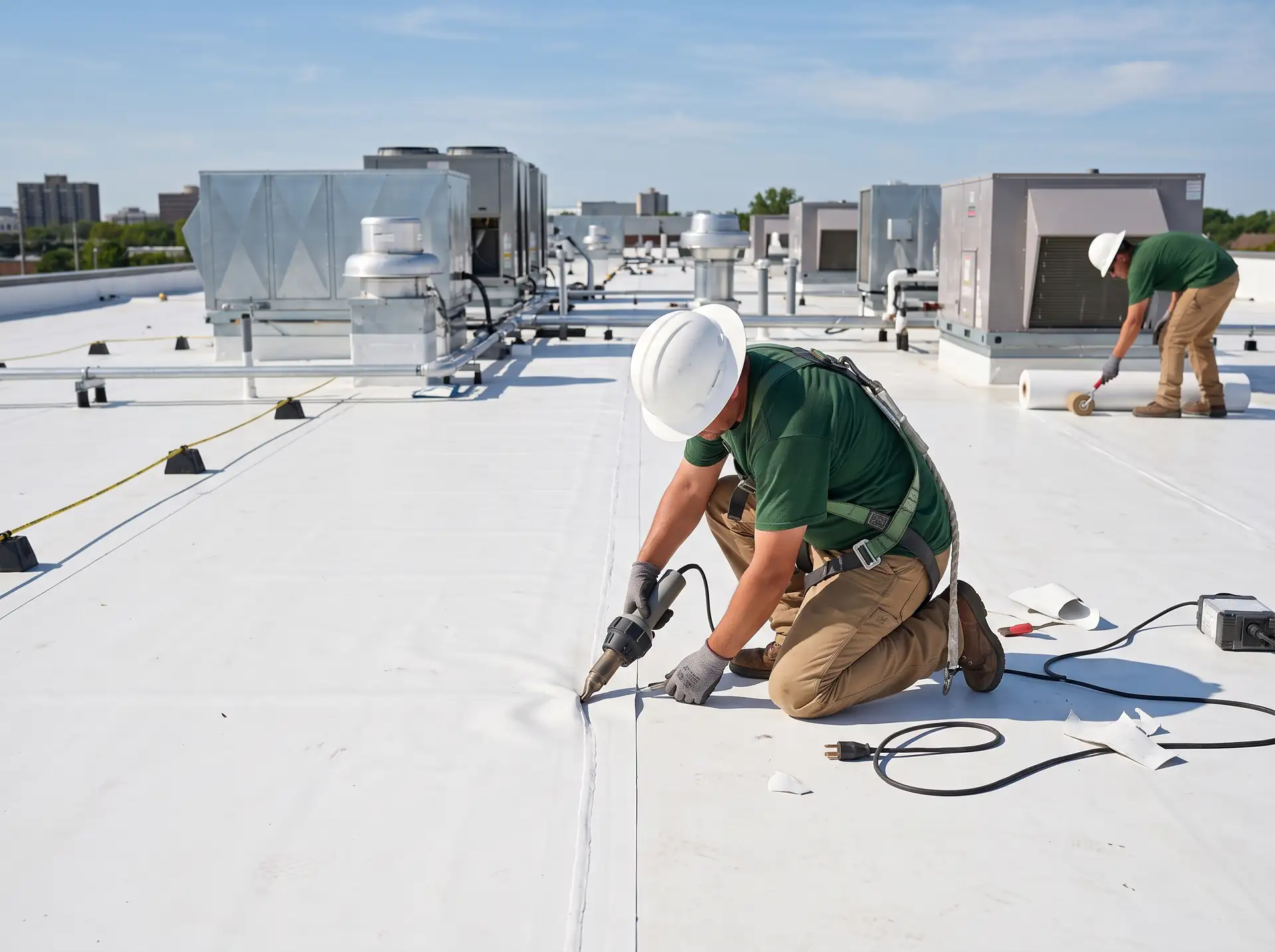
A single-ply sheet with heat-welded seams, usually white or light, which suits the reflectance the energy code asks for on low-slope roofs.
Modified bitumen and built-up roofs already on the building
Many existing commercial roofs are multi-layer systems with a cap sheet or gravel surface. A repair matches the system that is there; a replacement may move to a membrane that suits the building better.
Steep-slope sections
Mansards, entries and mixed-use buildings often carry pitched sections in shingle, tile or metal. Those go in the same proposal, with the right covering for each part.
For the details of each membrane, see flat roofing; for leaks on the roof you already have, flat roof repair. Homes are covered on our roofing contractor in Los Angeles page.
Commercial roof repair
A commercial roof repair starts with finding where the water gets in, which on a low-slope roof is rarely right above the stain. Seams, flashing where the membrane turns up a wall or curb, drains, and the penetrations for rooftop equipment are checked first, and small test cuts show whether the insulation under the membrane is wet; each cut is sealed again.
The repair matches the membrane: a welded patch on TPO, new cap sheet on modified bitumen, new plies on a built-up roof. When the insulation is wet across large areas, a repair only buys time, and the proposal says so.
 Flat Roofing
Drainage, ponding and roof access
Water that stays on a flat roof finds every weak seam. The National Roofing Contractors Association guidance, as quoted by the Florida Roofing and Sheet Metal Contractors Association, is that a roof should have no ponding water 48 hours after rain. Before a new membrane goes on, the drainage is planned: tapered insulation to move water toward the drains, crickets behind rooftop units and walls, and drain changes where water collects.
Rooftop equipment matters too: every curb and penetration is a flashing detail to check, and the paths service technicians walk to the units are worth planning for when the membrane is chosen.
Title 24 cool roof rules on nonresidential re-roofs
California's energy code has its own re-roof rule for nonresidential buildings (Section 141.0(b)2B of the 2025 Building Energy Efficiency Standards). It applies when more than 50 percent of the roof area, or more than 2,000 square feet of roof, whichever is less, is replaced, recovered or recoated. The values of Section 140.3(a)1A then apply:
- Low-sloped roofs, climate zones 1 to 16: an aged solar reflectance of at least 0.63 and a thermal emittance of at least 0.75, or an SRI of at least 75.
- Steep-sloped roofs, climate zones 2 and 4 to 16: an aged solar reflectance of at least 0.25 and a thermal emittance of at least 0.80, or an SRI of at least 23 (zones 1 and 3 have lower values).
- Exceptions: roof constructions of at least 25 pounds per square foot, building-integrated solar, and a trade-off with added insulation for low-slope roofs below 0.63.
Products count only with a Cool Roof Rating Council rating. The rules for homes are different; our guide to cool roof requirements in California covers them.
Not sure what your roof needs? Call (323) 760-7835 or request an estimate: we look at the roof, photograph what we find and send a written proposal.
Flat Roof RepairPlanning work around tenants and operations
A commercial re-roof happens over people who keep working. These are the questions to settle before the first day, and the written proposal is where the answers belong:
- Which areas of the roof are opened each day, and how they are closed again at the end of it
- Access for crews and materials without blocking entrances, parking or deliveries
- Rooftop equipment that has to be disconnected or lifted, and who coordinates with the mechanical contractor
- Noise and odor from the work, and the hours tenants should be told about
- Where the city requires a permit, that it is in place before work starts, and when the inspections are
How commercial roofing works with us
Roof walk and history
The roof, its drains and equipment, and where the leaks have been.
Test cuts and photos
Small sealed cuts to check the insulation, and photos of what we find.
Written proposal
Repair or replacement, the system, the drainage plan and the order of work.
The work
Sections opened and closed in order, daily cleanup and a final walkthrough.
Commercial Roofing questions
Do you do commercial roof repair as well as replacement?
Yes. Much of the work on commercial roofs is repair: seams, flashing, drains and the penetrations for rooftop equipment. A replacement is proposed when the membrane or the insulation under it has failed across large areas.
Which buildings do you work on?
Commercial buildings with low-slope roofs across Los Angeles, Ventura and Santa Barbara Counties, including the pitched sections many of them have.
Does a commercial re-roof need a cool roof in California?
It depends on how much of the roof is replaced. Once more than 50 percent of the roof, or more than 2,000 square feet, whichever is less, is replaced, Title 24 sets cool-roof values for a nonresidential re-roof: on low-sloped roofs in every climate zone, on steep-sloped roofs in zones 2 and 4 to 16 (lower values in zones 1 and 3), with exceptions for heavy roofs of 25 pounds per square foot or more, building-integrated solar and an insulation trade-off on low-slope roofs.
How do I get a commercial roofing estimate?
Call (323) 760-7835 or send the form. We look at the roof on site and send a written proposal; we do not publish prices.
Each city on our service areas page lists its building permit office; ask that office which permit a commercial re-roof needs at your address.