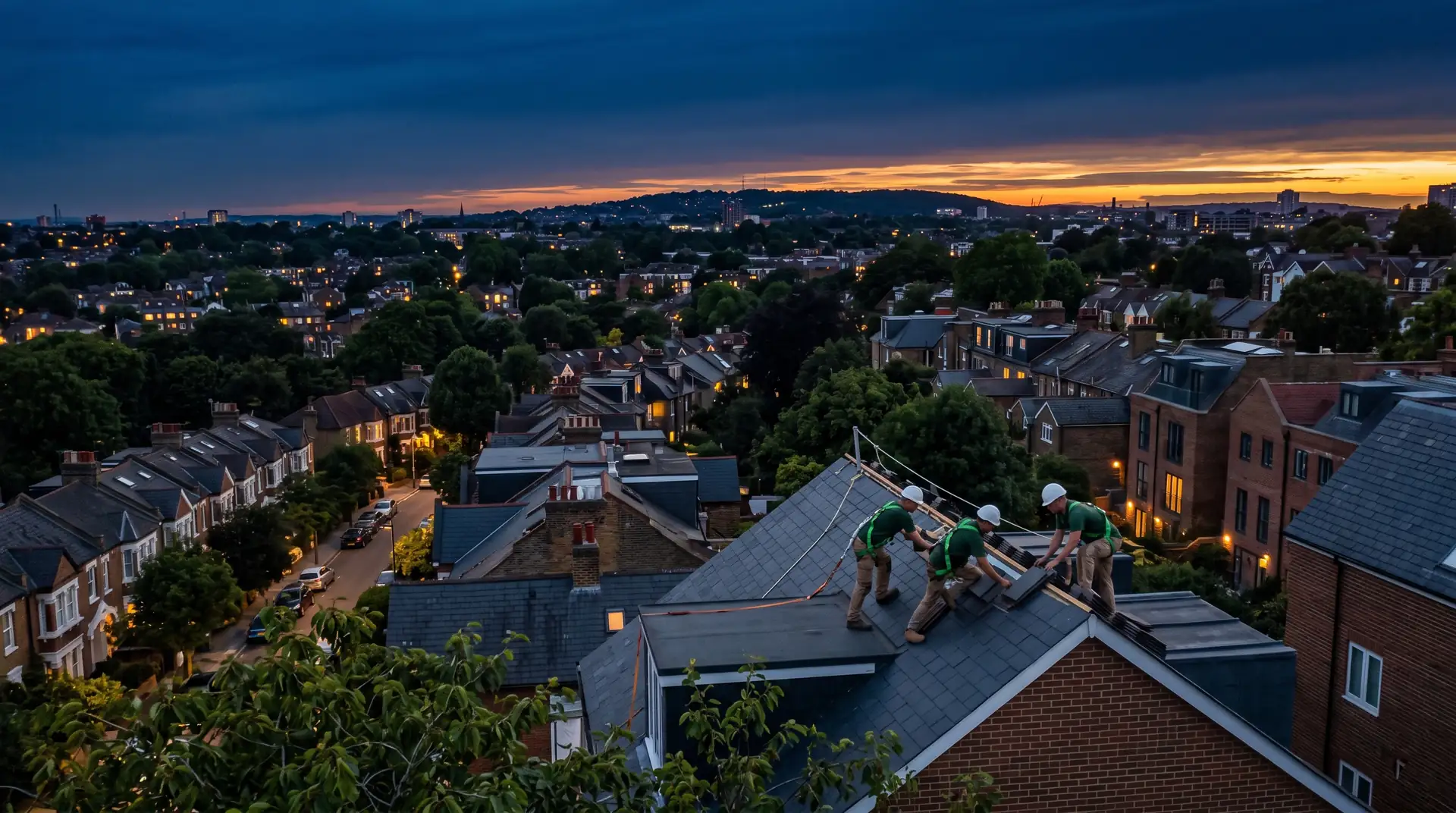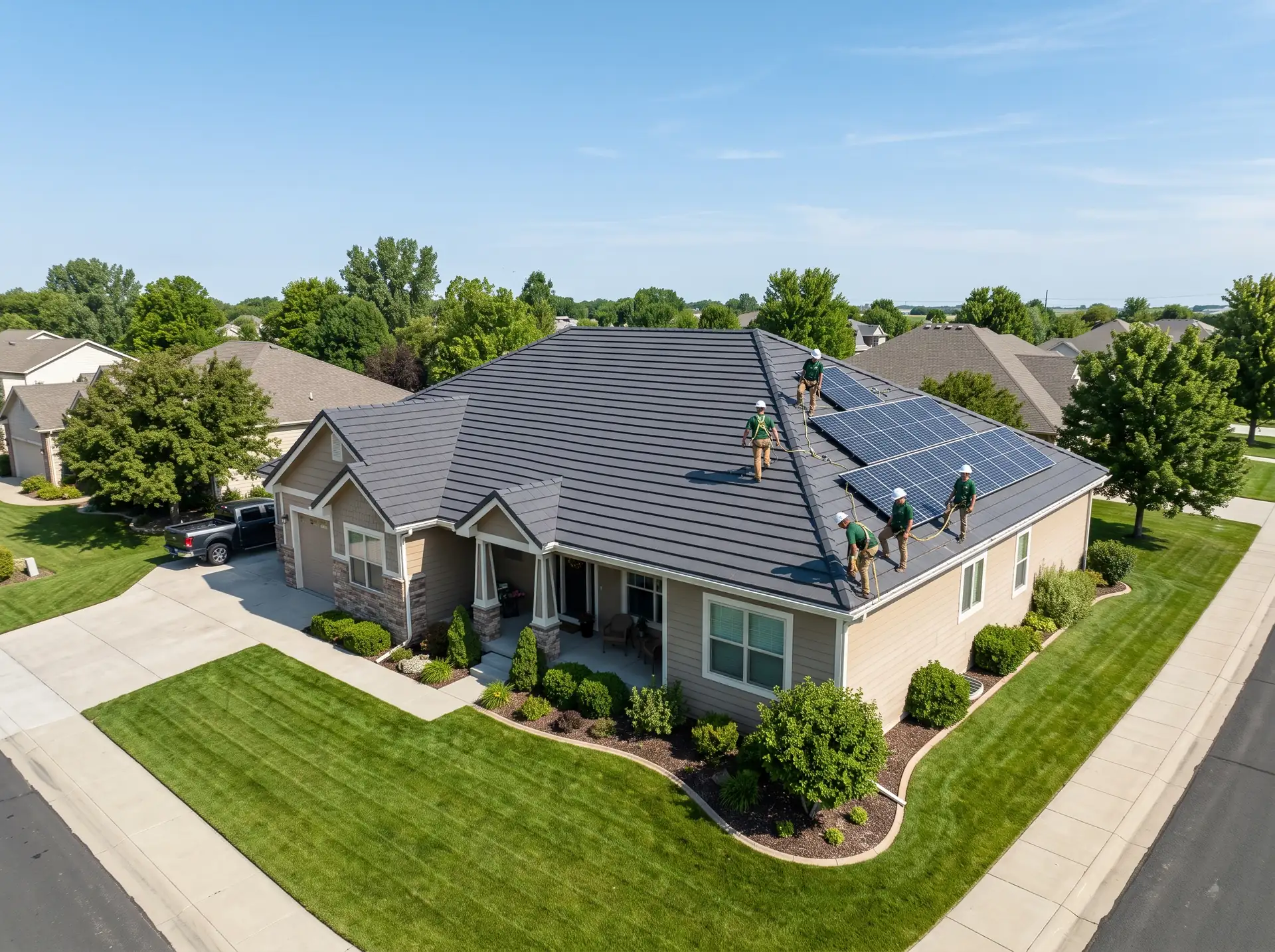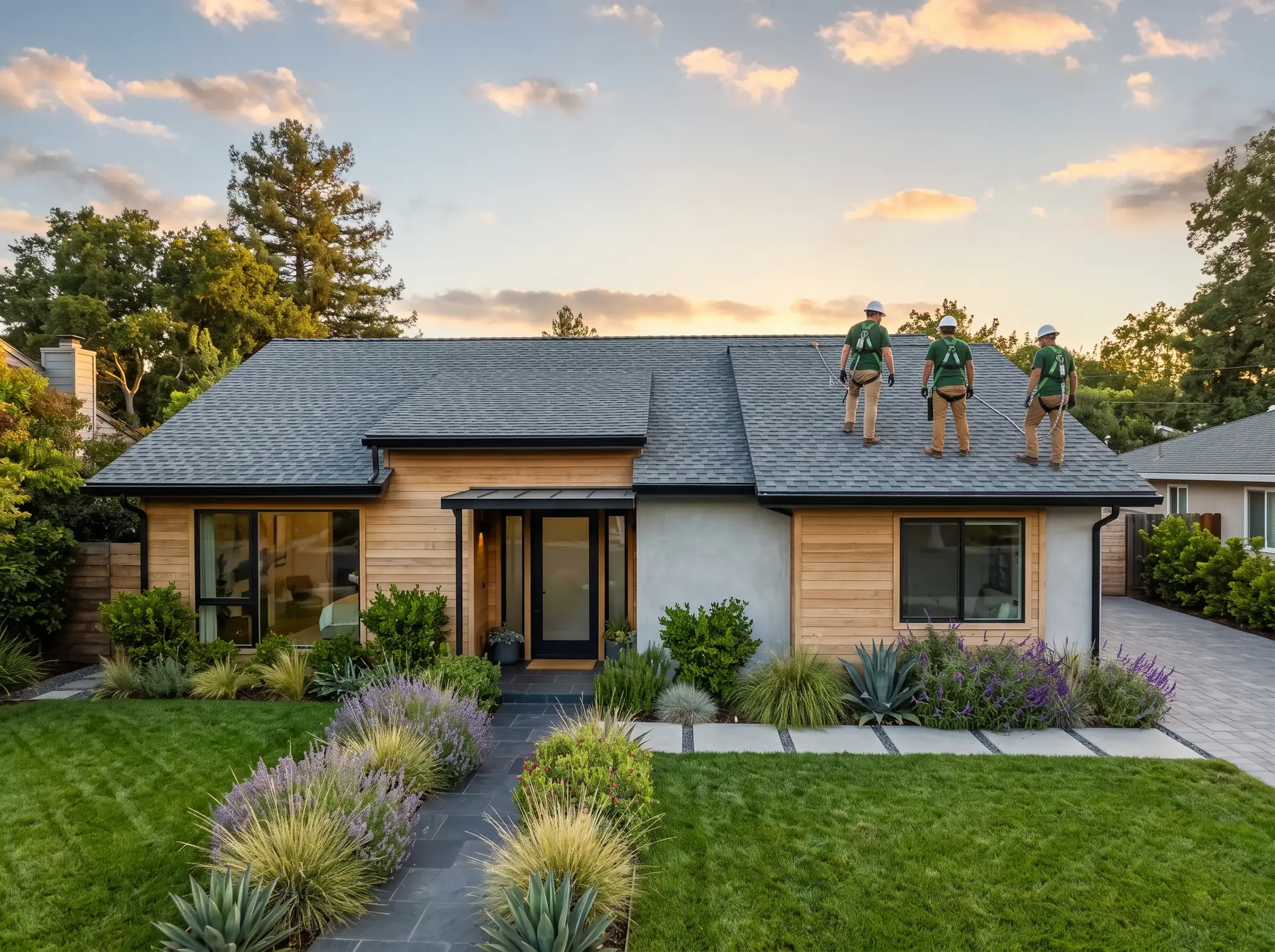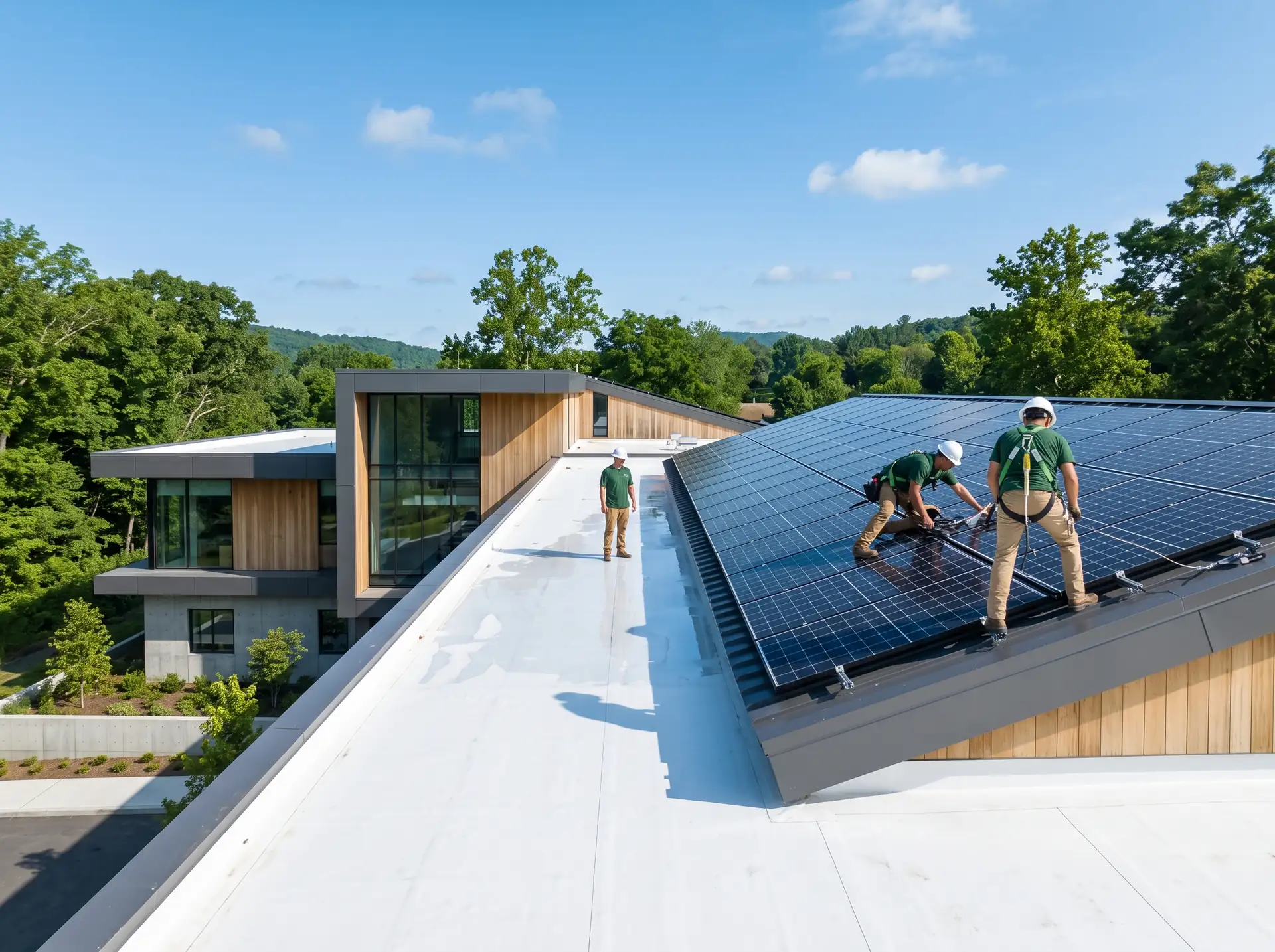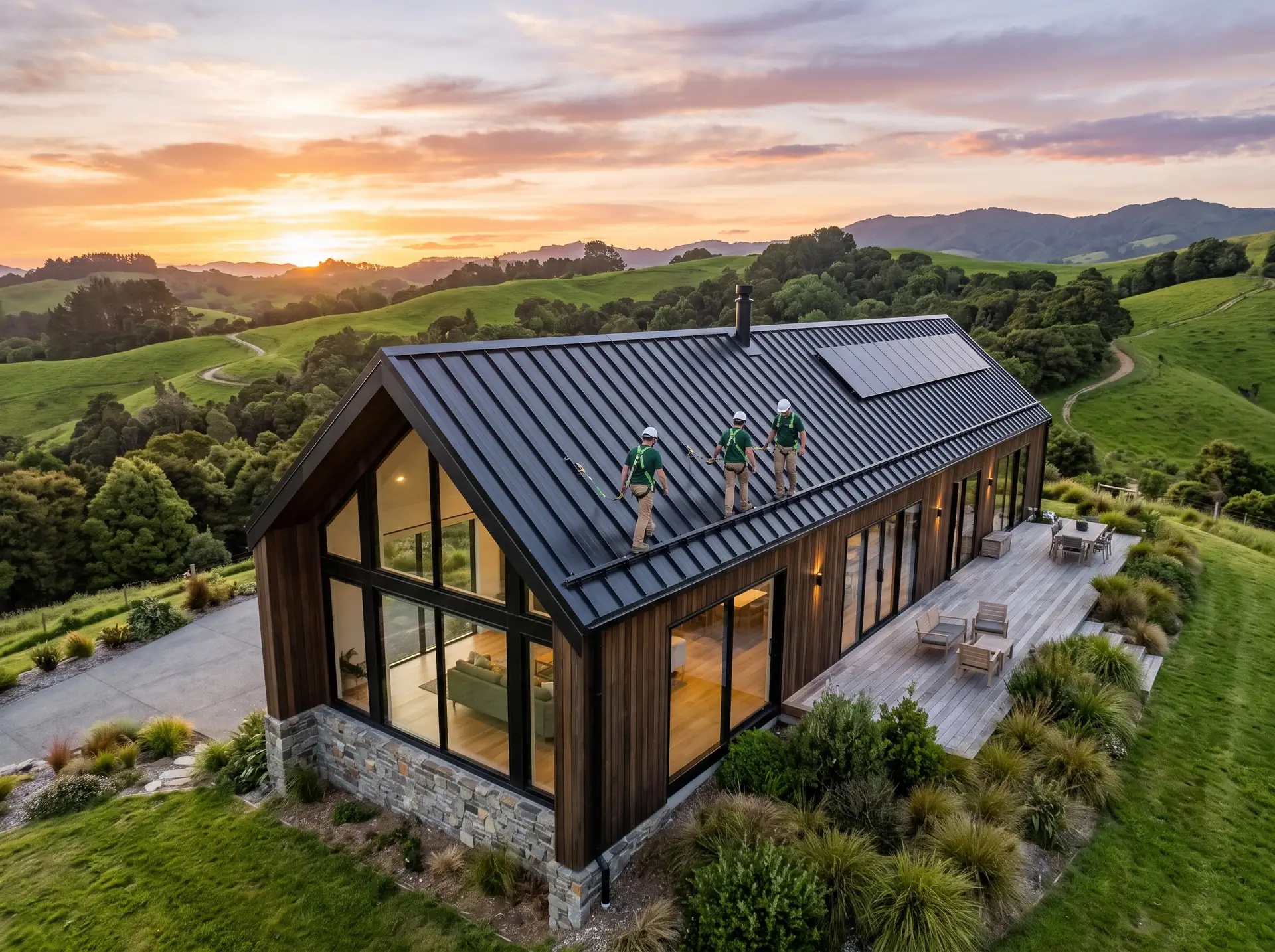
Metal roof vs shingle comes down to how long you will keep the house. Architectural asphalt shingles cost less to install; a 2007 National Association of Home Builders study put their life at about 20 years. Standing-seam metal costs more upfront, the Metal Roofing Alliance puts its life at 30 to 50 years or more, it weighs less, and solar clamps onto its seams without drilling.
Both are commonly Class A fire rated and both come in rated cool colors. Staying 20 years or more, or adding solar: metal usually wins. Shorter horizon or tighter budget: shingles.
Metal roof vs shingle, side by side
Figures come from the named industry bodies and product data sheets; ratings belong to specific products and assemblies, so compare the named products in your proposals.
| Architectural asphalt shingles | Standing-seam metal | |
|---|---|---|
| Upfront cost | Lower | Higher |
| Service life | About 20 years (NAHB, 2007) | 30 to 50+ years (Metal Roofing Alliance) |
| Weight per 100 sq ft | About 200 to 225 lb (CertainTeed and GAF product data) | About 130 to 150 lb, painted 24-gauge steel (Fabral product data) |
| Fire rating | Most shingle assemblies are Class A (Asphalt Roofing Manufacturers Association) | Most metal roofing is Class A, rated as a tested assembly (Metal Roofing Alliance) |
| Wind rating | Tested to ASTM D3161 (top class F) and D7158 (top class H); many architectural lines list both | Uplift tested per product; for example, one standing-seam line lists UL 580 Class 90 |
| Impact (UL 2218, Class 1 to 4) | Varies: some standard lines Class 3, impact-resistant lines Class 4 | Many standing-seam panels Class 4 |
| Cool roof options | Shingles with reflective or cool-colored granules; some lines meet Title 24 for steep roofs | Factory-painted cool colors; unpainted metal sheds heat poorly |
| Solar | Mounts bolted through the roof and flashed | Clamps on the seams, no holes in the roof |
| Rain noise | Baseline | "Little difference" from other materials (Metal Roofing Alliance) |
| End of life | U.S. EPA: 13.0 of 15.1 million tons of shingle debris went to landfill in 2018 | Steel can be recycled repeatedly without loss of quality (American Iron and Steel Institute) |
Leaning toward metal? Our metal roofing service covers standing-seam and stone-coated steel, with the gauge and finish chosen for your location. Shingles are part of our roof replacement service.
How long does each last?
Industry figures vary, so attribute them. A 2007 National Association of Home Builders study of home component life expectancy found that "roofs made of asphalt shingles last for about 20 years", and the Asphalt Roofing Manufacturers Association calls a residential roof "more than 20 years old" a "prime candidate for reroofing". The Metal Roofing Alliance says to "count on a metal roof lasting 30 to 50+ years", adding that metal roofs "can often be repainted versus replaced". A Metal Construction Association study of unpainted commercial standing-seam roofs projected more than 60 years for that roof type.
A warranty is not a lifespan. Shingle and metal warranties are contract terms with conditions; read them for what they cover, not as a promise of years.
Cost: upfront price vs cost per year of service
Shingles win on the day you pay. Metal is the larger check upfront, which is why the useful comparison is the price divided by the years you expect to get from the roof, and whether you will be in the house to collect those years.
What moves the price of either: roof size and pitch, the number of valleys, dormers, skylights and walls to flash, tear-off layers and deck repairs, and for metal the gauge, profile and finish. Both are priced from measurements after an on-site look; a guide that quotes one national figure cannot know your roof.
Fire, wind and impact ratings
Fire ratings run Class A (highest) to Class C under the UL 790 and ASTM E108 tests. The Asphalt Roofing Manufacturers Association says "most asphalt shingle roof assemblies have a Class A fire resistance rating", and the Metal Roofing Alliance says "most metal roofing carries a Class A fire-resistant rating".
For metal, the rating is typically for the tested assembly, including the underlayment. Where California's 2025 Wildland-Urban Interface Code applies, a re-roof of half or more needs a Class A assembly, and either material can be one; see Class A fire-rated roofing for what else the code asks at the eaves and vents.
Impact ratings under UL 2218 run from Class 1 to Class 4. Not every architectural shingle is Class 4 (one widely sold line lists Class 3), while many standing-seam panels are rated Class 4. Wind ratings are also product-specific. Ask for the ratings of the exact products in each bid.
Heat, cool roofs and Title 24
Both materials come in cool versions. The Department of Energy recommends shingles "surfaced with light-colored or (if a darker color is preferred) cool-colored granules", and metal "factory coated with a light- or cool-colored paint", noting that unpainted metals "get hotter in the sun than painted metals of comparable solar reflectance". At least one mainstream cool shingle line states that all its colors meet California's Title 24 values for steep roofs.
In inland climate zones, a pitched re-roof has to meet a minimum reflectance unless an exception applies, whichever material you choose. See cool roof requirements in California and cool roofing.
Solar: where metal pulls ahead
On a shingle roof, solar racking is bolted through the roof and each mount is flashed. On standing seam, clamps grip the raised seams; the Metal Roofing Alliance notes the seams "can act as natural attachment points, eliminating the need to drill holes through the roofing surface". Because a metal roof can outlast the array, it also avoids the remove-and-reinstall that an aging shingle roof forces. See whether to replace your roof before solar.
When shingles are the better choice
- You expect to sell within the life of a shingle roof, so metal's extra years would go to the next owner.
- The budget for the re-roof is fixed and the upfront difference matters more than the long run.
- The look of the street or your HOA's rules favor a shingle roof.
- You want the widest choice of colors and styles from many manufacturers.
When metal is the better choice
- You plan to stay 20 years or more and would rather not re-roof again.
- Solar is on the roof or in the plan.
- You want a noncombustible covering in wildfire country, with the eaves and vents detailed to match.
- You would rather keep a roof's worth of shingle debris out of the landfill at the next replacement.
What about metal vs tile?
Tile is the other long-lived option in Southern California. Clay and concrete tile are noncombustible and the 2007 NAHB study gave them "over 50 years", but they are heavy: standard concrete tile runs about 900 to 970 pounds per 100 square feet in manufacturer data, several times the weight of standing-seam steel, and a switch to tile needs the framing checked. See tile roofing.
Other questions
Is a metal roof louder than shingles in the rain?
The Metal Roofing Alliance says there is little difference between metal and other materials in noise from rain or hail.
Can metal go over my existing shingles?
The California Residential Code permits a recover installed to the roofing manufacturer's approved instructions, and standing-seam systems that carry their own loads to the structure need no tear-off, but no recover is allowed over a water-soaked roof or one that already has two layers (Section R908.4). A tear-off lets the deck be inspected first, which is what we recommend. Roofing permits and recover rules.
Does salt air affect a metal roof warranty?
It can. Metal Sales, for one, excludes "exposure to salt environments" from its paint warranty, so near the coast the metal, finish and warranty are chosen for the address.
Questions about your own roof? Call (323) 760-7835 or request an estimate, and see our metal roofing service for what the work involves.
Sources
- Metal Roofing Alliance, FAQs
- Metal Roofing Alliance, Solar and metal roofs
- Metal Roofing Alliance, Metal roofing and California wildfires
- Metal Construction Association, Service Life Assessment of Unpainted Standing Seam Roofs
- National Association of Home Builders, Study of Life Expectancy of Home Components (2007, copy)
- Asphalt Roofing Manufacturers Association, FAQs
- Asphalt Roofing Manufacturers Association, A simple guide to your asphalt shingle roofing system
- CertainTeed, Landmark shingles product data (via BuildSite)
- CertainTeed, Landmark Solaris product data (via BuildSite)
- GAF, Timberline HDZ environmental product declaration (NSF)
- Fabral, Thin Seam standing seam technical data
- Metal Sales, Seam-Loc 24 specification data (via BuildSite)
- U.S. Department of Energy, Guidelines for Selecting Cool Roofs (2010)
- U.S. Department of Energy, Consumer Guide to Cool Roofs (PDF)
- U.S. EPA, Advancing Sustainable Materials Management: 2018 Fact Sheet
- American Iron and Steel Institute, Steel recycling
- Eagle Roofing, Concrete roof tile technical specifications (2026)
Sources were read on September 30, 2026. Codes and maps change; check with your building department for the rules in force at your address.