How long does a roof last? It depends first on the material: about 20 years for asphalt shingles and more than 50 years for clay tile, concrete tile and slate, according to the National Association of Home Builders, and 30 to 50 years or more for metal, according to the Metal Roofing Alliance. The layers under the covering, the flashing and how the roof is looked after decide whether a roof reaches those numbers.
Roof lifespan by material
These are the published figures, each from the body that published it. They are typical service lives, not guarantees for a particular roof:
| Material | Typical life | Source |
|---|---|---|
| Asphalt shingles | About 20 years | National Association of Home Builders, life expectancy study (2007) |
| Clay or concrete tile | Over 50 years | National Association of Home Builders (2007) |
| Slate and copper | Over 50 years | National Association of Home Builders (2007) |
| Metal | 30 to 50+ years; coated standing seam up to 70 years | Metal Roofing Alliance, citing Metal Construction Association research for standing seam |
The Asphalt Roofing Manufacturers Association adds a practical rule of thumb for shingles: a roof more than 20 years old is a prime candidate for reroofing. For metal, the Metal Roofing Alliance notes that a worn finish "can often be repainted versus replaced".
Is your roof near the end of its life? Our roof replacement service covers a full tear-off and a new roof, and a roof inspection tells you how much life your current roof has left.
How long does a roof last in California?
The figures above apply in California too; the sources above give no separate California figures. What can end a California roof early is the fire code rather than wear.
CAL FIRE calls the roof "the most vulnerable part of your home". In State Responsibility Areas and in local High and Very High fire hazard severity zones, a re-roof of 50 percent or more within 12 months must be a Class A assembly, so a covering that is not Class A comes off at the next re-roof whatever its age. Our guide to Class A fire-rated roofing explains the rule.
Underlayment under tile: why the tiles outlive it
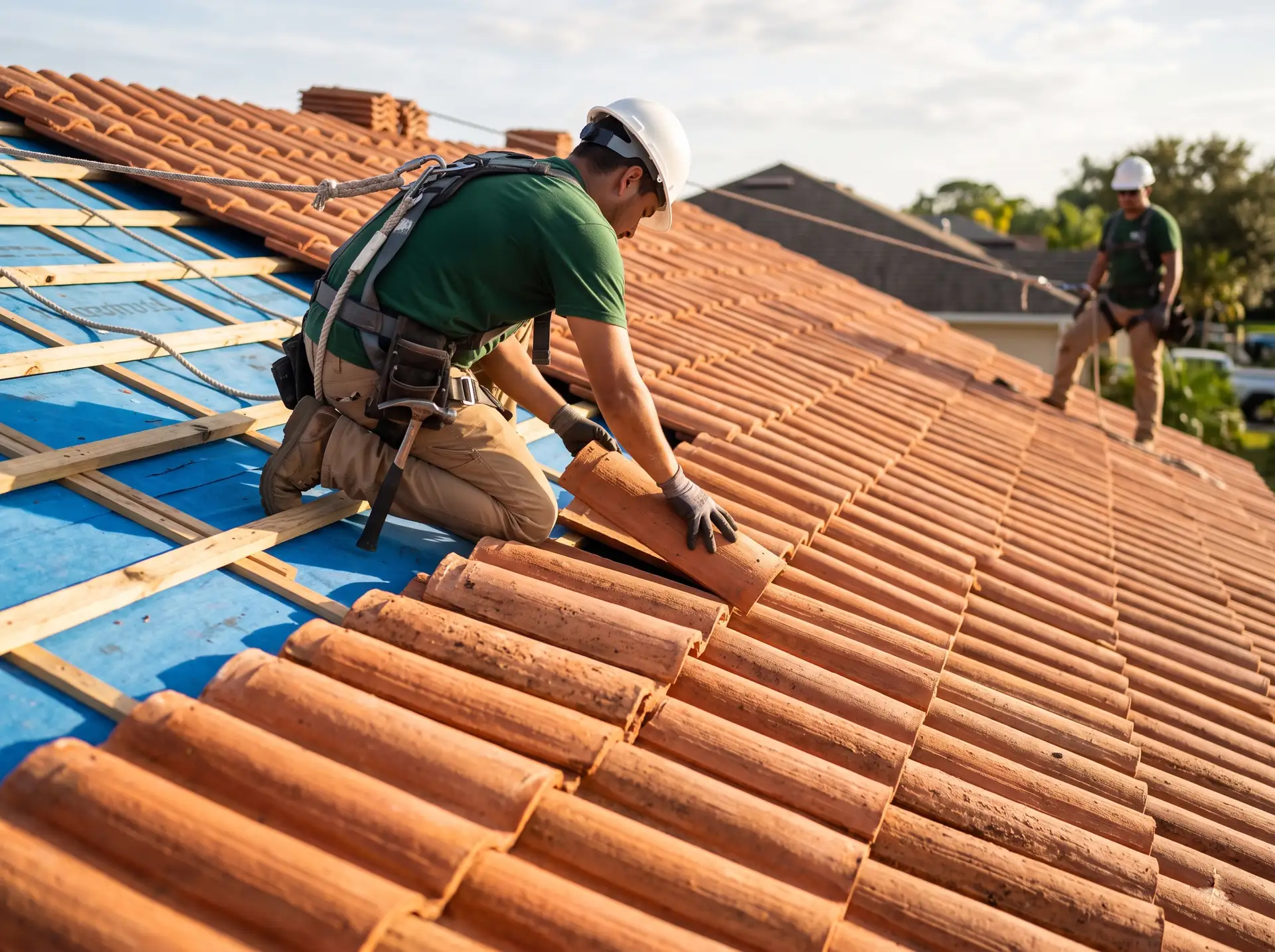
A tile roof often looks fine long after it has started to fail, because the tiles are only part of the system. The Tile Roofing Industry Alliance calls the underlayment "critical to the success of the roof system" and, in most cases, the secondary water barrier that carries away the water that gets past the tiles. No lifespan in years is published for tile underlayment, so its condition is checked by lifting tiles rather than guessed from the age of the roof.
When the underlayment has failed but the tiles are sound, the fix is a lift and relay: the tiles come off, the underlayment and flashing are renewed, and the sound tiles go back on. See tile roof underlayment replacement.
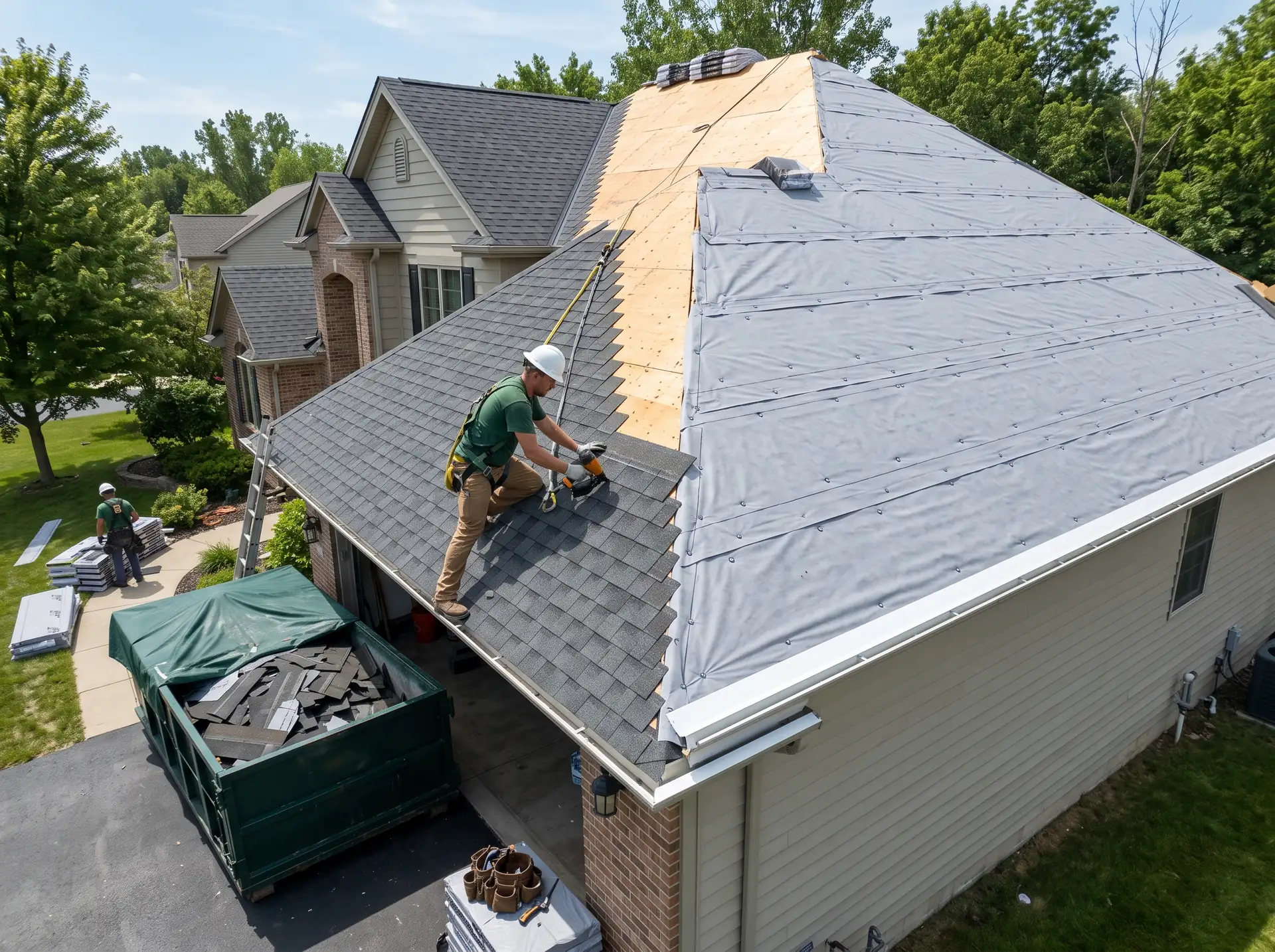 Roof Replacement
Signs your roof is near the end
- Leaks in more than one area, or new leaks soon after earlier repairs
- Shingles that are curling, cracking or losing their granules across whole slopes
- Soft, spongy or sagging areas that point to a damaged deck underneath
- Many cracked or slipped tiles, or brittle underlayment under the tiles
- Water staining in the attic along several rafters, or daylight through the deck
One of these on its own is often a repair. Several together, on a roof near the ages in the table, usually point to a replacement.
Repair, re-roof or wait: how to decide
Three questions settle most decisions. Is the damage local or spread across the roof? Is the roof near the end of its typical life for its material? And is anything about to go on top of it, such as solar panels, that would be expensive to take off later?
On that last point, the California Public Utilities Commission advises replacing a roof that is due soon before installing solar. The Department of Energy puts the life of solar panels at about 25 to 30 years, so the roof under them should have at least that much life left. See whether to replace your roof before solar.
A roof inspection with photos answers the first two questions for your roof, and ends with an estimate of the remaining life, labelled as an estimate.
Other questions
How long do roofs last on average?
It depends on the material: about 20 years for asphalt shingles and more than 50 years for clay or concrete tile and slate (National Association of Home Builders), and 30 to 50 years or more for metal (Metal Roofing Alliance).
Does a tile roof last forever?
The tiles can last more than 50 years, but the underlayment under them is what keeps water out, and no lifespan in years is published for it. That is why a tile roof is inspected under the tiles before it is judged sound.
Can I make my roof last longer?
Have it inspected once a year, ideally before the rains, and after major storms, so small problems are repaired before they spread.
Questions about your own roof? Call (323) 760-7835 or request an estimate, and see our roof replacement service for what the work involves.
Sources
- National Association of Home Builders, Study of Life Expectancy of Home Components (2007, copy)
- Metal Roofing Alliance, FAQs
- Asphalt Roofing Manufacturers Association, FAQs
- Tile Roofing Industry Alliance, Concrete and Clay Roof Tile Installation Manual (2024)
- CAL FIRE, Ready for Wildfire: hardening your home
- California Public Utilities Commission, California Solar Consumer Protection Guide
- California Wildland-Urban Interface Code 2025, Chapter 5
- U.S. Department of Energy, Homeowner's Guide to Going Solar
Sources were read on October 9, 2026. Codes and maps change; check with your building department for the rules in force at your address.