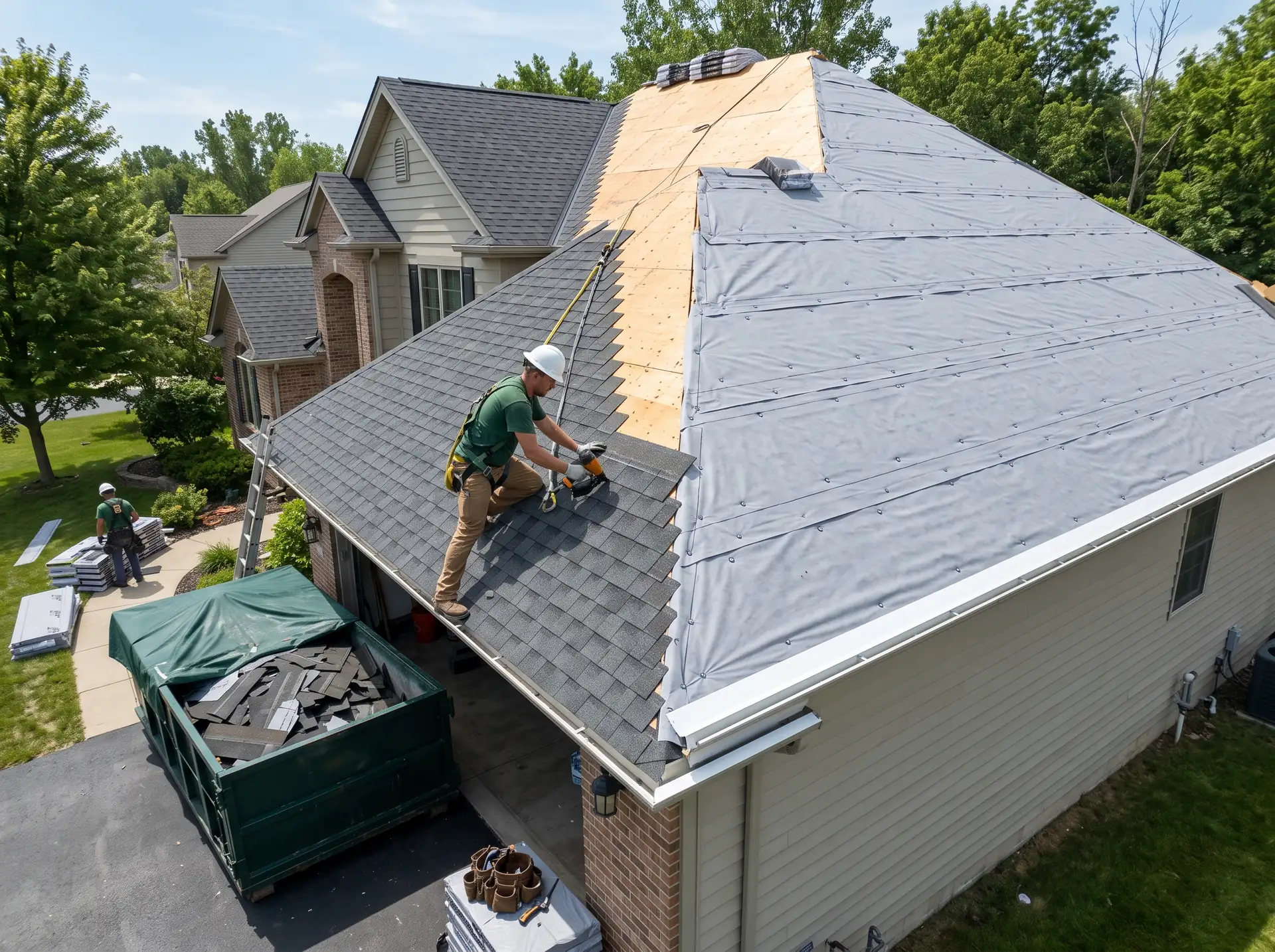
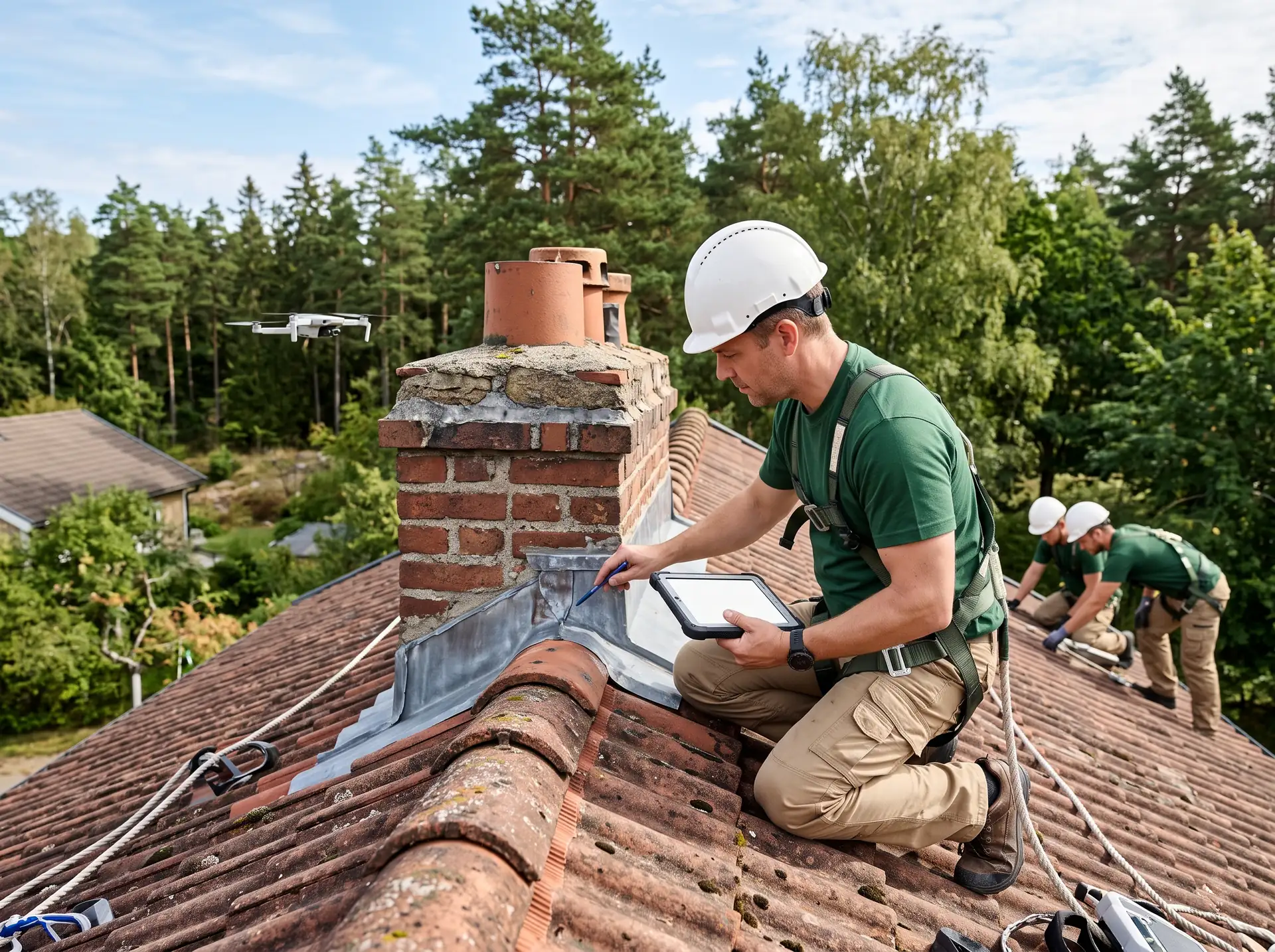
Roof repair from Global Green Roofing starts with finding where the water actually gets in, which is often several feet from the stain on your ceiling. We repair leaks, storm damage, missing shingles, broken tiles and failed flashing in Los Angeles, fix the cause rather than the symptom, and tell you plainly whether the rest of the roof is sound or close to replacement.
 Roof Repair
What to do right now if your roof is leaking
Water that gets inside keeps doing damage, so the first hour matters more than the first week. These steps limit the damage until the roof is repaired:
- Move furniture and electronics away and put a bucket under the drip.
- Keep people and furniture clear of a ceiling that is sagging with water, and call us.
- Photograph the stain, the damage and any debris on the roof before anything is moved. Your insurer will ask for these.
- Stay off a wet roof. Wet shingles, tile and clay are slippery, and tile cracks under the wrong step. Call us and we will tarp it safely.
Where do roof leaks usually start?
Most leaks do not start in the open field of shingles or tiles. They start where the roof is interrupted, and the water then runs along the underlayment, deck or rafters before it shows up inside.
Flashing at walls, chimneys and skylights
Metal flashing seals the joint between the roof and anything that meets it. When it rusts, lifts, or the sealant behind it cracks, water tracks down the wall side of the joint.
Pipe boots and vents
The rubber collars around plumbing vents dry out and split in the sun, and a split boot lets water run straight down the pipe. On a re-roof the California Residential Code requires rusted or damaged vents and flashings to be replaced (Section R908.5); on a repair, the boot alone is usually the fix.
Valleys
Where two slopes meet, the roof funnels a lot of water through one channel. Worn valley metal and short laps leak in heavy rain even when the rest of the roof is fine. On tile, the code sets the valley metal at 11 inches or more each side of the center with a splash diverter rib (Section R905.3.9), so an undersized valley is replaced, not patched.
Wind and storm damage
Lifted or missing shingles, cracked tiles and branch impacts expose the underlayment, which was never meant to be the only layer between rain and the deck.
Gutters and drainage
A blocked gutter backs water up under the first course of roofing and into the fascia and the top of the wall. In fire hazard zones, gutters also have to be noncombustible with a means of keeping leaves out (California Wildland-Urban Interface Code 504.4), which matters when a gutter is replaced.
How we trace a roof leak
A patch in the wrong place is money spent twice. We work from both sides of the roof:
- Inside first: where the attic is accessible, we follow the water marks on the rafters and deck uphill to the highest wet point.
- Then on the roof: we check every penetration, flashing joint and valley above that point, because water enters above where it drips.
- Photos of the cause: you see the failed boot, open flashing or broken tile before any repair is agreed.
- A check after the repair: the area is inspected again once the work is done so we know it sheds water.
Roof repair by roof type
The fix depends on what the roof is made of, and two roof types have their own pages because the work is different:
Shingle roofs
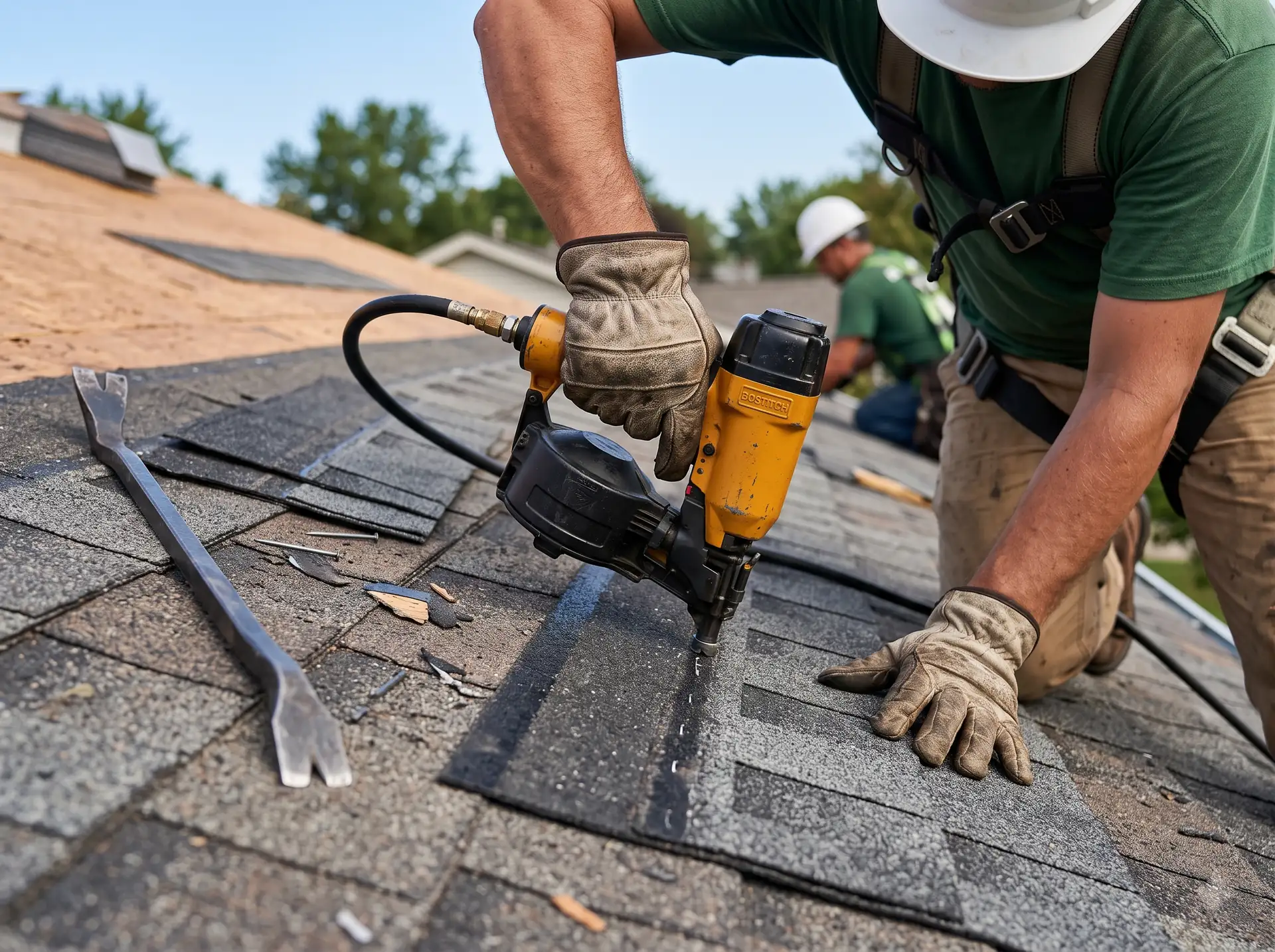
Damaged shingles are replaced by releasing the seal strips on the courses above, sliding in a matched shingle and re-nailing, so the repair laps the same way as the original roof.
Tile roofs
Leaks under tile are usually an underlayment or flashing problem, not the tile. See tile roof repair for how cracked and slipped tiles and worn underlayment are handled.
Flat and low-slope roofs
Ponding, blisters and open seams need membrane repairs, not shingle work. See flat roof repair.
Metal roofs
Common causes are fasteners that have backed out or were over-driven, dried sealant at trims, and damaged flashing around penetrations. They are repaired with matching fasteners, sealant and trim, and a damaged panel can be replaced on its own.
Emergency roof repair and tarping
When water is coming in during a storm, the goal is to stop it, not to finish the repair. A tarp is secured over the damaged area and carried over the ridge so rain cannot run under it, and the permanent repair follows once the roof is dry enough for sealants and shingles to bond.
A tarp is temporary, so book the permanent repair when you book the tarp.
Storm damage and insurance claims
If the damage came from wind, a storm or a falling tree, your homeowner's policy may cover it. Photos taken before anything was moved, and the date the damage appeared, make any claim easier, so document it early. We provide photos and a written description of the damage we find for your claim. Wear and tear on an old roof is usually treated differently from sudden damage, so ask your insurer what your policy covers before assuming either way.
What affects the cost of a roof repair
A repair is priced from what we find, so we do not quote a figure before seeing the roof. These are the things that move it:
- Access and pitch: a steep or two-story roof needs more safety equipment and time.
- The roof material, and whether matching shingles or tiles are still made.
- What sits under the damage: a wet or rotted deck has to be replaced before the covering goes back.
- Flashing work at walls and chimneys, which can mean removing and resetting surrounding roofing.
- Whether the job is a tarp now and a repair later, or one visit.
Do roof repairs need a permit?
Small repairs often do not, but each city draws the line its own way. The City of Los Angeles exempts work valued at $2,500 or less unless it affects the structure or public safety; Long Beach exempts up to 100 square feet of roof repair in any 12 months; Simi Valley lists re-roofing more than 10% of a roof or over 100 square feet as permitted work; Pasadena and Malibu publish no size limit, so their building departments are asked first. Under the California Residential Code a full re-roof is not exempt from permits; see roofing permits in California.
Repair or replace: how we decide with you
We recommend a repair when the damage is local and the rest of the roof has useful life left. If the roofing is failing across several slopes, or the same area keeps leaking after earlier repairs, we will say so and show you the photos, because repeated patching can cost more than a planned roof replacement. If you are unsure which you are facing, a roof inspection gives you the full picture first.
How roof repair works with us
Call or send the form
Tell us what you are seeing: a ceiling stain, a drip, missing shingles or tiles.
Leak tracing
We inspect the roof and, where we can, the attic, to find where the water actually gets in.
Clear recommendation
Photos of the problem and a written repair scope, or an honest note if the roof needs more.
The repair
Matched materials, new flashing or boots where needed, and a check that the area sheds water.
Roof Repair questions
Can you match my existing shingles or tiles?
We match color and profile as closely as current products allow. Older shingles that are discontinued or weathered may show a slight difference, and we will tell you before we start.
Can a roof be repaired in the rain?
A leaking roof can be tarped in the rain to stop water coming in, but permanent repairs need a dry surface so sealants and shingles bond properly.
Why does my ceiling stain appear far from the leak?
Water enters at a weak point, then runs along the underlayment, deck or rafters until it finds a place to drip. That is why leaks are traced from the roof side, not only from the stain.
Is one leak a sign I need a new roof?
Not by itself. A single leak on a sound roof is usually a repair. Several leaks, widespread wear or repeated leaks in the same place are the signs that replacement may be the better investment.
Repair permit lines differ by city, from a size limit in Long Beach to a value limit in Los Angeles and none published in Pasadena; each city page under service areas has its own.