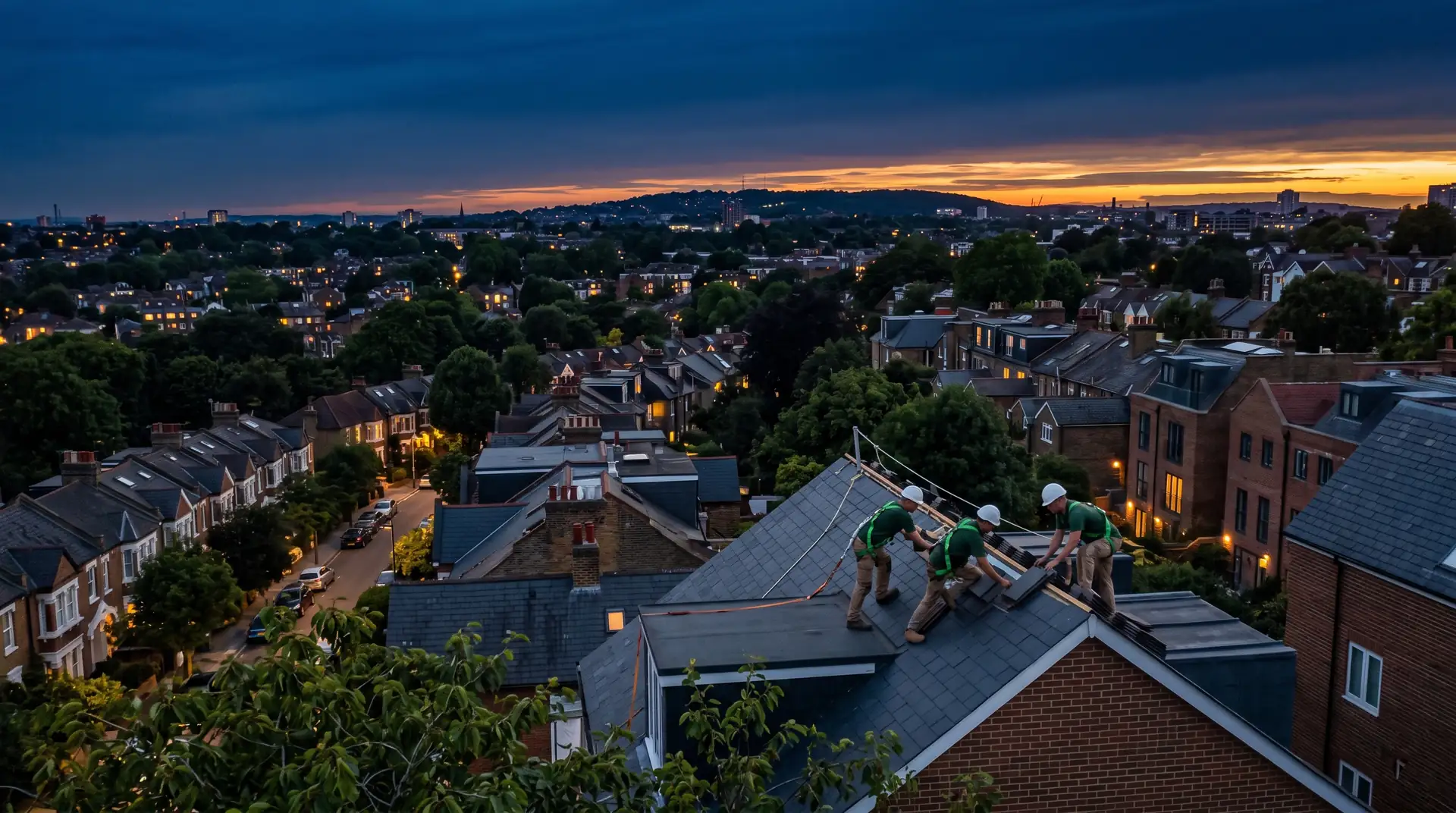
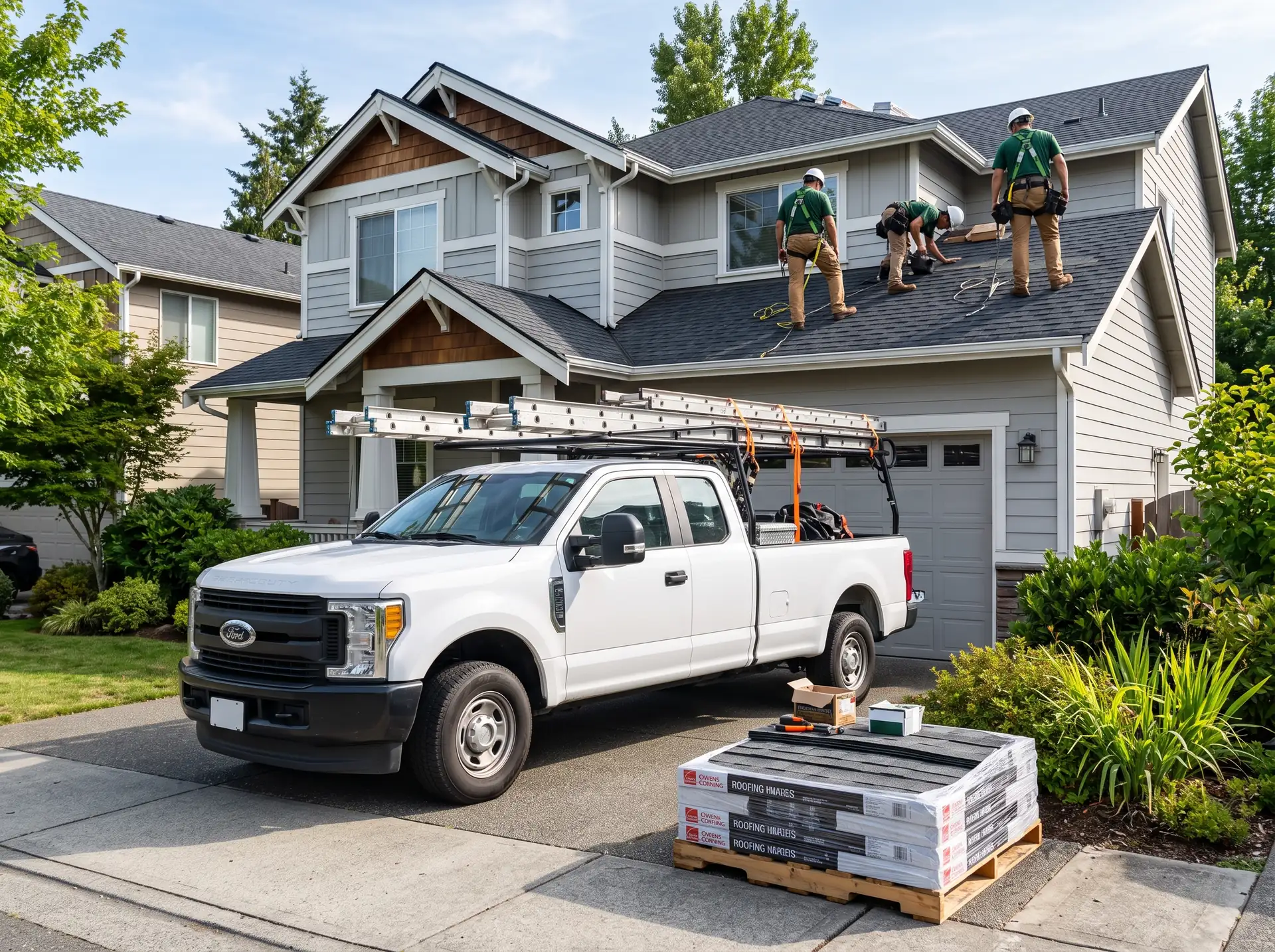
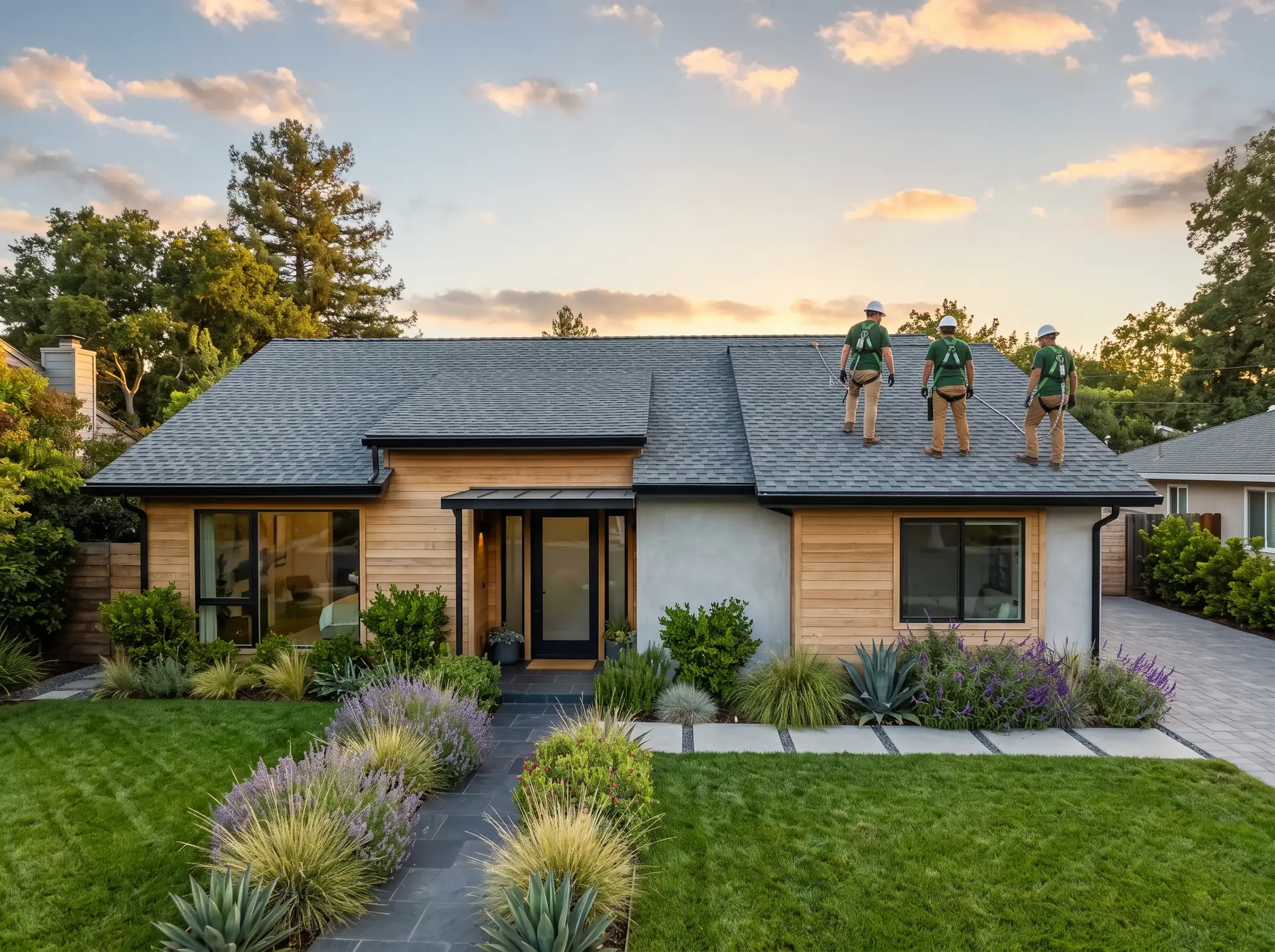
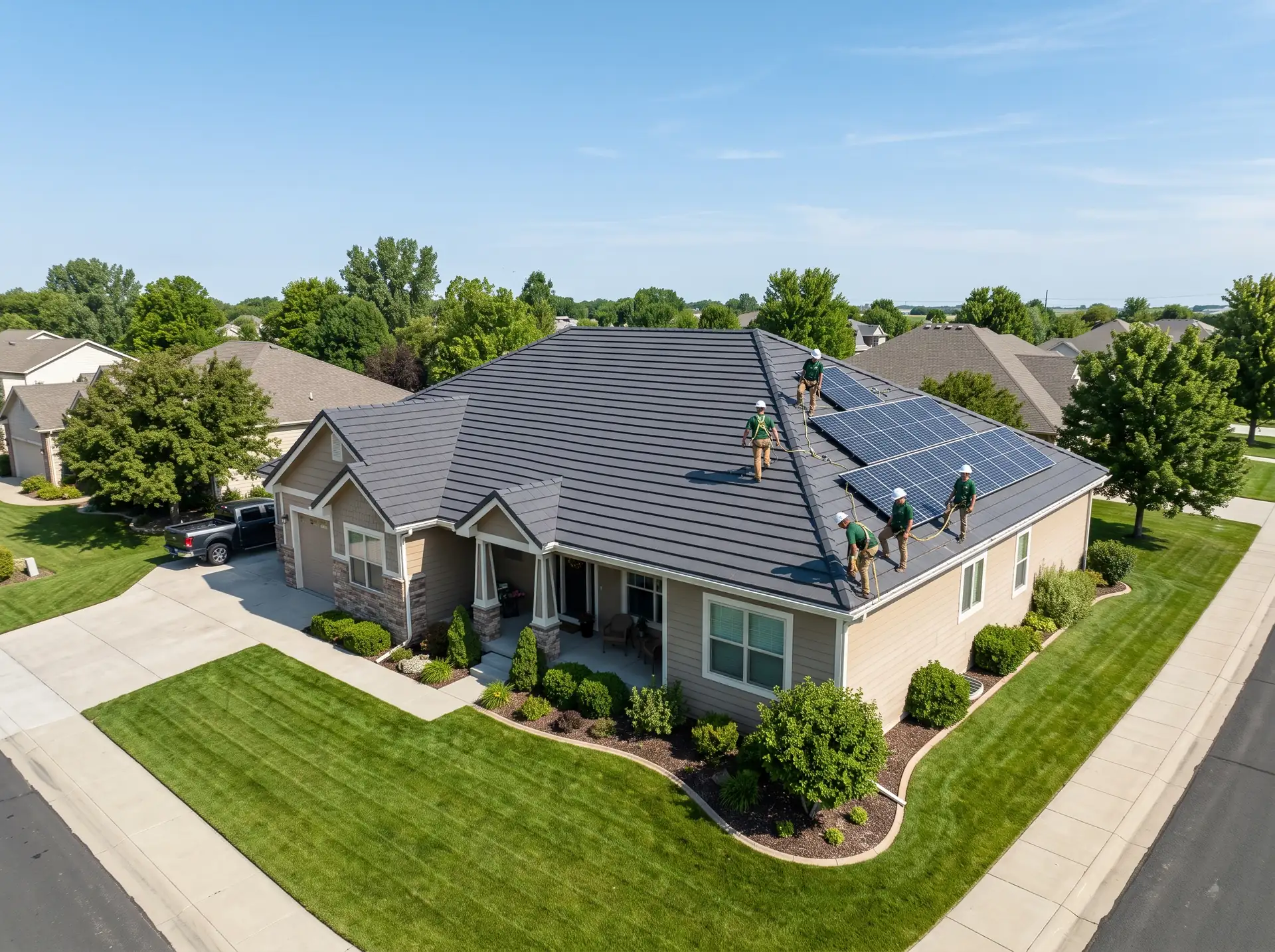
Roof replacement at Global Green Roofing means a new roofing system from the deck up, not new shingles over old problems. In Los Angeles and the surrounding area we strip the old roof, repair damaged sheathing, and install new underlayment, flashing, ventilation and the shingle, tile, metal or low-slope covering you choose. The scope is in a written proposal before any work begins.
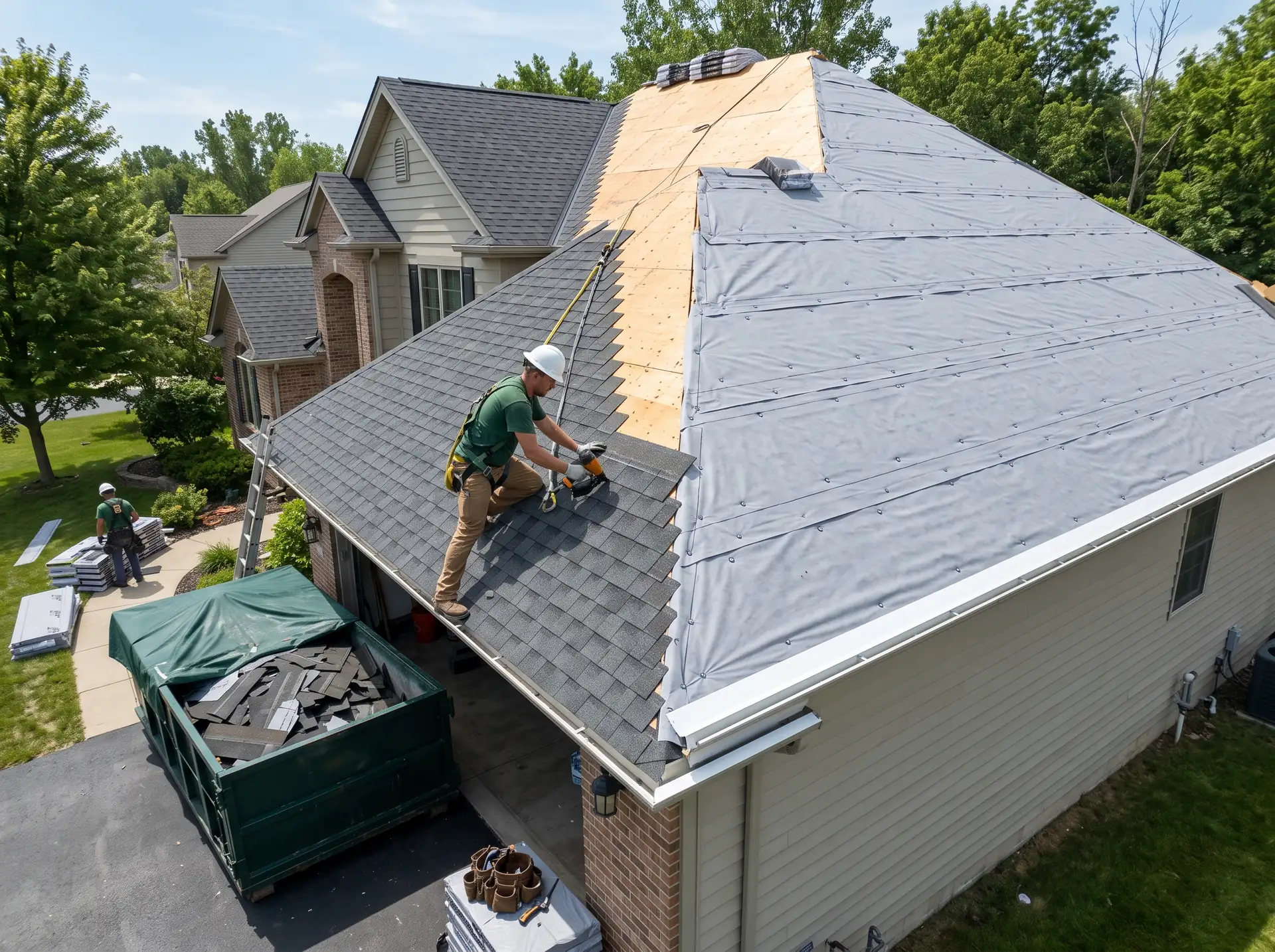 Roof Replacement
When is it time to replace a roof instead of repairing it?
A repair makes sense when the problem is local: one leak, a few missing shingles, a cracked tile, a failed pipe boot. Replacement is the better spend when the problems are spread across the roof, because patching a roof that is failing everywhere fixes one spot while the next one fails.
These are the signs that point toward replacement:
- Leaks in more than one area, or new leaks soon after earlier repairs
- Shingles that are curling, cracking or losing their granules across whole slopes
- Soft, spongy or sagging areas that point to a damaged deck underneath
- Many cracked or slipped tiles, or underlayment under tile that has reached the end of its life
- Daylight or water staining visible in the attic along several rafters
What a complete roof replacement includes
A roof is a system, and most early leaks start at the parts nobody sees. A proper replacement renews every layer, not only the visible covering.
Tear-off and deck inspection
The old roofing comes off down to the sheathing so the deck can be checked board by board. Rotted or delaminated sheathing is replaced before anything new goes on, and you are shown what was found.
Underlayment
Synthetic underlayment covers the deck, with self-adhered membrane in the valleys, around penetrations and at the eaves, where water concentrates.
Flashing, edges and penetrations
Drip edge, valley metal, step and counter flashing at walls and chimneys, and new boots on every vent pipe. Old flashing left under a new roof is a weak point, and the California Residential Code requires rusted, damaged or deteriorated flashings to be replaced on a re-roof (Section R908.5).
Ventilation
Intake at the eaves and exhaust at or near the ridge, balanced so the attic can breathe. Venting lets attic heat and moisture out instead of leaving them trapped under the deck.
The new covering and cleanup
Shingle, tile, metal or low-slope membrane, installed to the manufacturer's instructions. The site is cleaned daily and swept with a magnet for nails at the end of the job.
Which roofing material fits your home?
The right roof depends on the structure, the look you want, your budget and how long you plan to stay. This is how the main options compare:
| Material | Best fit | Weight | What to know |
|---|---|---|---|
| Architectural asphalt shingles | Most sloped homes; lowest upfront cost | Light | Available in cool-rated colors |
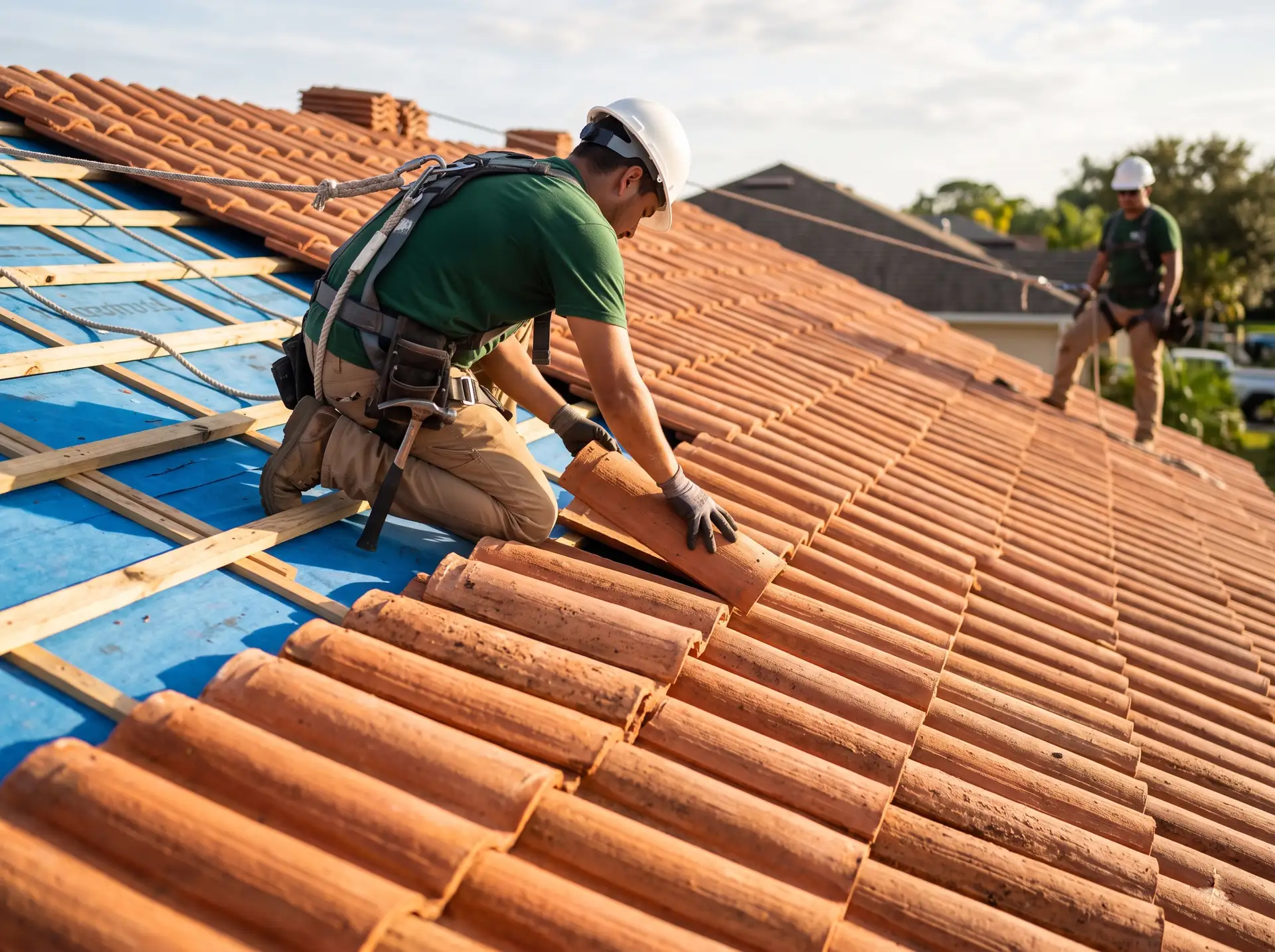
| Clay or concrete tile | Spanish, Mission and Mediterranean styles | Heavy: framing must be able to carry it | Sound tiles can be lifted and relaid over new underlayment; the code allows reinstalling undamaged tile |
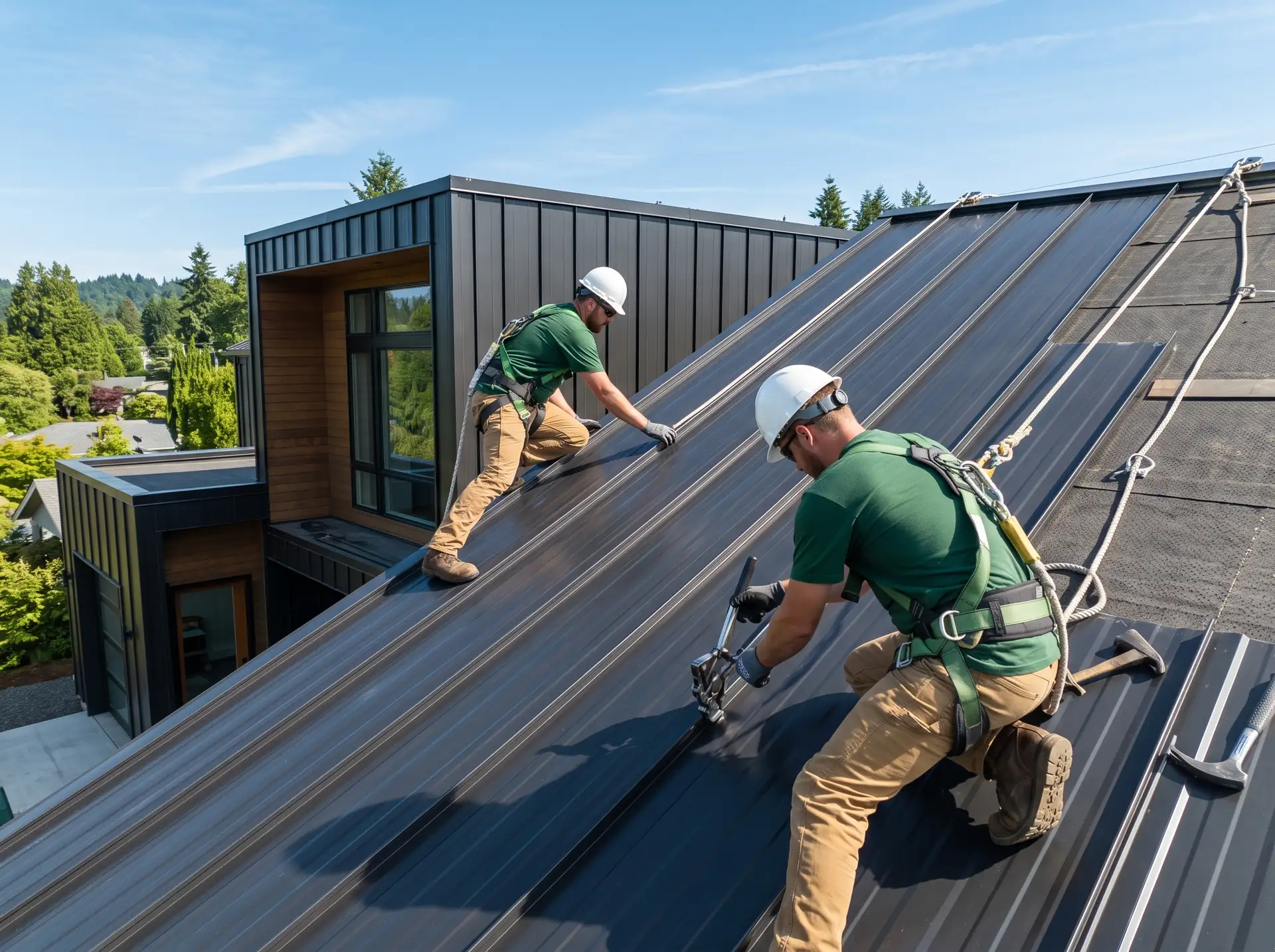
| Standing-seam or stone-coated metal | Long-term owners, modern designs, solar | Light | Noncombustible; panels clamp to solar mounts on standing seam |
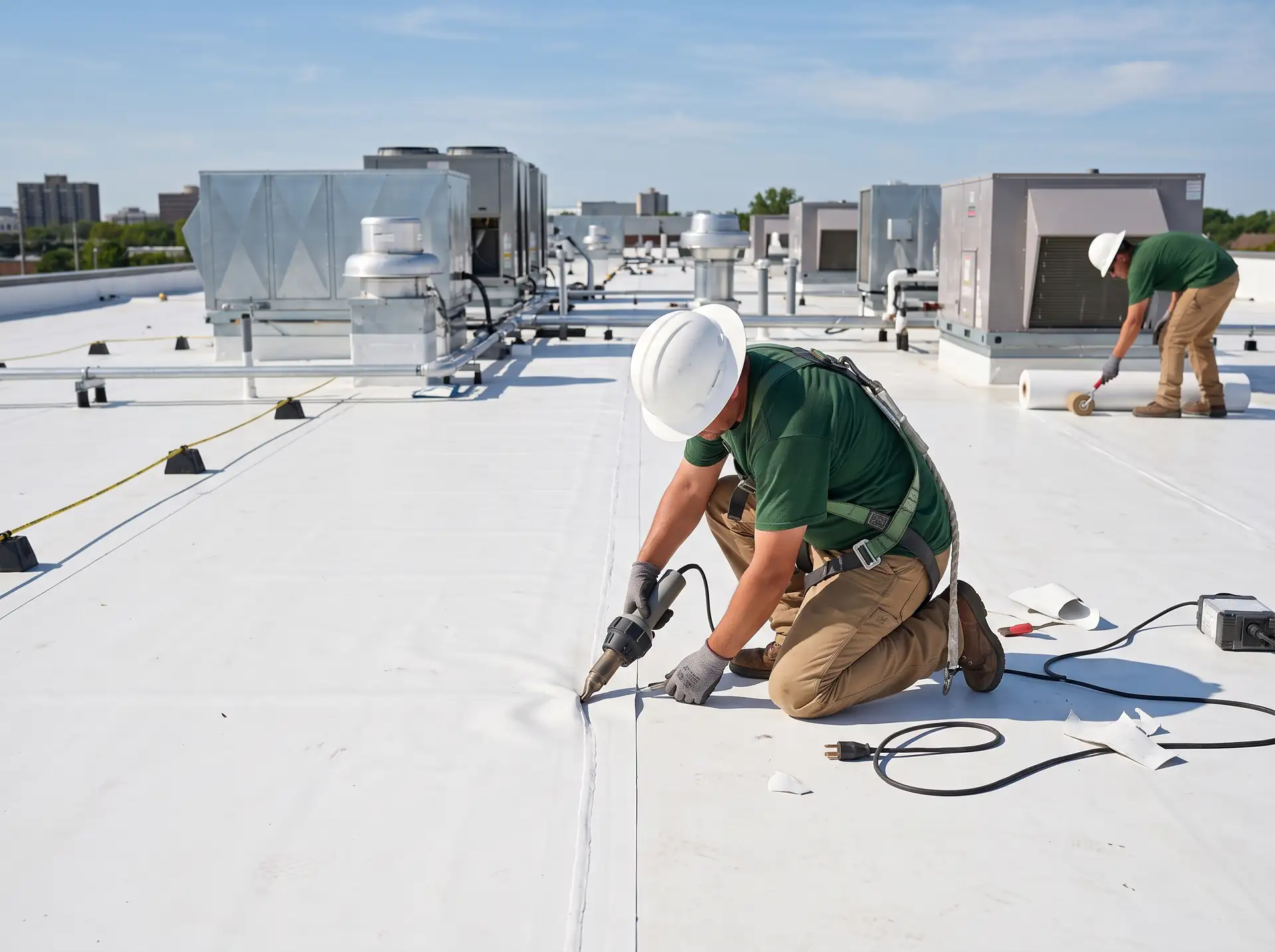
| TPO or other membrane | Flat and low-slope sections | Light | Needs working drainage; light colors reflect heat |
If you are weighing metal against shingles, our metal roof vs shingle guide sets out the trade-offs side by side, and cool roofing covers reflective versions of each material.
California rules that apply to a re-roof
Three sets of rules can change what goes on your roof, and all three are checked for your address before you choose a product:
- A building permit. A roof replacement is not exempt from permits under the California Residential Code, so the city or county inspects the work. How roofing permits work in California.
- The Title 24 cool-roof rule. In several California climate zones, replacing more than half of a roof triggers minimum reflectance values for the new covering. Which zones and roofs it applies to.
- Fire-rated roofing. In state-responsibility fire zones and local High and Very High Fire Hazard Severity Zones, replacing half or more of a roof within 12 months requires a Class A roof assembly under the 2025 Wildland-Urban Interface Code. What Class A means and where it applies.
Roof replacement with solar panels
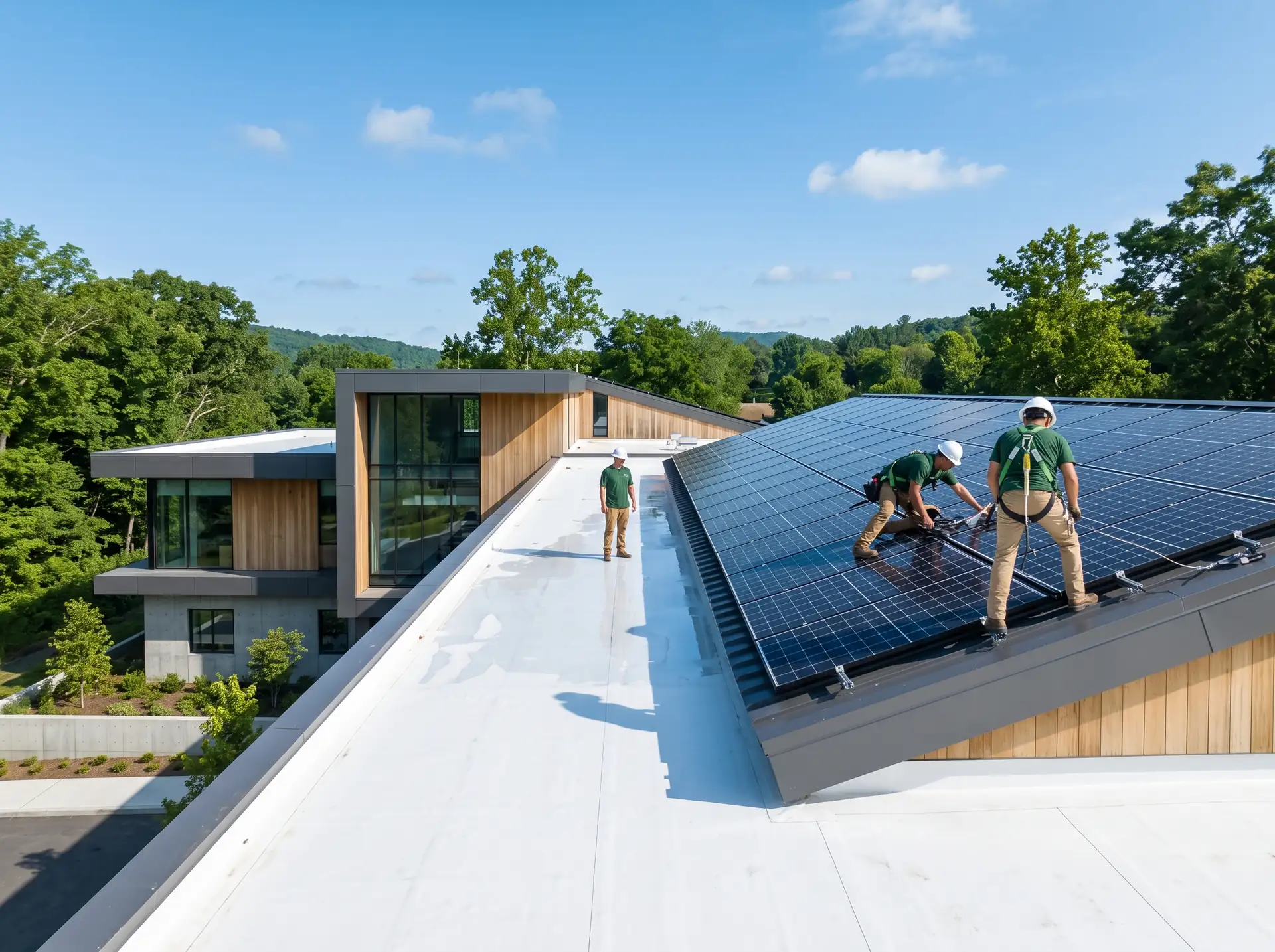
If panels are already on the roof, they have to come off before the old roofing can, and go back on once the new roof is in. We arrange the removal and reinstall as part of the re-roof; it needs its own permit in the places whose rules we read, such as unincorporated Los Angeles County, which requires a separate permit for the reinstallation. The racking attachments are the part to get right: every mount goes through the new roof, so each one is flashed into the new underlayment and covering rather than sealed on top.
If solar is only planned, the California Public Utilities Commission's advice is to replace a roof that is due soon before the panels go on, so they do not have to come off again later. Our guide on whether to replace your roof before solar explains how to judge whether your roof has enough life left to carry an array.
What drives the cost of a roof replacement
Every roof is priced from its own measurements, so we do not quote a number before seeing it. These are the factors that move the price:
- Roof size and pitch: steeper roofs need more safety equipment and time
- The material you choose, and how many old layers come off: a replacement removes every layer down to the deck (Residential Code R908.3)
- Deck repairs found after tear-off
- Complexity: valleys, dormers, skylights, chimneys and walls to flash
- Ventilation upgrades, solar removal and reinstall, and the permit and inspections
How roof replacement works with us
Assessment
We inspect the roof and attic, measure every slope and photograph what we find.
Written proposal
The system, the materials and the full scope in writing, so you can compare like with like.
Permit and scheduling
Where the local building department requires a permit, it is issued before work starts, and the work is booked around the weather.
Installation
Tear-off, deck repairs, underlayment, flashing, ventilation and the new covering.
Final walkthrough
Cleanup, inspection sign-off where required, and your paperwork.
Roof Replacement questions
Can new tile or shingles go over my old tile roof?
No. The California Residential Code does not allow a new covering over existing slate, clay or cement tile, over a water-soaked roof, or over a roof that already has two layers (Section R908.4). The old tile comes off, though sound tiles may be reinstalled.
Can a new roof go over the old one?
The code allows a recover over one existing layer in limited cases, but we recommend a full tear-off. It lets the deck be inspected and repaired, the flashing renewed, and it keeps extra weight off the structure.
Does a roof replacement need a permit?
Yes. Under the California Residential Code a re-roof is not on the list of work exempt from permits, so the city or county issues a permit and inspects it; the forms and inspections differ by city. The permit is in place before the tear-off starts.
The rules around a re-roof change at the city line, from a one-step online permit in Long Beach to an inspection before the new covering goes on in Malibu. Each city on our service areas page has its own notes.