Tile roof repair at Global Green Roofing fixes cracked, broken and slipped clay or concrete tiles and the leaks that show up under them in Los Angeles. Because water that gets past the tiles is stopped by the underlayment below them, we look under the tiles at the leak path, repair the underlayment or flashing that failed, and reset the area with matched tiles.
 Tile Roof Repair
Signs your tile roof needs repair
- Cracked, chipped or broken tiles, often after someone walked the roof for solar, a satellite dish, painting or HVAC work
- Slipped tiles that leave a gap in the pattern, or tiles lying in the gutter
- A ceiling stain or drip after rain, often below a valley, a chimney or a skylight
- Mortar at the ridge or hips that is cracked or falling out
- Visible underlayment, or black paper edges showing where tiles have moved
Why a tile roof leaks when most of the tiles look fine
Tiles are not a sealed surface. The Tile Roofing Industry Alliance notes that water migrates past tile "through improper flashing of the tile, wind-driven rain or ice damming", and the underlayment on the deck carries it down to the eaves. A leak means that layer has a hole, a tear or a gap at a joint, or that a flashing detail is sending water under it.
A broken tile makes this worse quickly: it lets sun reach the underlayment, which dries out and cracks, and it lets a direct stream of water hit that spot in every storm. That is why a single cracked tile deserves a repair visit rather than waiting for the stain.
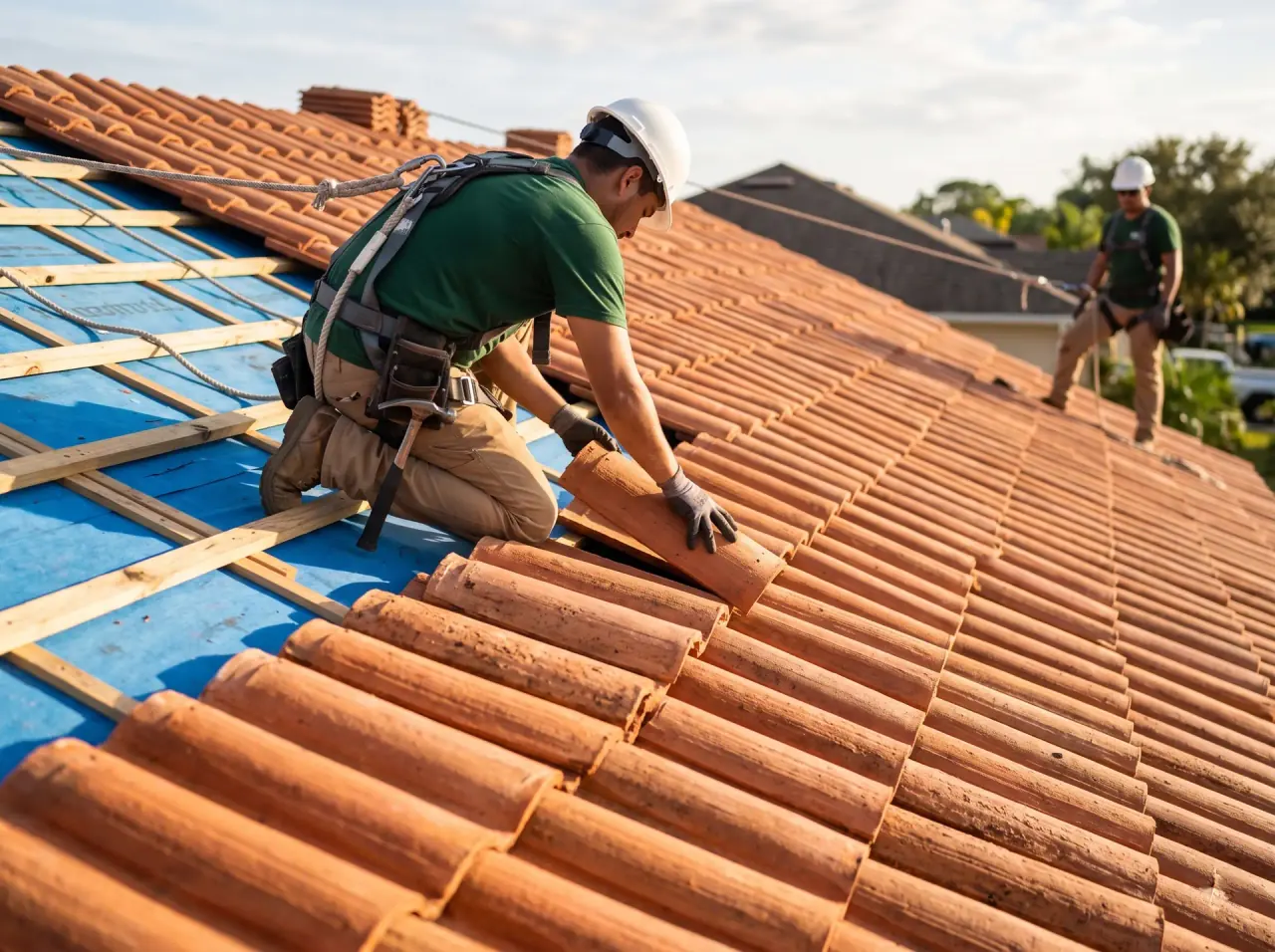 Tile Roofing
How we find the leak under tile
Guessing from the ceiling stain does not work on tile, because water can run a long way along the underlayment and battens first. The repair visit follows the water instead:
- Map the stain and, where the attic is accessible, the water marks on the deck above it.
- Lift the tiles along that path, starting at the highest likely entry point: valleys, penetrations, wall and chimney flashing.
- Look at the underlayment directly: brittle, torn, nail holes, or rotted where water has sat.
- Photograph what failed before anything is replaced, so you see the cause.
Clay tile repair and broken roof tile replacement
Clay tile repair and concrete tile repair follow the same order: stop the water at the layer that failed, then put back a roof surface that sheds water the way the original did. The California Residential Code allows sound tile to be reinstalled on a roof, but not tile that is cracked or broken (Section R908.5), so a cracked tile is replaced, never glued or sealed.
Replacing cracked and broken tiles
Broken tiles are removed without disturbing their neighbours and replaced with matching tiles, fastened to the batten or with clips as the original system was. The Tile Roofing Industry Alliance notes that a replacement tile has to interlock and seat like the tiles around it, which is why fit matters as much as colour.
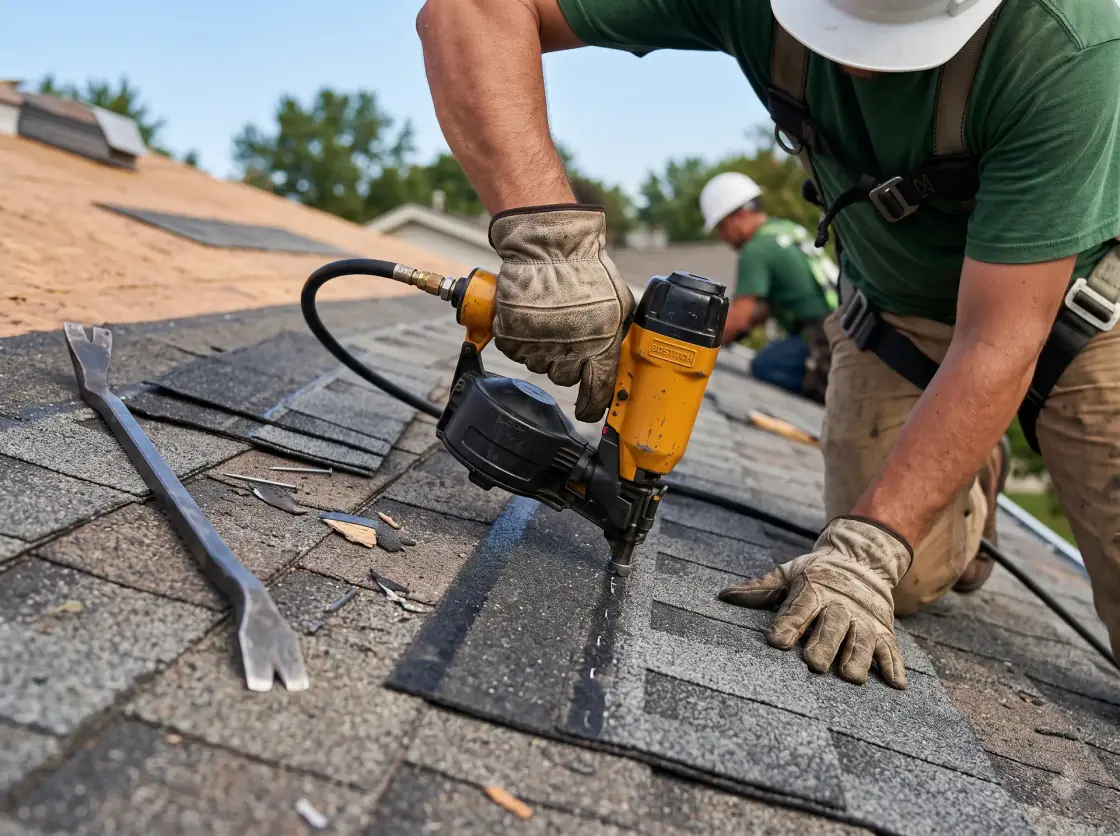 Roof Repair
Resetting slipped tiles
A slipped tile usually means a failed nail or a rotted batten. The fastening is fixed, not just the tile pushed back, or it will slip again.
Local underlayment repair
Around a leak, the tiles are lifted, the damaged underlayment cut out and replaced, lapped under the old material uphill and over it downhill so water still runs the right way, and the tiles relaid.
Valley, flashing and penetration repairs
Rusted or undersized valley metal, open wall flashing and failed pipe or vent flashing are replaced, with the surrounding tiles lifted and reset around the new metal.
Ridge and hip repairs
Loose ridge and hip tiles are reset and re-secured, and failed mortar is replaced.
Matching discontinued tile: salvaged tiles
Many tile profiles and colours are still made (the common tile profiles on Los Angeles homes are described on our tile roofing page), so a repair often uses a new tile in the same profile and colour. When a tile has been discontinued, the closest current match goes on, or a salvaged tile is moved from a less visible slope and the new tile goes there instead.
Either way you are told before the work which tiles will be new and which salvaged, and the photos show where each one went.
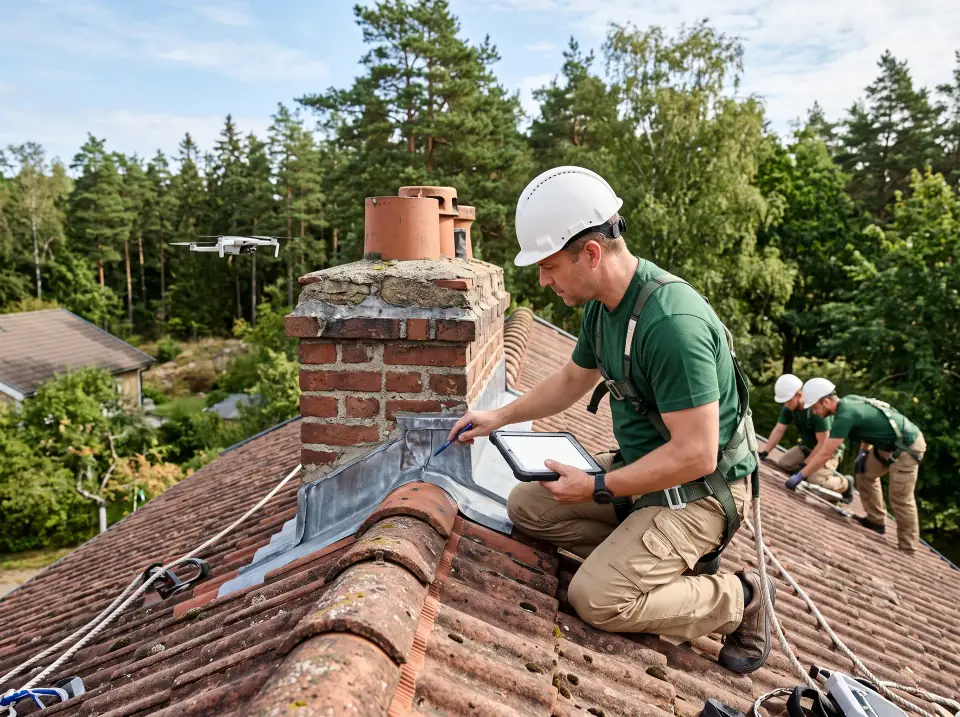 Roof Inspection & Maintenance
How we assess a tile roof without breaking tiles
An inspection should not cause the next leak. On tile we step only on the bottom 3 inches of each tile, where the tile below supports it, as the Tile Roofing Industry Alliance advises, and we stay off hips and valleys. Slopes that cannot be walked safely are checked from the eaves and with drone photos.
At the eaves, valleys and penetrations a few tiles are lifted so the underlayment itself can be seen, because that layer, not the tile, decides whether a repair is enough. Everything is photographed before it is touched.
Tile roof repairs in fire hazard zones
Several of the cities we serve have large areas mapped as High or Very High fire hazard zones. There, the 2025 California Wildland-Urban Interface Code requires any repaired part of a roof covering to be at least Class A, and a re-roof of 50 percent or more within 12 months to be a Class A assembly. CAL FIRE calls the roof "the most vulnerable part of your home" and notes that embers can ignite homes up to a mile away.
So in those zones the repaired part of a tile roof has to be at least Class A. Our guide to Class A fire-rated roofing explains the rule and how to find your zone.
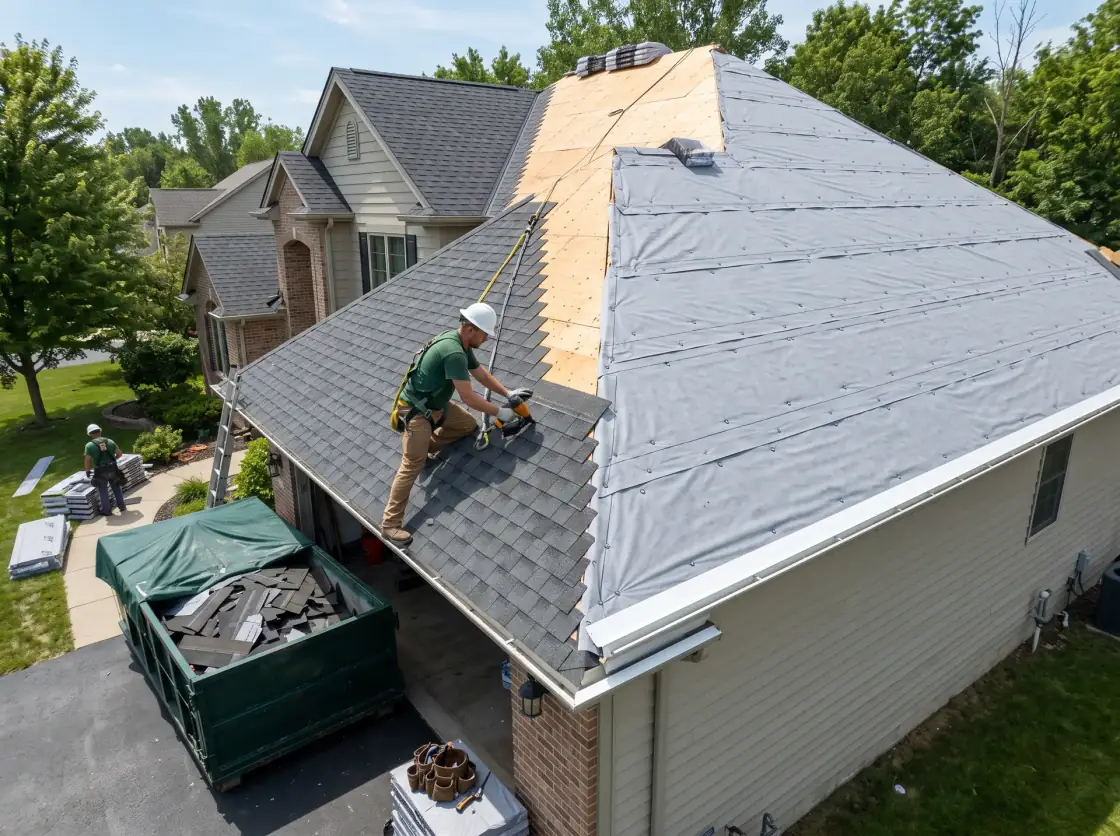 Roof Replacement
When a repair stops making sense
If the underlayment is brittle across whole slopes, a repair only moves the leak to the next weak spot. At that point the better job is a lift and relay: all the tiles come off, all the underlayment and flashing is renewed, and the sound tiles go back on. Our guide to tile roof underlayment replacement explains how to tell, and tile roofing covers the full re-roof. We show you photos of the underlayment either way, so the decision is yours to make on evidence.
Protecting a tile roof from the next repair
Tile breaks under the wrong step, and the Tile Roofing Industry Alliance notes that "most manufacturers specifically do not warrant breakage due to foot traffic." Before solar installers, painters, satellite or HVAC technicians go up, ask how they will walk it: TRI advises stepping only on the bottom 3 inches of each tile, where the tile below supports it, and staying off hips and valleys. Afterwards, check the roof for cracked tiles before the rains.
Not sure what your roof needs? Call (323) 760-7835 or request an estimate: we look at the roof, photograph what we find and send a written proposal.
How tile roof repair works with us
Tell us what you see
A stain, broken tiles, or tiles in the gutter, and when it started.
Leak path inspection
Tiles lifted along the water path; underlayment and flashing checked and photographed.
Written repair scope
What failed, what the repair covers, or an honest note that the roof needs a lift and relay.
The repair
Matched tiles, repaired underlayment and flashing, and the area reset and checked.
 Flat Roof Repair
Tile Roof Repair questions
Wind cracked or moved some of my roof tiles. Is it urgent?
Yes, but it is usually not a same-night emergency: have it repaired before the next rain, and call the same day if water is already coming in or a whole area of tiles has come off. A cracked or slipped tile can leave the underlayment below it uncovered. The Tile Roofing Industry Alliance (TRI) says broken tiles should be replaced as soon as possible so water and the sun's UV rays do not damage that layer, while underlayment that stays covered will likely keep shedding water. If it already leaks, ask us to tarp it: the California Department of Insurance notes a policy may not cover further damage when reasonable steps to protect the home were not taken. TRI also advises against setting new or salvaged tiles over damaged underlayment, so the repair checks that layer first.
Can you find tiles that match my roof?
Often, yes. Many profiles and colors are still made; for discontinued tiles a close match or a salvaged tile taken from a less visible part of the roof is used, and you are told which before the work.
Is it safe to walk on my tile roof?
Tile can take weight on the lower part of each tile, where it rests on the tile below, but it cracks when stepped on in the middle or at the top.
Can a cracked tile be sealed instead of replaced?
Not as a lasting fix. Tile manufacturers' own product approvals say "cracked or broken tiles must not be installed or allowed to remain on the roof", which is why the repair replaces the tile.
Do you do clay tile repair as well as concrete tile?
Yes. Clay and concrete tile are repaired the same way: the leak is traced under the tiles, the underlayment or flashing that failed is fixed, and cracked tiles are replaced with matching or salvaged tiles.
What does a tile roof repair cost?
It depends on what failed and how much of the roof has to be lifted to reach it: a few cracked tiles, a local underlayment patch, or valley and flashing metal. We do not publish prices; every repair is quoted in writing after an on-site look.
Where do you repair tile roofs?
Across Los Angeles, Ventura and Santa Barbara Counties, so if you are searching for tile roof repair near me anywhere in that area, we cover it. Call (323) 760-7835 or send the form, and we will book a visit to trace the leak and show you photos of what we find.
In fire hazard zones, California's fire code requires any repaired part of a roof covering to be at least Class A; our service areas pages show which cities have mapped High and Very High zones.