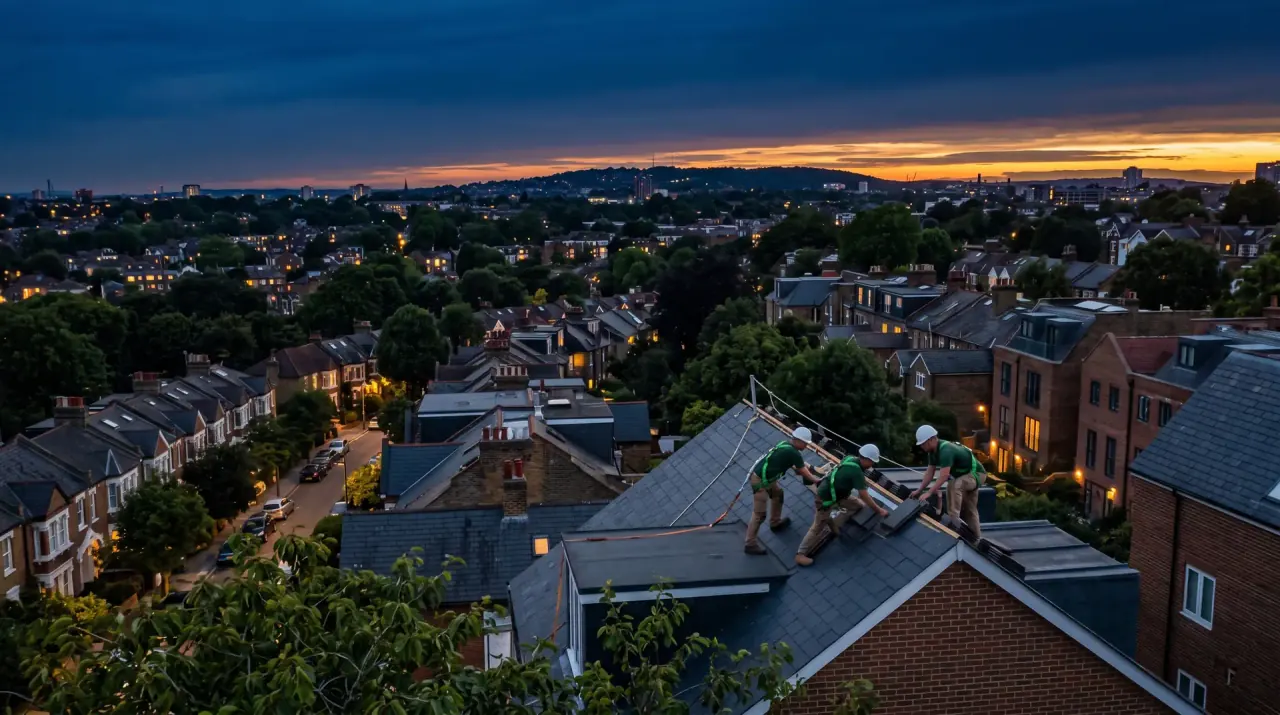
Global Green Roofing offers roofing and roof repair in Santa Barbara, including tile re-roofs, leak repairs and fire-rated roofs. Santa Barbara re-roofs turn on three local rules: whether the new roof matches the old one (which decides the permit type), whether the house is in El Pueblo Viejo or the Hillside Design District (which brings design review and clay tile standards), and whether it is in the city's High Fire Hazard Area.
- Permit officeCity of Santa Barbara Building & Safety, 630 Garden Street
- Permit typeLike-for-like re-roof: instant online permit. New material, color or type: express permit
- Title 24 climate zone6 (93130 is listed as 5)
- Cool roof on a re-roofLow-slope roofs only; pitched roofs have no cool-roof requirement in zone 6
- Housing ageMedian year built 1965; 74% of homes built before 1980
Santa Barbara re-roof permits: instant or express
The City of Santa Barbara sorts re-roofs by whether anything changes. "Reroofs that maintain the same color, material, and type of roofing" qualify for an OnDemand permit, issued automatically with no plan review through the city's online permit portal, for one- and two-family homes. "Reroofs with new material, color, and type of roofing" are Express permits, which the city says are issued "within 5 or less business days when accepted for review".
The city has enforced the 2025 California codes since January 2, 2026. The state rules that sit behind every re-roof permit are in our guide to roofing permits in California.
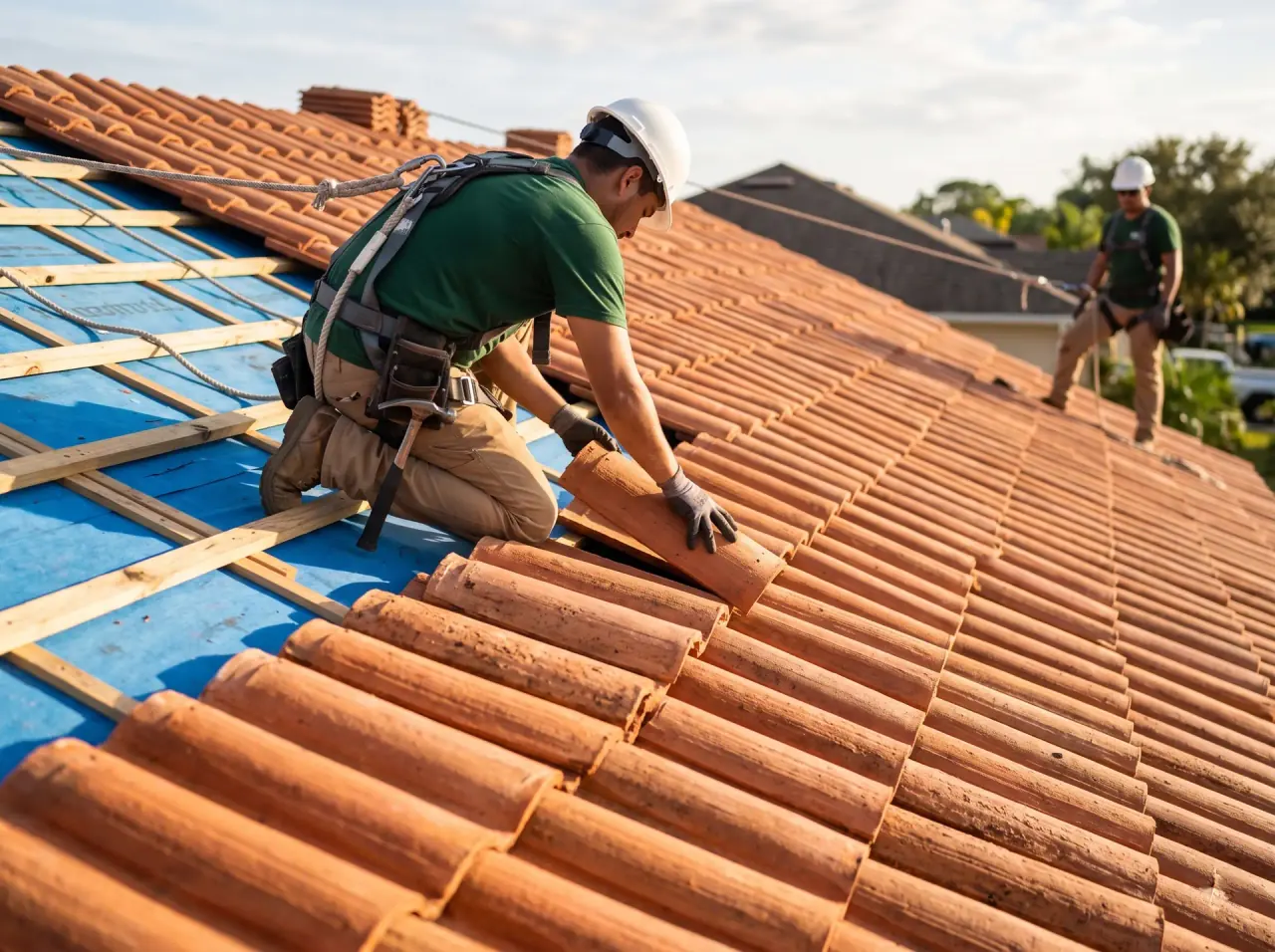 Tile Roofing
Clay tile and design review: El Pueblo Viejo and the hillsides
Changing the look of a roof can bring design review in two parts of the city, and in El Pueblo Viejo any alteration falls under the Historic Landmarks Commission:
El Pueblo Viejo Landmark District
The district covers the area around the Royal Presidio, the State Street commercial corridor and Cabrillo Boulevard (Part I), and the area around the Mission (Part II). The city says "all properties in El Pueblo Viejo Landmark District are under the jurisdiction of the Historic Landmarks Commission for alterations or new construction."
The district's design guidelines are specific about roofs: "Roof tile should be two-piece cap and pan, dark terra-cotta clay tile. Starter course should be double tiled (booster tile). Visible birdstops are not to be used." Staff can approve a re-roof when the material and color suit the building's style, but the Commission's guidelines say "S-Tile roofs are not eligible for administrative approvals."
Hillside Design District and other single-family homes
The city's Single Family Residence Design Guidelines (2007) list, as a design review trigger in the Hillside Design District, "the replacement of an existing roof covering with a roof covering of different materials or colors (excluding 'like for like' re-roof)".
Where a traditional Hispanic style is proposed or the site is prominent, the guidelines require a two-piece terra cotta Mission "C-tile" roof. They allow clay S-tile on a re-roof only when four criteria are met: the S-tile suits the architecture, a licensed engineer or architect finds the building cannot carry two-piece barrel tile, the result is consistent with the guidelines' intent, and the installation details set as conditions of approval are followed (for example, 15% to 20% of field tiles laid with mortared, randomly placed boosters).
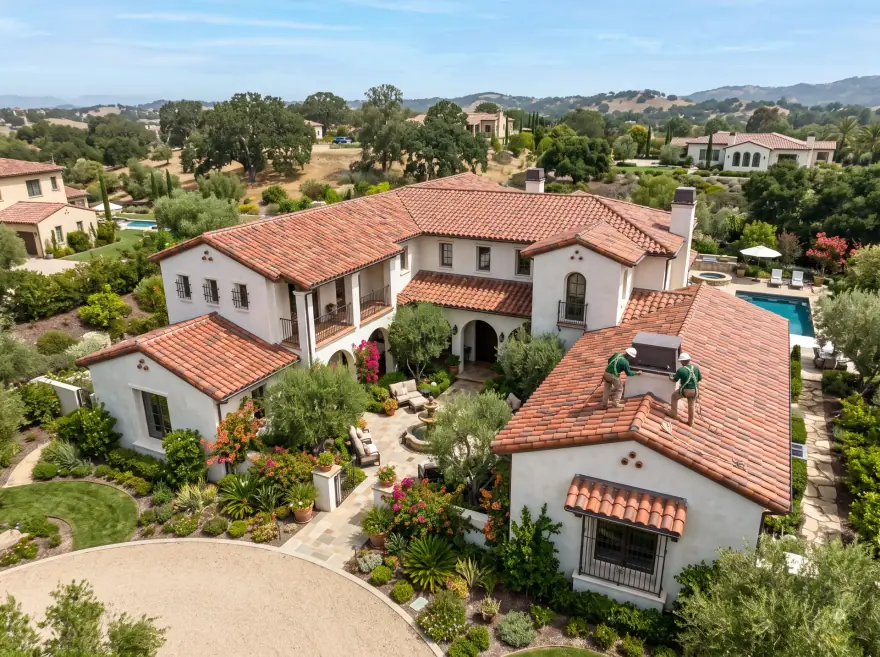 Tile Roof Repair
In practice: a like-for-like tile re-roof is the simple path, and a change of tile profile or color is where design review starts. Inside El Pueblo Viejo, confirm with the city whether a like-for-like re-roof needs Historic Landmarks Commission or staff sign-off before the permit. Our tile roofing page covers lift-and-relay re-roofs that keep the original clay tiles, which avoids a change of look altogether.
Class A roofs in Santa Barbara's High Fire Hazard Area
The city's building code amendments for the 2022 code cycle (Ordinance 6093, effective January 1, 2023) require that "roof coverings shall be class A or noncombustible fire retardant materials on existing buildings and additions or repairs to existing buildings" in the High Fire Hazard Area, and allow fire-retardant treated shakes only to replace less than 20% of an existing shake roof within two years.
The city's high fire handout (2019 codes) calls for vent mesh openings from 1/16 inch to no more than 1/8 inch. The city scheduled its amendments for the 2025 codes for adoption in December 2025; check the current text with Building & Safety, and see the state rule in Class A fire-rated roofing.
That area grew in 2025. After CAL FIRE released updated local maps on March 10, 2025, the city said "more areas in Santa Barbara are now considered a hazard", including "parts of the Mesa neighborhood, especially near Cliff Drive and Flora Vista, and areas in the northern parts of San Roque and La Cumbre." The city's MAPS tool has a High Fire Hazard Area layer to check a parcel. See Class A fire-rated roofing for what the rating covers.
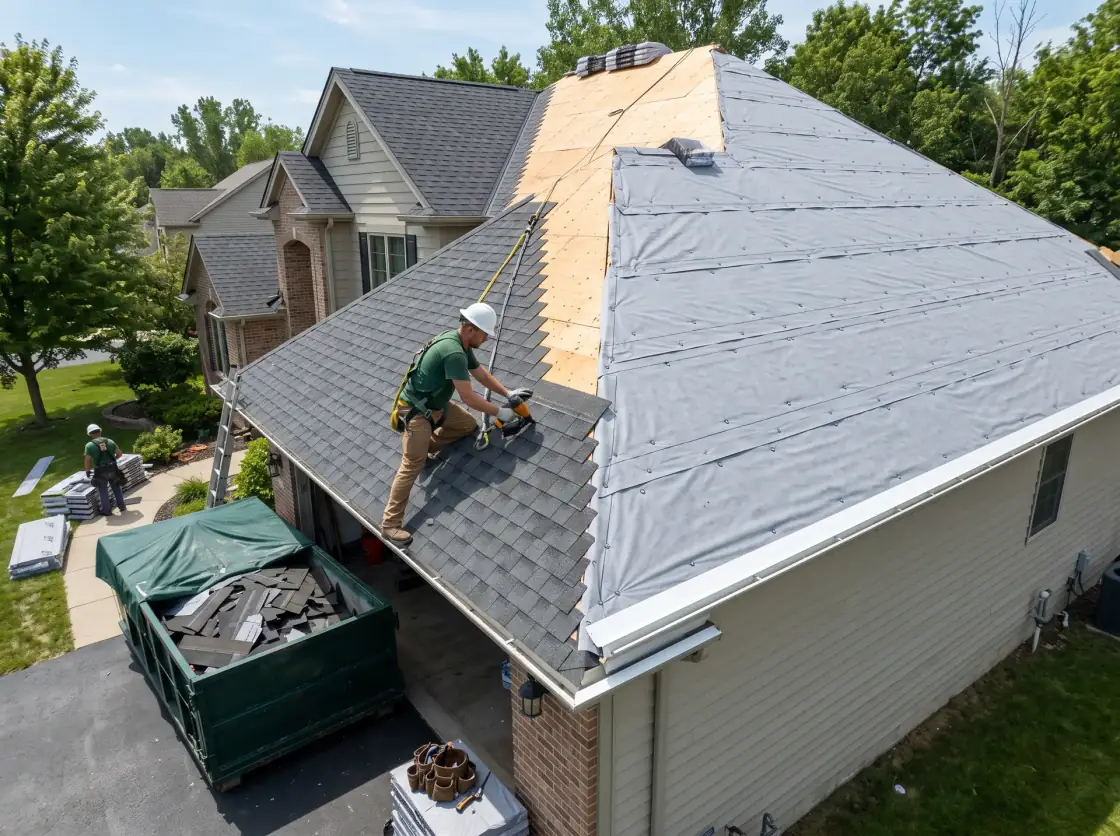 Roof Replacement
Sundowner winds and Santa Barbara's fire history
The National Weather Service describes "sundowners" as extreme northerly winds along the south coast of Santa Barbara County that "can produce damaging gale force winds and dangerous fire weather conditions", and ties them to the "devastating 'Tea Fire' of 13-17 November 2008". The city's 2021 Community Wildfire Protection Plan notes that "the largest and most damaging fires have occurred during such winds."
CAL FIRE records that the 2017 Thomas Fire burned 281,893 acres across Santa Barbara and Ventura counties and destroyed 1,063 structures; the city's plan says it "burned into the eastern part of the City."
The Santa Barbara County Fire Safe Council calls a Class A roof "the most important home hardening upgrade you can do" if you do not have one, and advises sealing openings at roof edges with bird stops or cement. Inside El Pueblo Viejo the district guidelines add that visible birdstops are not to be used, and the single-family guidelines ask for bird stops mortared with natural cement, so the two rules are checked together.
Older homes, mild weather: what Santa Barbara roofs need
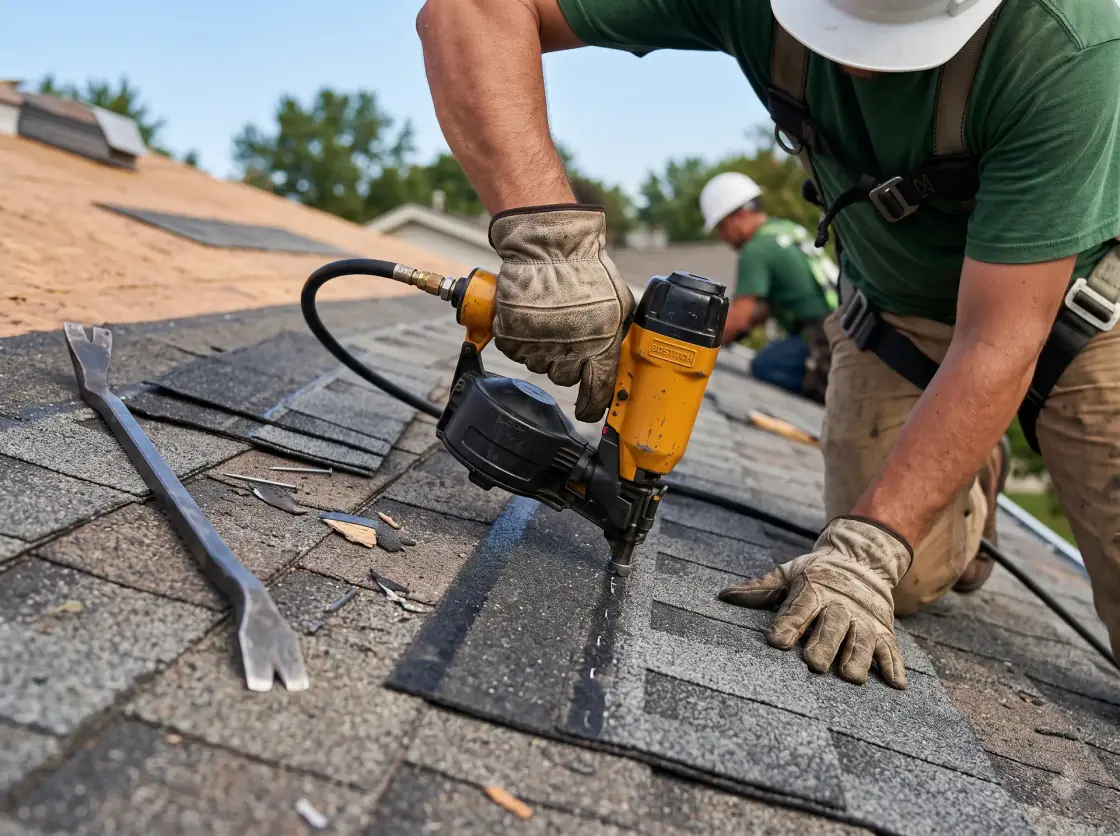
The Census Bureau's 2024 survey puts the median Santa Barbara home at 1965, with 74% built before 1980. The city's own wildfire plan notes that "much of the City was developed before the adoption of building and fire codes that required noncombustible roofing". On roofs this old, a re-roof is the moment to strip to the deck, check the sheathing and bring the roof to current fire rules; the California code does not allow a new covering over existing clay or cement tile.
 Roof Repair
NOAA's 1991 to 2020 normals for the Santa Barbara station (USC00047902), inside the city, show an average August high of 77.7 F, about 5 days a year at 90 F or hotter, and 18.98 inches of rain a year, about 87% of it from November to March.
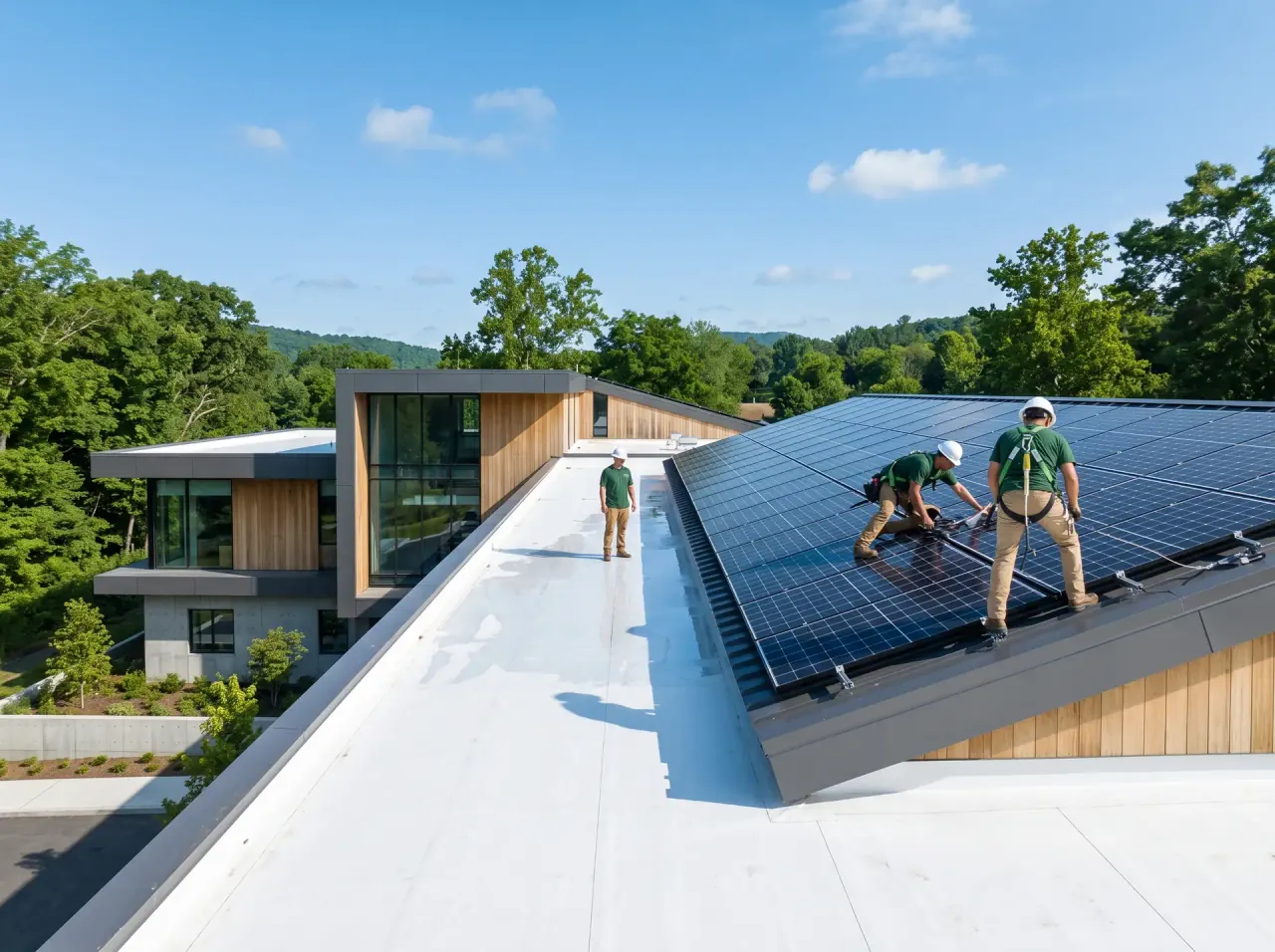
In climate zone 6, a pitched re-roof has no Title 24 cool-roof requirement; a flat or low-slope re-roof does (see flat roofing). The El Pueblo Viejo guidelines themselves note that cool roofs are "otherwise incompatible" with the district's style, which is one more reason the low-slope rule and the design rules are checked together.
Spanish tile roof maintenance and repair in Santa Barbara
Spanish tile roof maintenance in Santa Barbara means a check once a year in the fall, before the November to March rains that bring about 87% of the city's rain, and again after a major storm or sundowner wind. Global Green Roofing repairs and re-roofs clay tile roofs in Santa Barbara: cracked tiles are replaced with matching or salvaged tiles, and worn underlayment is replaced by a lift and relay that puts the sound original tiles back.
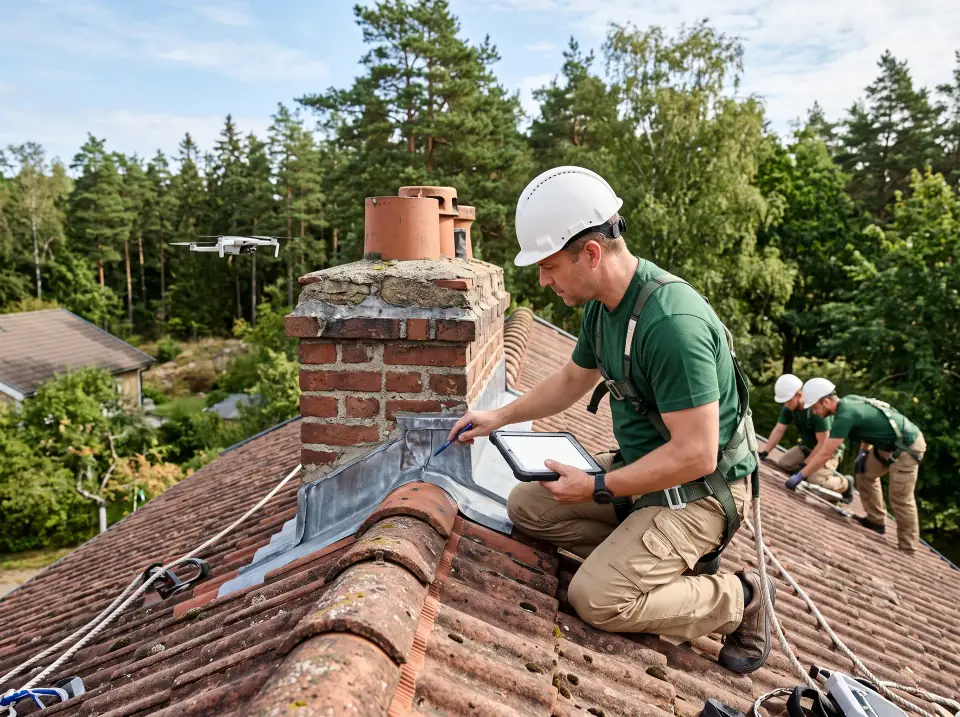
The Tile Roofing Industry Alliance calls the underlayment under the tile the secondary water barrier in most cases, recommends having its condition inspected before a tile repair, and advises against laying new or reused tiles over compromised underlayment, whatever the roof's age. So its condition is checked, not guessed from age: a yearly roof inspection lifts a few tiles at the eaves, valleys and penetrations to see it, and looks at:
 Roof Inspection & Maintenance
- Cracked and slipped tiles. The Alliance advises replacing a broken tile as soon as possible, before water and the sun's UV damage the underlayment below it, so a cracked tile is replaced, not sealed (see tile roof repair). When a roof is relaid, the California Residential Code does not allow damaged, cracked or broken tile to go back on (R908.5).
- Underlayment. A worn patch can be repaired and the tiles reset; underlayment that has failed across whole slopes is replaced by a lift and relay (how a lift and relay works).
- Flashing, hips and ridges. Valley metal, wall and chimney flashing, and the mortar at hips and ridges, which the city's single-family guidelines ask to be natural cement. When a roof is relaid, the code requires rusted, damaged or deteriorated flashing to be replaced (R908.5).
- Eave closures. Cracked or missing mortar at the bird stops or cement closing the tile ends reopens the ember gap the Fire Safe Council wants closed. The rules for these closures, including El Pueblo Viejo's ban on visible birdstops, are in the sundowner section above.
- Valleys and gutters. The Santa Barbara County Fire Safe Council advises keeping the roof and gutters clear of leaf litter, and notes that many homes in the area have protected Coast Live Oaks with limbs over the roof: clear valleys and gutters before November.
- How the roof is walked. We step only on the bottom 3 inches of each tile, as the Alliance advises, and check slopes that are unsafe to walk from the eaves and with drone photos.
 Cool Roofing
Larger tile work fits the dry months: NOAA's normals for the city's station show 0.01 inches of rain in each of July and August. We do not publish prices: each repair or lift and relay is priced in a written proposal after an on-site look.
Roof leaking or due for replacement in Santa Barbara? Call (323) 760-7835 or request an estimate: we look at the roof, photograph what we find and send a written proposal.
Services and guides for roofs in Santa Barbara
- Tile Roofing: Clay tile re-roofs, including lift and relay that keeps your original tile.
- Tile Roof Repair: Cracked and slipped clay tile and leaks at valleys and flashing.
- Roof Replacement: Full re-roofs to current fire rules in the High Fire Hazard Area.
- Tile Roof Underlayment Replacement: How a Lift and Relay Works: How a lift and relay works and which tiles can go back on.
- What Is a Class A Fire Rated Roof, and When Does California Require One?: What a Class A assembly includes, from underlayment to eave closures.
 Commercial Roofing
Roofing in Santa Barbara: common questions
When should I replace my roof in Santa Barbara?
When leaks keep coming back or the covering is worn out, not at a set age. A 2007 National Association of Home Builders study puts asphalt shingles at about 20 years and clay or concrete tile at over 50, so on a Santa Barbara tile roof have the underlayment checked by lifting tiles before deciding on a re-roof; if the tiles are sound, a lift and relay that keeps them may be enough. Plan the work for the dry months, since about 87% of the city's rain falls from November to March. How long a roof lasts, by material.
Do roofers in Santa Barbara have to install a cool roof?
Only on low-slope roofs in most of the city. Santa Barbara is Title 24 climate zone 6, where the state cool-roof rule on a re-roof covers low-slope roofs but not pitched ones; ZIP 93130 is listed as zone 5, where it covers neither. A roofing contractor in Santa Barbara still needs the right permit: like-for-like re-roofs of one- and two-family homes (same color, material and type) get an instant online permit.
Is a re-roof permit instant in Santa Barbara?
For a like-for-like re-roof, yes: the city issues an OnDemand permit online with no plan review for one- and two-family homes when the color, material and type stay the same. A change of material, color or type is an Express permit, issued within 5 business days or less once accepted.
Do I need design review to re-roof in Santa Barbara?
Sometimes. The city puts all El Pueblo Viejo properties under the Historic Landmarks Commission for alterations, though its guidelines let staff approve compatible re-roofs other than S-tile. In the Hillside Design District, the 2007 single-family guidelines list a change of roof material or color, excluding like-for-like re-roofs, as a design review trigger.
Can I re-roof with clay S-tile instead of two-piece Mission tile?
In El Pueblo Viejo, S-tile re-roofs are not eligible for staff approval. Under the 2007 single-family guidelines, S-tile on a re-roof is judged against four criteria, including a licensed engineer's or architect's finding that the building cannot carry two-piece barrel tile.
Does this page cover Montecito and Goleta?
No. This page covers the City of Santa Barbara only; other jurisdictions have their own rules.
Other cities we cover are listed on our service areas page.
Sources for this page
19 public sources, tap to show
- City of Santa Barbara, Building permit forms and applications (OnDemand and Express permits)
- City of Santa Barbara, Building & Safety (2025 codes)
- City of Santa Barbara, El Pueblo Viejo Landmark District
- City of Santa Barbara, El Pueblo Viejo Design Guidelines
- City of Santa Barbara, Historic Landmarks Commission General Design Guidelines
- City of Santa Barbara, Single Family Residence Design Guidelines (2007)
- City of Santa Barbara, Construction Codes Local Amendments (Ordinance 6093)
- City of Santa Barbara, High Fire Requirements handout
- City of Santa Barbara, Update to safety plans after new fire hazard zone maps (April 8, 2025)
- City of Santa Barbara, Wildland fire and MAPS tool
- City of Santa Barbara, 2021 Community Wildfire Protection Plan
- CAL FIRE, Thomas Fire incident page
- National Weather Service, Extreme Northeasterly Wind Events in the Hills Above Montecito
- Santa Barbara County Fire Safe Council, Wildfire home hardening guide: roof
- NOAA NCEI, 1991-2020 Climate Normals, Santa Barbara (USC00047902)
- California Energy Commission, Climate Zone Assignments by ZIP Code
- California Energy Commission, 2025 Building Energy Efficiency Standards, Section 150.2(b)1I
- U.S. Census Bureau, ACS 2024 5-year: housing in Santa Barbara (tables B25035, B25034, B25003, via Census Reporter)
- 2025 California Residential Code, Chapter 9 (R908.4), via UpCodes
Public sources read on September 30, 2026. Climate zones and fire hazard maps are drawn by address; check yours with the tools linked above.